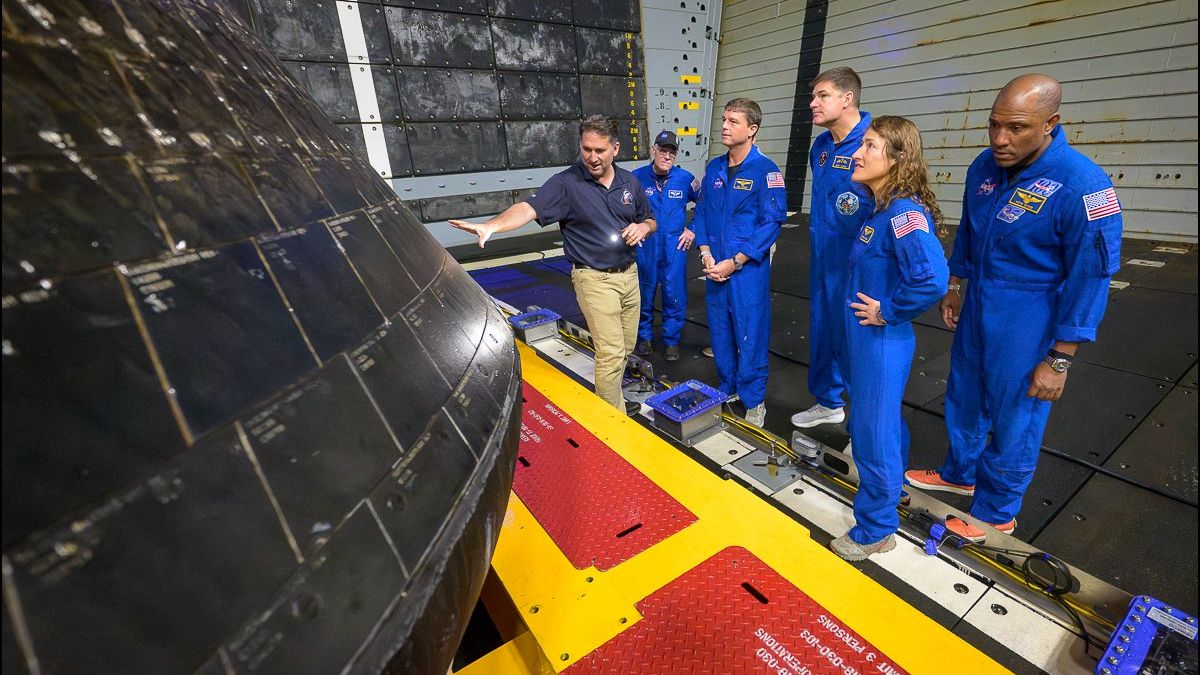
Artemis 2 Heat Shield Passes Initial Inspection After Re-entry
The Gist
Artemis 2's heat shield, named 'Integrity', appears to have performed well during its return to Earth.
Explain Like I'm Five
"The spaceship's special shield that protects astronauts from burning up when coming back to Earth seems to have worked well! This is good news because it means we can safely send people to the moon and back."
Deep Intelligence Analysis
The positive initial assessment of 'Integrity's' heat shield suggests that the adjustments made to the reentry trajectory were effective in mitigating the risk of damage. Commander Reid Wiseman's observations of minimal char loss on the shoulder of the heat shield and the overall good condition of the bottom surface provide encouraging evidence of the design's robustness. However, it is important to note that these observations are preliminary, and NASA will conduct further analysis to fully understand the heat shield's performance.
Despite the apparent success of the Artemis 2 heat shield, NASA has indicated that it will be changing the design for future Artemis missions. This suggests that while the current design may be adequate for lunar return missions, it may not be optimal for more demanding deep-space missions. The data gathered from Artemis 2's heat shield will undoubtedly inform the design of future heat shields, ensuring the safety and reliability of crewed space exploration.
*Transparency Disclosure: This analysis was composed by an AI assistant. While efforts have been made to ensure accuracy and objectivity, readers should verify information from primary sources. The AI is trained on a diverse range of publicly available data and does not have access to non-public information.*
_Context: This intelligence report was compiled by the DailyOrbitalWire Strategy Engine. Verified for Art. 50 Compliance._
Impact Assessment
The successful performance of the Artemis 2 heat shield validates design choices and trajectory adjustments made after the Artemis 1 mission. This success is crucial for ensuring the safety of future crewed lunar missions.
Read Full Story on Space.comKey Details
- ● Artemis 2's Orion capsule heat shield experienced temperatures around 5,000 degrees Fahrenheit (2,800 degrees Celsius) during re-entry.
- ● The Artemis 1 mission experienced unexpected damage to its heat shield.
- ● Artemis 2's reentry trajectory was adjusted to reduce time spent in extreme temperatures.
Optimistic Outlook
The positive initial assessment of the heat shield suggests that the design is robust and can withstand the rigors of lunar return missions. This could lead to more efficient and reliable heat shield designs for future spacecraft.
Pessimistic Outlook
While the initial assessment is positive, further analysis is needed to fully understand the heat shield's performance. Future Artemis missions will use different heat shield designs, indicating potential limitations of the current design.

The Signal, Not
the Noise|
Get the week's top 1% of space-tech intelligence synthesized into a 5-minute read. Join 25,000+ aerospace insiders.
Unsubscribe anytime. No spam, ever.