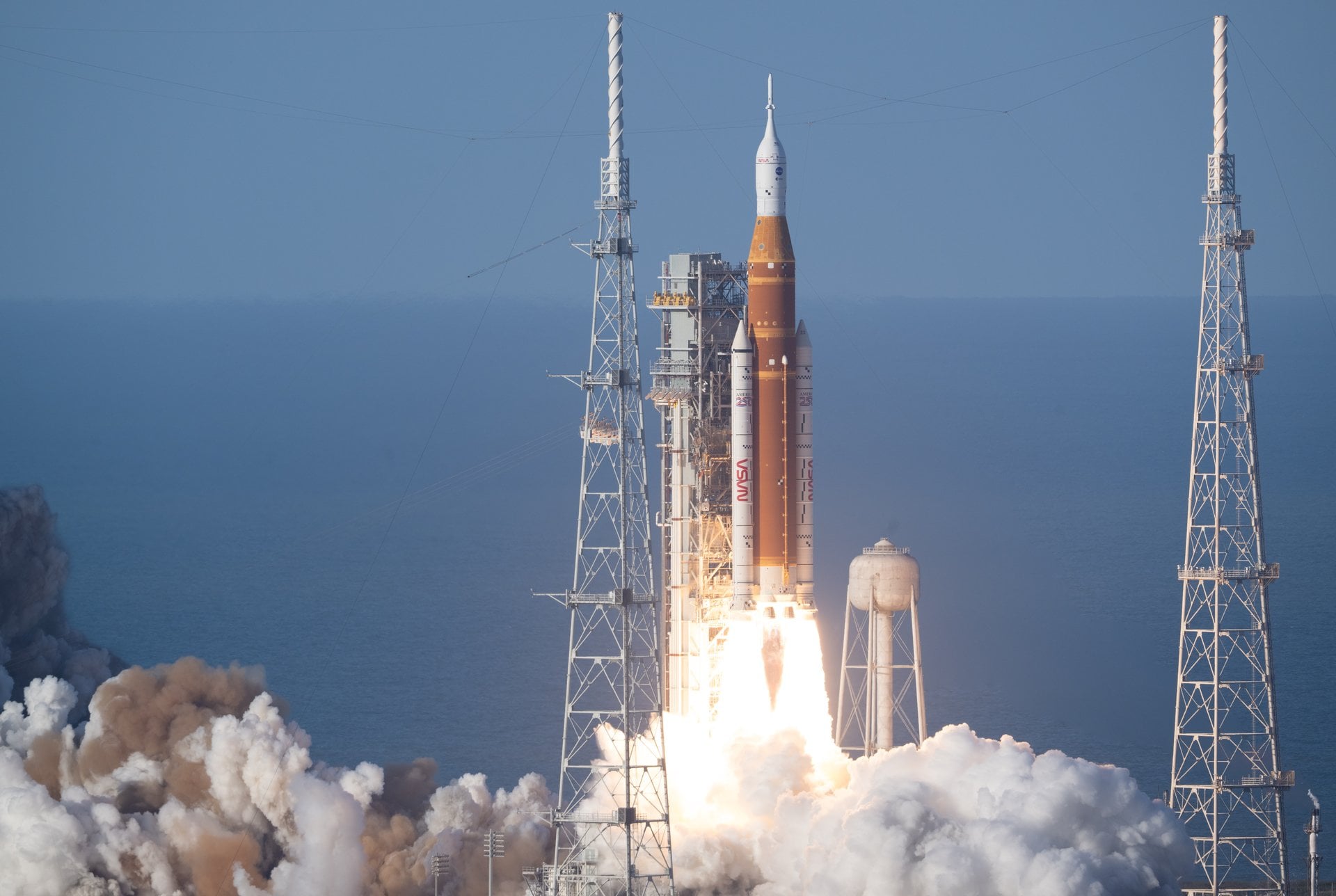
Artemis II Launches, Crewed Lunar Mission Begins
The Gist
Artemis II successfully launched, marking the first crewed mission beyond LEO in over 50 years.
Explain Like I'm Five
"Imagine a field trip to the Moon! Artemis II is like the practice run to make sure the spaceship and everything works perfectly before we land there for real."
Deep Intelligence Analysis
The successful launch of Artemis II underscores the progress made in developing the Space Launch System (SLS), a heavy-lift launch vehicle designed to send large payloads to the Moon and beyond. The SLS's twin solid rocket boosters and RS-25 engines provided the necessary thrust to propel the Orion spacecraft into its lunar trajectory. The mission also highlights the importance of international collaboration in space exploration, with the European Space Agency (ESA) providing the ESM for the Orion spacecraft. The proximity operations demonstration, where the crew guided the spacecraft through a series of controlled maneuvers, is particularly significant as it simulates the rendezvous and docking procedures that will be required for future Artemis missions involving a Human Landing System (HLS).
However, the Artemis program faces several challenges, including the high cost of the SLS and the potential for delays due to technical issues or funding constraints. The long-term sustainability of the program will depend on the ability to develop more cost-effective launch solutions and foster greater international cooperation. Despite these challenges, the Artemis II mission represents a significant step towards establishing a permanent human presence on the Moon and paving the way for future missions to Mars and beyond. The mission's success will inspire a new generation of scientists, engineers, and explorers, driving innovation and technological advancements in the aerospace industry.
_Context: This intelligence report was compiled by the DailyOrbitalWire Strategy Engine. Verified for Art. 50 Compliance._
Impact Assessment
Artemis II is a critical step towards returning humans to the Moon and establishing a long-term lunar presence. The mission serves as a dress rehearsal, testing vital systems and procedures for future lunar landing missions and validating the SLS and Orion spacecraft's capabilities.
Read Full Story on Universe TodayKey Details
- ● Artemis II launched on April 1st at 06:25 p.m. EDT.
- ● The mission has a four-person crew: Reid Wiseman, Victor Glover, Christina Koch, and Jeremy Hansen.
- ● The mission is a ten-day journey around the Moon.
- ● The SLS twin solid rocket boosters provided 75% of initial thrust.
- ● The Orion spacecraft is named Integrity.
Optimistic Outlook
The successful launch and initial operations of Artemis II demonstrate the viability of the SLS and Orion systems. The mission's data will refine future Artemis missions, potentially accelerating the timeline for lunar surface operations and in-situ resource utilization.
Pessimistic Outlook
Any anomalies during the ten-day mission could delay future Artemis launches and impact the overall program timeline. The reliance on SLS, a costly and complex system, presents a long-term risk to the program's sustainability if more cost-effective alternatives aren't developed.

The Signal, Not
the Noise|
Get the week's top 1% of space-tech intelligence synthesized into a 5-minute read. Join 25,000+ aerospace insiders.
Unsubscribe anytime. No spam, ever.