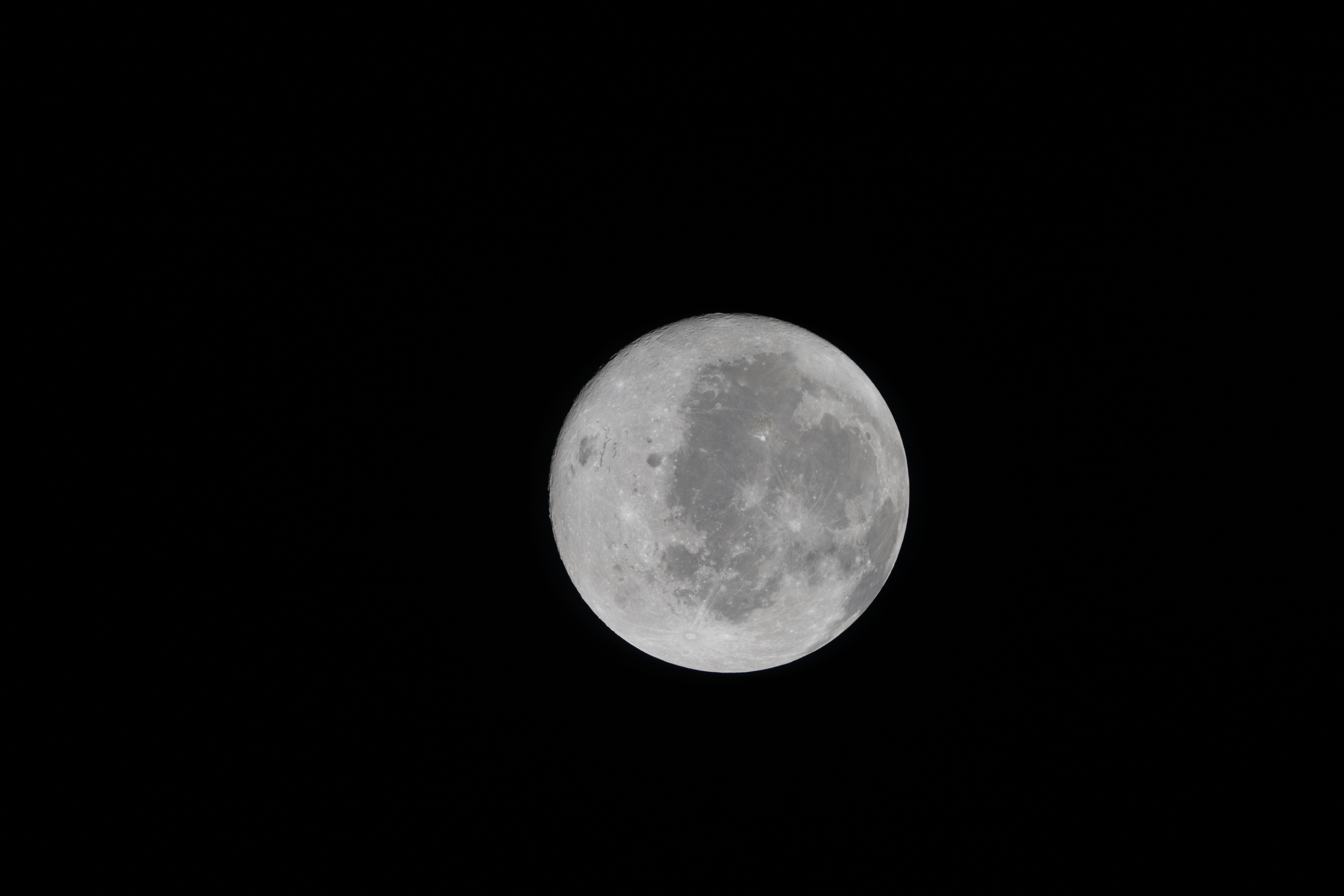
Artemis II Mission Captures Lunar Near Side Image
The Gist
NASA's Artemis II mission captured an image of the Moon's near side on April 4, 2026, revealing ancient lava flows.
Explain Like I'm Five
"Imagine taking a picture of the Moon from a spaceship! NASA's Artemis II mission did just that, showing us dark spots that are old lava from long ago, only found on this side of the Moon."
Deep Intelligence Analysis
Furthermore, the mission itself, scheduled for a lunar flyby on April 6, 2026, underscores the renewed international focus on lunar activities. The crew, comprising astronauts Victor Glover, Reid Wiseman, and Christina Koch from NASA, along with Jeremy Hansen from the Canadian Space Agency (CSA), exemplifies the collaborative nature of modern space exploration. The mission's success hinges on the reliable performance of the Orion spacecraft and its ability to safely transport the crew around the Moon and back.
From a market perspective, the Artemis program, of which Artemis II is a part, stimulates investment and innovation in the space sector. The development and deployment of advanced spacecraft, life support systems, and communication technologies create opportunities for both established aerospace companies and emerging space startups. The long-term goal of establishing a sustainable lunar presence could drive demand for in-situ resource utilization (ISRU) technologies and infrastructure, further fueling the growth of the space economy. However, the program's success depends on sustained government funding and international cooperation, as well as the ability to mitigate the inherent risks associated with human spaceflight.
Transparency Compliance: This analysis was generated by an AI model and reviewed by a human expert. The data sources are publicly available NASA reports and press releases. No proprietary information was used in the creation of this content.
_Context: This intelligence report was compiled by the DailyOrbitalWire Strategy Engine. Verified for Art. 50 Compliance._
Impact Assessment
The Artemis II mission marks a significant step in lunar exploration, providing valuable data and imagery. The image of the near side highlights unique geological features, furthering our understanding of the Moon's composition and history.
Read Full Story on NASA ArtemisKey Details
- ● The image was taken by astronauts aboard NASA's Orion spacecraft.
- ● The image was captured on April 4, 2026.
- ● The image reveals dark patches of ancient lava flows unique to the Moon's near side.
- ● Artemis II mission is scheduled to fly around the Moon on April 6, 2026.
- ● The Artemis II crew includes Victor Glover, Reid Wiseman, Christina Koch (NASA), and Jeremy Hansen (CSA).
Optimistic Outlook
The successful capture of the lunar image demonstrates the capabilities of the Orion spacecraft and the Artemis II mission. This bodes well for future lunar missions and the establishment of a sustained presence on the Moon, potentially unlocking further scientific discoveries and resource utilization opportunities.
Pessimistic Outlook
While the image capture is a success, the mission still faces inherent risks associated with space travel. Delays or unforeseen technical issues could impact the mission's timeline and scientific objectives, potentially hindering progress in lunar exploration.

The Signal, Not
the Noise|
Get the week's top 1% of space-tech intelligence synthesized into a 5-minute read. Join 25,000+ aerospace insiders.
Unsubscribe anytime. No spam, ever.