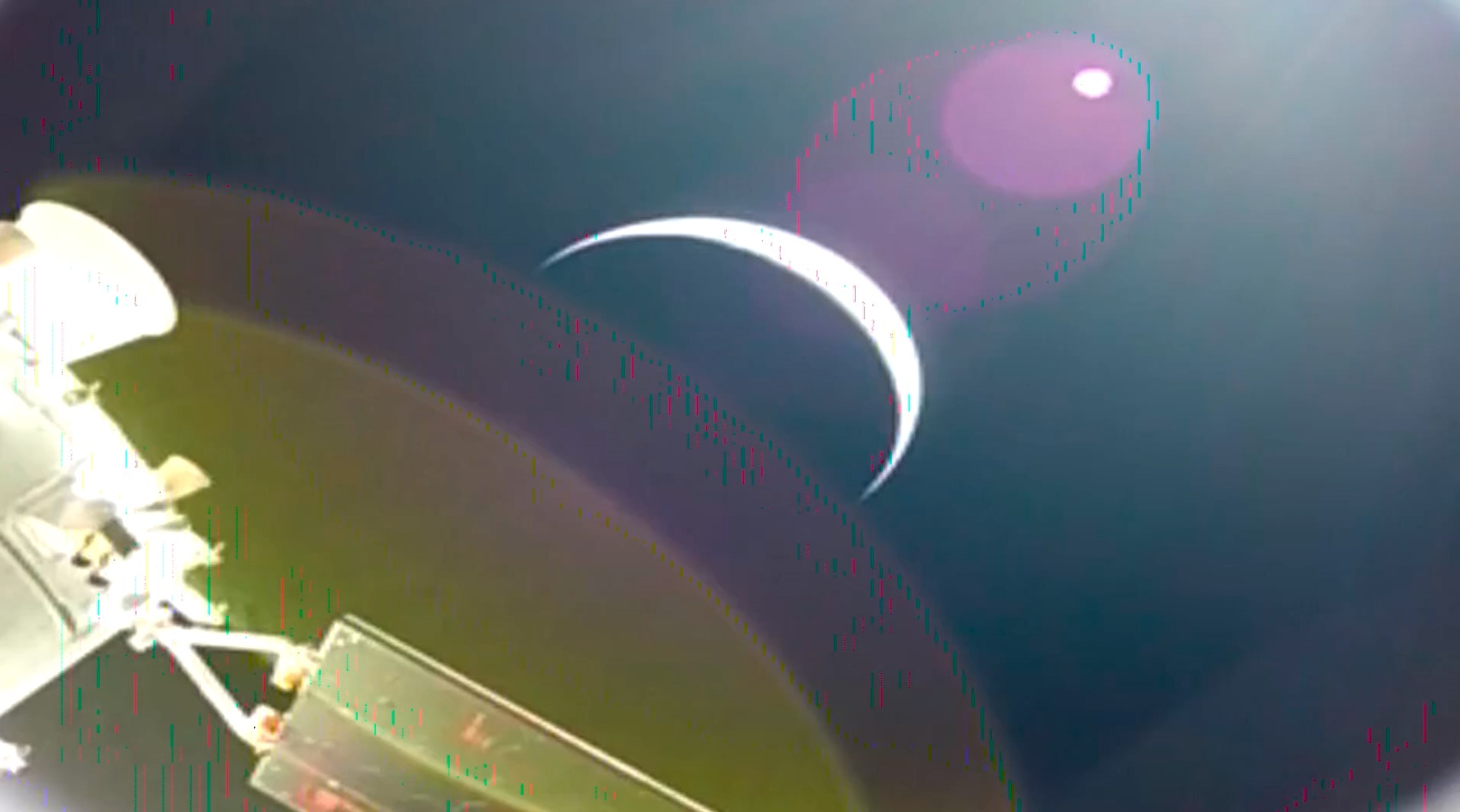
Artemis II Achieves Lunar Trajectory After Successful Engine Burn
The Gist
NASA's Artemis II mission successfully executed a translunar injection burn, sending astronauts towards the Moon for the first time since 1972.
Explain Like I'm Five
"Imagine we're throwing a ball really high (into space) so it can go around the Moon and come back! NASA just did that with a spaceship and some astronauts, the first time in a long, long time!"
Deep Intelligence Analysis
The mission profile includes a lunar flyby, during which the astronauts will capture high-resolution imagery and make observations of the lunar surface, including areas of the far side never directly observed by humans. These observations are expected to provide valuable insights into the Moon's geology and composition, potentially leading to new scientific discoveries. Furthermore, the mission will assess the performance of Orion's life support systems and other critical components in the harsh environment of deep space, ensuring their reliability for future long-duration missions.
While the successful translunar injection is a major milestone, the mission still faces significant challenges. The lunar flyby and subsequent return to Earth pose inherent risks, and any system malfunctions or unforeseen events could jeopardize the mission's success. The Artemis program, as a whole, is also subject to budgetary constraints and political uncertainties, which could impact its long-term trajectory. Nevertheless, the Artemis II mission represents a bold step forward in human space exploration, inspiring hope and excitement for a new era of lunar discovery.
_Context: This intelligence report was compiled by the DailyOrbitalWire Strategy Engine. Verified for Art. 50 Compliance._
Impact Assessment
This mission marks a significant step in NASA's Artemis program, paving the way for future lunar exploration and a sustained human presence on the Moon. The data gathered from this flight will be crucial for refining technologies and procedures for more complex missions.
Read Full Story on NASA ArtemisKey Details
- ● Orion's service module engine fired for approximately six minutes.
- ● The crew consists of NASA astronauts Reid Wiseman, Victor Glover, Christina Koch, and CSA astronaut Jeremy Hansen.
- ● The mission is a planned 10-day test flight around the Moon.
- ● Orion reached a high Earth orbit extending about 46,000 miles above the Earth for system checkouts.
Optimistic Outlook
The successful translunar injection demonstrates the reliability of the SLS rocket and Orion spacecraft. The mission's planned lunar flyby will provide valuable data and imagery, potentially leading to new scientific discoveries and inspiring future generations of space explorers.
Pessimistic Outlook
The mission still faces several critical phases, including the lunar flyby and return to Earth. Any system malfunctions or unforeseen challenges could jeopardize the mission's success and delay future Artemis program milestones.

The Signal, Not
the Noise|
Get the week's top 1% of space-tech intelligence synthesized into a 5-minute read. Join 25,000+ aerospace insiders.
Unsubscribe anytime. No spam, ever.