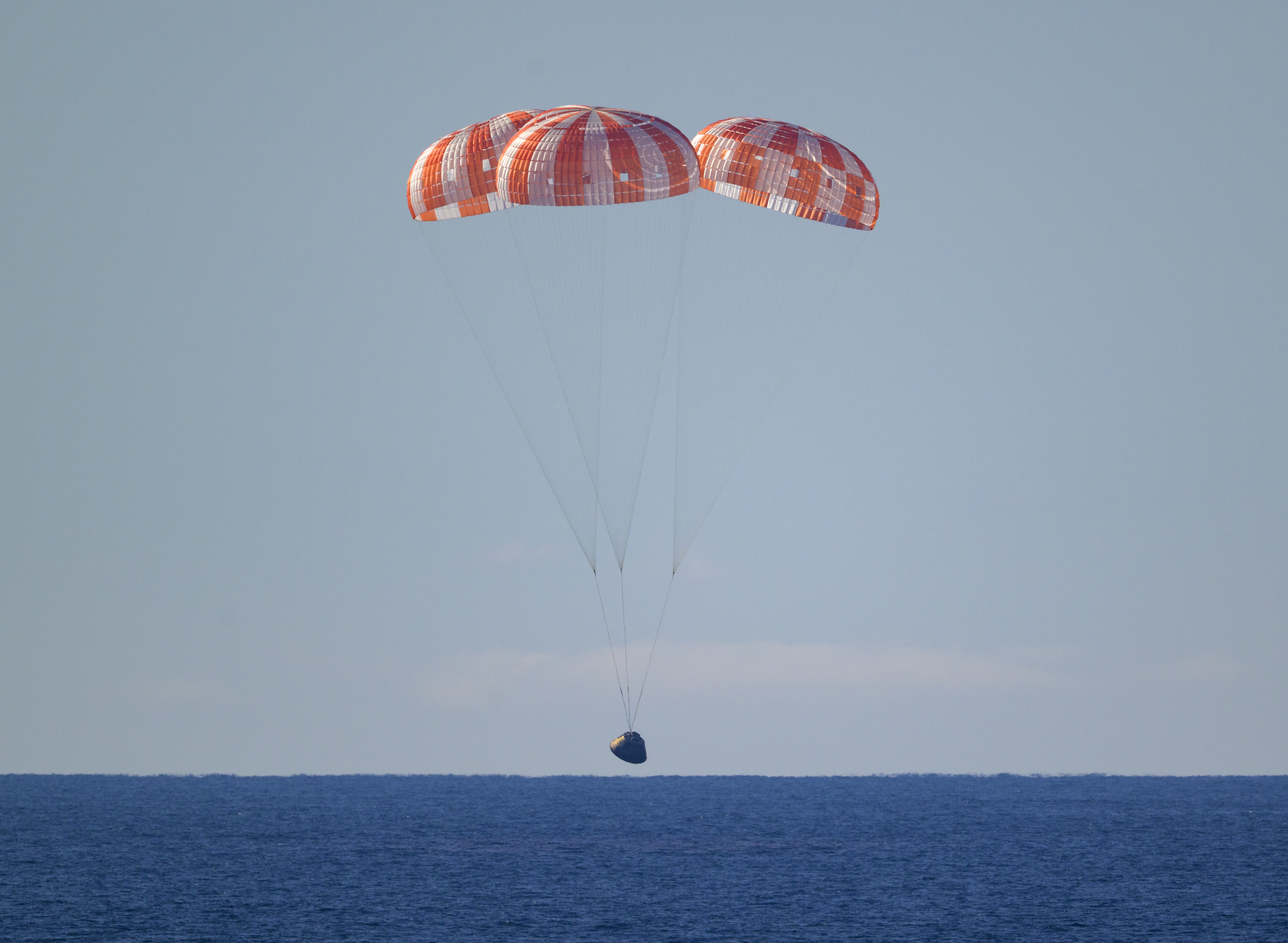
Artemis II Splashes Down Successfully in 2026
The Gist
NASA's Artemis II mission successfully splashed down in the Pacific Ocean on April 10, 2026, after a nearly 10-day mission.
Explain Like I'm Five
"Astronauts in a spaceship (Artemis II) went around the Moon and came back safely to Earth, splashing down in the ocean!"
Deep Intelligence Analysis
The mission's success validates the Orion spacecraft's design and operational capabilities, as well as the effectiveness of the mission control and support infrastructure. The data collected during Artemis II will be crucial for refining future mission plans and mitigating potential risks. The program's long-term goals include establishing a sustainable presence on the Moon and leveraging lunar resources to support deep space exploration. However, the complexity of the Artemis program and its reliance on advanced technologies introduce potential challenges and risks that must be carefully managed to ensure continued success.
*Transparency Disclosure: This analysis was composed by an AI model. While efforts have been made to ensure accuracy, the information should be verified with trusted sources. The AI is continuously learning and improving.*
_Context: This intelligence report was compiled by the DailyOrbitalWire Strategy Engine. Verified for Art. 50 Compliance._
Impact Assessment
The successful splashdown of Artemis II marks a significant milestone in NASA's Artemis program, paving the way for future crewed missions to the Moon and eventually Mars. It demonstrates the progress in deep space exploration capabilities.
Read Full Story on NASA Breaking NewsKey Details
- ● Artemis II splashed down on April 10, 2026, in the Pacific Ocean.
- ● The mission lasted nearly 10 days.
- ● Artemis II surpassed the Apollo 13 record for farthest crewed spaceflight.
- ● The crew captured views of the far side of the Moon.
Optimistic Outlook
Artemis II's success validates the technologies and strategies for future lunar missions. The data and experience gained will accelerate the development of sustainable lunar operations and crewed Mars missions.
Pessimistic Outlook
Delays or complications in subsequent Artemis missions could hinder the long-term goals of lunar exploration and Mars colonization. The program's reliance on complex systems introduces potential points of failure.

The Signal, Not
the Noise|
Get the week's top 1% of space-tech intelligence synthesized into a 5-minute read. Join 25,000+ aerospace insiders.
Unsubscribe anytime. No spam, ever.