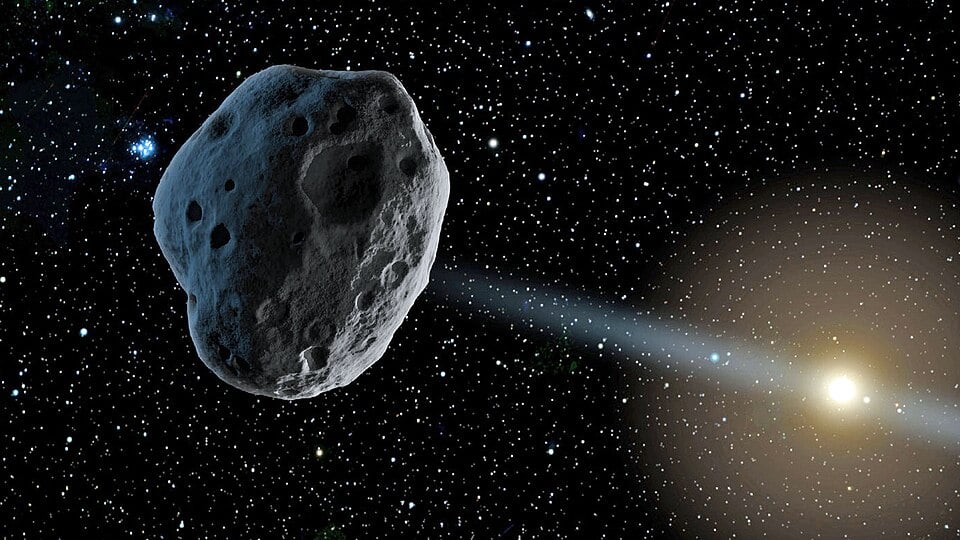
Earth Faces Potential Impacts from Building-Sized Asteroids
The Gist
Earth could be hit by five building-sized asteroids by the end of the century, posing a threat to space infrastructure.
Explain Like I'm Five
"Imagine space rocks the size of buildings hitting Earth! This article talks about how we can find them and protect our satellites."
Deep Intelligence Analysis
Transparency note: This analysis is based solely on the provided article text. Further research and expert consultation would be required for a comprehensive assessment.
_Context: This intelligence report was compiled by the DailyOrbitalWire Strategy Engine. Verified for Art. 50 Compliance._
Impact Assessment
Impacts from these asteroids could disrupt space infrastructure, including satellites used for GPS and communications. In a worst-case scenario, they could trigger Kessler syndrome, potentially locking us out of space access for decades.
Read Full Story on Universe TodayKey Details
- ● Decameter-scale asteroids (10s of meters) impact the Earth-Moon system roughly every couple of decades.
- ● Asteroid 2024 YR4 is between 53 and 67 meters in diameter.
- ● Impact of 2024 YR4 could release an airburst equivalent to 8 to 10 megatons of TNT.
- ● The Vera Rubin Observatory is expected to find up to 10 times more decameter-scale asteroids.
Optimistic Outlook
The Vera Rubin Observatory and other telescopes are improving our ability to detect and track these asteroids. Early detection could allow for mitigation strategies to be developed and deployed, protecting critical space assets.
Pessimistic Outlook
Decameter-scale asteroids are difficult to detect and track, making timely intervention challenging. The potential for disruption of space infrastructure and the risk of Kessler syndrome remain significant concerns.

The Signal, Not
the Noise|
Get the week's top 1% of space-tech intelligence synthesized into a 5-minute read. Join 25,000+ aerospace insiders.
Unsubscribe anytime. No spam, ever.