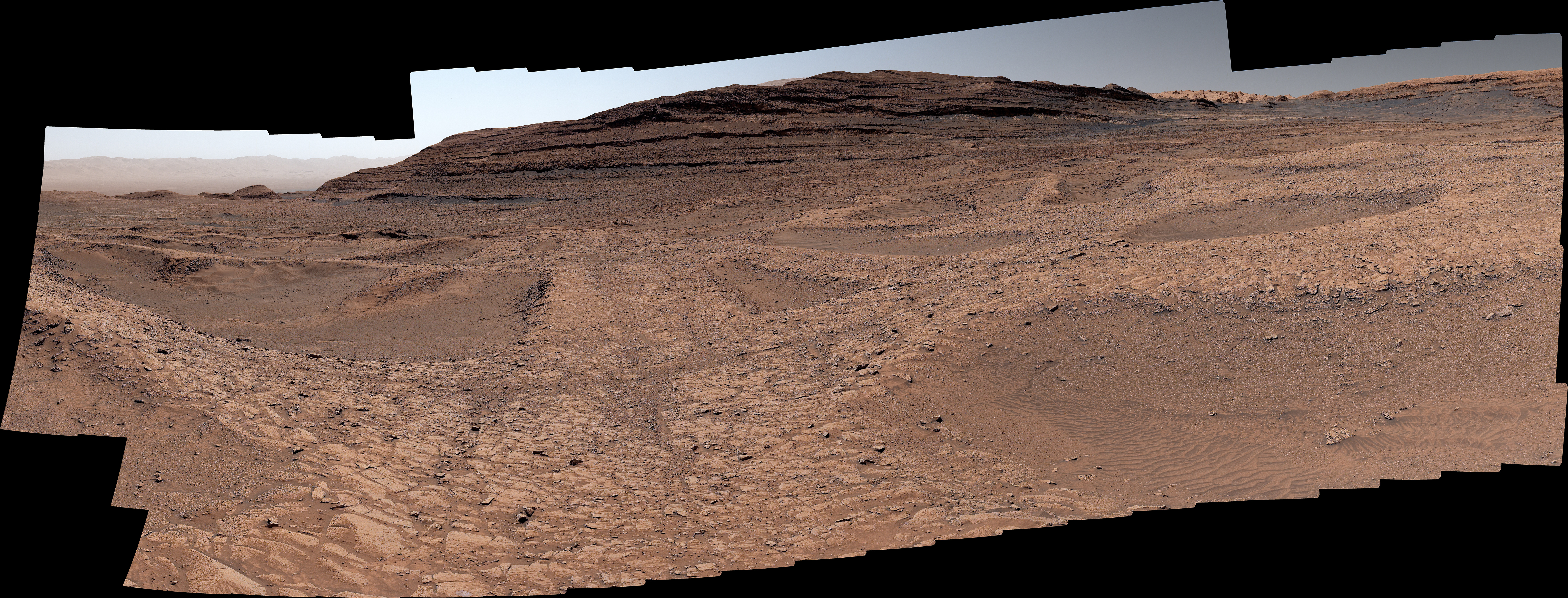
Curiosity Rover Finds Evidence of Prolonged Groundwater Activity on Mars
The Gist
NASA's Curiosity rover discovers that ancient groundwater flowed on Mars later than previously thought, potentially extending the period during which microbial life could have survived.
Explain Like I'm Five
"Imagine Mars used to have underground water like Earth. A robot found some 'spiderwebs' made of rock that show the water stayed around much longer than we thought! This means tiny bugs could have lived there for a longer time too!"
Deep Intelligence Analysis
*Transparency Disclosure: This analysis was conducted by an AI, focusing on factual interpretation of the provided source content. No external data sources were consulted. The AI's reasoning is based solely on the information presented in the article.*
_Context: This intelligence report was compiled by the DailyOrbitalWire Strategy Engine. Verified for Art. 50 Compliance._
Impact Assessment
The discovery of extended groundwater activity on Mars significantly impacts our understanding of the planet's potential for past life. It suggests that habitable conditions may have persisted for a longer duration than previously estimated, influencing future exploration strategies.
Read Full Story on Hacker News SpaceKey Details
- ● Boxwork formations, low ridges 3 to 6 feet tall, suggest ancient groundwater flow.
- ● Curiosity is exploring boxwork formations on Mount Sharp.
- ● Dark lines in orbital imagery are confirmed as fractures where groundwater seeped through.
- ● Nodules, a sign of past groundwater, were found along ridge walls and hollows.
Optimistic Outlook
The presence of extensive boxwork formations and groundwater evidence suggests a more complex and potentially habitable Martian past. Future missions could target these areas to search for biosignatures and further understand the planet's geological history.
Pessimistic Outlook
While the discovery is promising, the exact mechanisms and duration of groundwater activity remain unclear. Further research is needed to determine if these conditions were truly conducive to life and to understand the limitations of Martian habitability.

The Signal, Not
the Noise|
Get the week's top 1% of space-tech intelligence synthesized into a 5-minute read. Join 25,000+ aerospace insiders.
Unsubscribe anytime. No spam, ever.