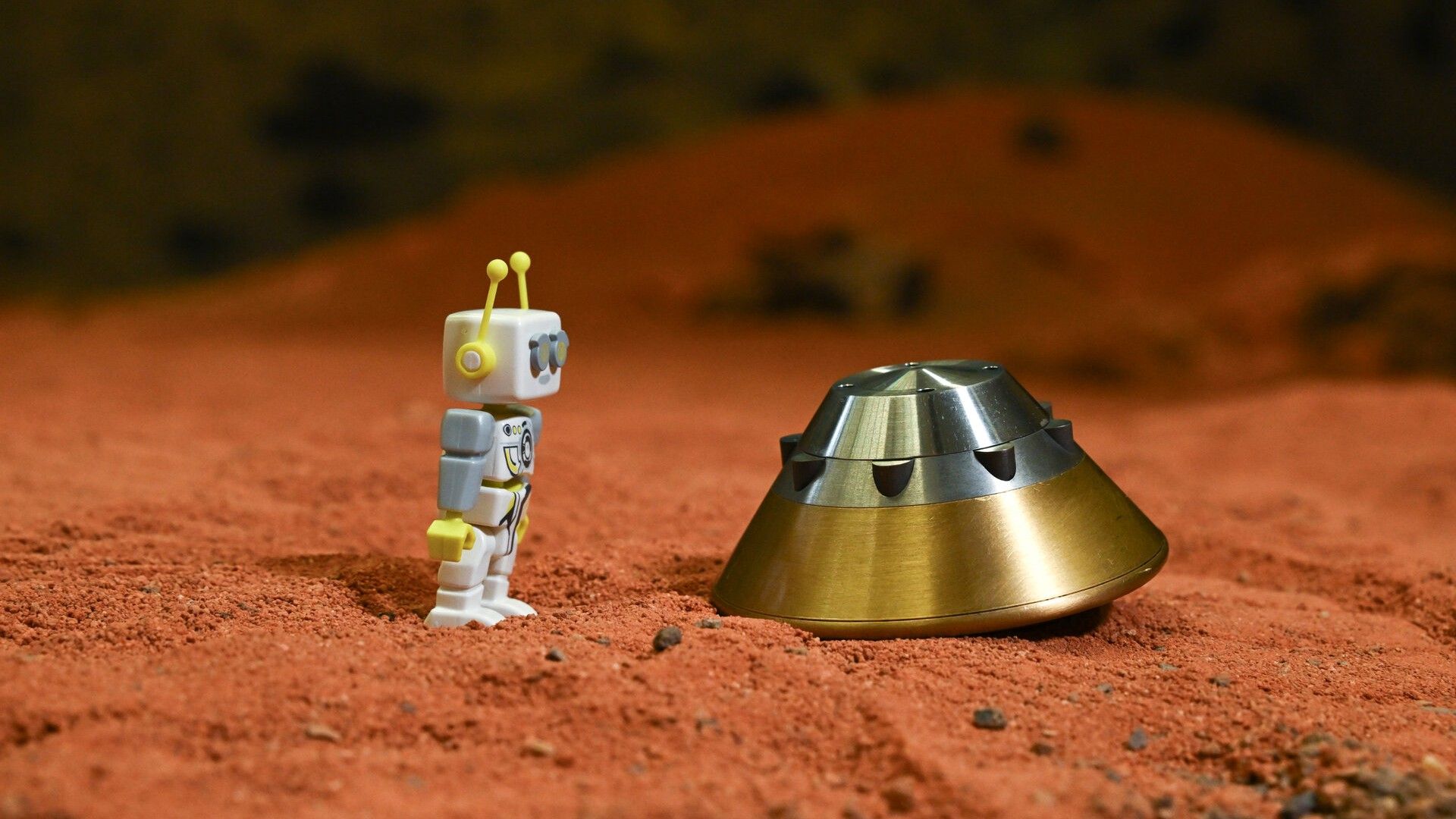
ESA Tests ExoMars Landing Module with Miniature Capsule Launches
The Gist
ESA is rigorously testing its ExoMars landing module using miniature capsules launched at supersonic speeds to simulate Martian atmospheric entry.
Explain Like I'm Five
"Imagine throwing tiny toy cars really, really fast to see if they break before sending a real car to Mars!"
Deep Intelligence Analysis
The use of micro-launches to simulate Martian atmospheric entry is an innovative approach to risk mitigation. The data collected on acceleration, movement, trajectory, and stability provides valuable insights into the challenges of landing on Mars. The ability of these capsules to withstand almost 17,000 g-forces is a testament to the engineering involved and highlights the importance of thorough testing in space exploration.
However, the success of the ExoMars mission hinges on the continued success of these tests and the timely development of the necessary hardware. Any setbacks or unexpected results could lead to delays and increased costs. The mission's ambitious goal of searching for signs of ancient life on Mars underscores the importance of ensuring the EDLM is fully prepared for the challenges of landing on the Red Planet. The data obtained from these tests will be crucial in optimizing the design and increasing the likelihood of a successful mission.
_Context: This intelligence report was compiled by the DailyOrbitalWire Strategy Engine. Verified for Art. 50 Compliance._
Impact Assessment
These tests are crucial for ensuring the EDLM can withstand the harsh conditions of Martian atmospheric entry. Successful landing is essential for the Rosalind Franklin rover's mission to search for signs of ancient life on Mars.
Read Full Story on Space.comKey Details
- ● ESA launched 20 miniature capsules to test the Entry Descent and Landing Module (EDLM) for the ExoMars mission.
- ● The 3-inch wide capsules were shot out of a bore gun at over 2,600 mph (4,200 kph).
- ● The capsules experienced almost 17,000 g-forces of acceleration during the tests.
- ● The ExoMars mission aims to launch in 2028 and will carry the Rosalind Franklin rover to Mars.
Optimistic Outlook
The successful completion of these tests increases the likelihood of a successful ExoMars mission in 2028. The data gathered will refine the EDLM design, improving its chances of safely delivering the Rosalind Franklin rover to the Martian surface.
Pessimistic Outlook
Any failures or unexpected data from these tests could delay the ExoMars mission. Further testing and design modifications would be required, potentially pushing the launch date beyond 2028 and increasing mission costs.

The Signal, Not
the Noise|
Get the week's top 1% of space-tech intelligence synthesized into a 5-minute read. Join 25,000+ aerospace insiders.
Unsubscribe anytime. No spam, ever.