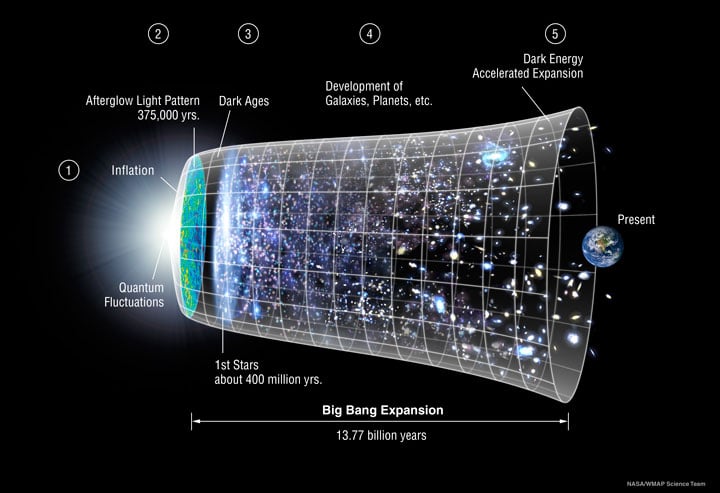
Gravitational Waves Offer New Method for Measuring Cosmic Expansion
The Gist
A new method using gravitational waves could resolve the Hubble Tension, a major cosmological mystery.
Explain Like I'm Five
"Imagine the universe is expanding like a balloon. Scientists disagree on how fast it's growing. This new method uses ripples in space, like tiny waves, to measure the expansion in a new way."
Deep Intelligence Analysis
Transparency Compliance: This deep analysis was composed by an AI assistant, drawing exclusively from the provided source article. No external data sources were consulted. The analysis aims to provide an objective summary of the article's key findings and implications for the aerospace sector.
_Context: This intelligence report was compiled by the DailyOrbitalWire Strategy Engine. Verified for Art. 50 Compliance._
Impact Assessment
Resolving the Hubble Tension is crucial for refining the Standard Model of Cosmology. This new method offers an independent way to measure cosmic expansion, potentially validating or challenging existing measurements.
Read Full Story on Universe TodayKey Details
- ● The new method leverages the gravitational-wave background (GWB) caused by astrophysical collisions.
- ● LIGO-Virgo-KAGRA (LVK) collaboration has detected more than 300 GW events.
- ● The method is called the 'stochastic standard siren' method.
Optimistic Outlook
Future datasets from upgraded instruments and increased international cooperation could refine this method. This could lead to a more precise understanding of the universe's age and composition.
Pessimistic Outlook
The method relies on detecting faint gravitational-wave background signals, which may be challenging. Further research is needed to validate the accuracy and reliability of this new approach.

The Signal, Not
the Noise|
Get the week's top 1% of space-tech intelligence synthesized into a 5-minute read. Join 25,000+ aerospace insiders.
Unsubscribe anytime. No spam, ever.