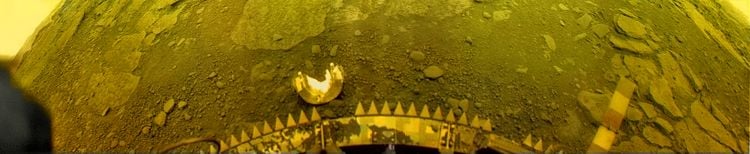
KYTHERA Mission Concept Aims for 200-Day Venus Surface Operation
The Gist
Researchers propose a lander, KYTHERA, designed for a 200-day mission on Venus, significantly exceeding previous mission durations.
Explain Like I'm Five
"Venus is super hot and squishy, like being deep underwater on Earth, but much worse! Scientists want to build a robot that can live there for almost a year to learn more about it."
Deep Intelligence Analysis
The success of KYTHERA hinges on advancements in materials science, thermal management, and power generation. The Delft High-P/T Laboratory for Planetary Materials will play a crucial role in evaluating the performance and feasibility of instrumentation and materials under Venus' harsh surface environment. The mission's timeline, targeting a launch window between 2035 and 2037, provides ample time for technology development and risk mitigation.
From a market perspective, KYTHERA could stimulate innovation in extreme environment technologies, benefiting the space startup ecosystem and driving demand for specialized components and services. The mission's reliance on radioisotope power systems could also spur advancements in nuclear power for space applications. However, the high cost and technical risks associated with Venus surface missions could limit the number of similar projects in the near future.
_Context: This intelligence report was compiled by the DailyOrbitalWire Strategy Engine. Verified for Art. 50 Compliance._
Impact Assessment
A long-duration Venus lander could provide unprecedented insights into the planet's geology, atmosphere, and evolution. Overcoming the extreme conditions on Venus is a significant engineering challenge with potential applications for other harsh environments.
Read Full Story on Universe TodayKey Details
- ● KYTHERA aims for a 200-day Venus surface mission.
- ● The mission is proposed for 2035-2037.
- ● Landing sites considered are Lakshmi Planum and Lada Terra.
- ● Power will be supplied by radioisotope systems.
Optimistic Outlook
If successful, KYTHERA could revolutionize our understanding of Venus, potentially revealing active volcanism and seismic activity. The mission could also validate new technologies for extreme environment exploration, benefiting future planetary missions.
Pessimistic Outlook
The extreme temperatures and pressures on Venus pose significant engineering hurdles, and past missions have had very short lifespans. The 2035-2037 timeframe depends on funding and technological advancements in cooling and power systems.

The Signal, Not
the Noise|
Get the week's top 1% of space-tech intelligence synthesized into a 5-minute read. Join 25,000+ aerospace insiders.
Unsubscribe anytime. No spam, ever.