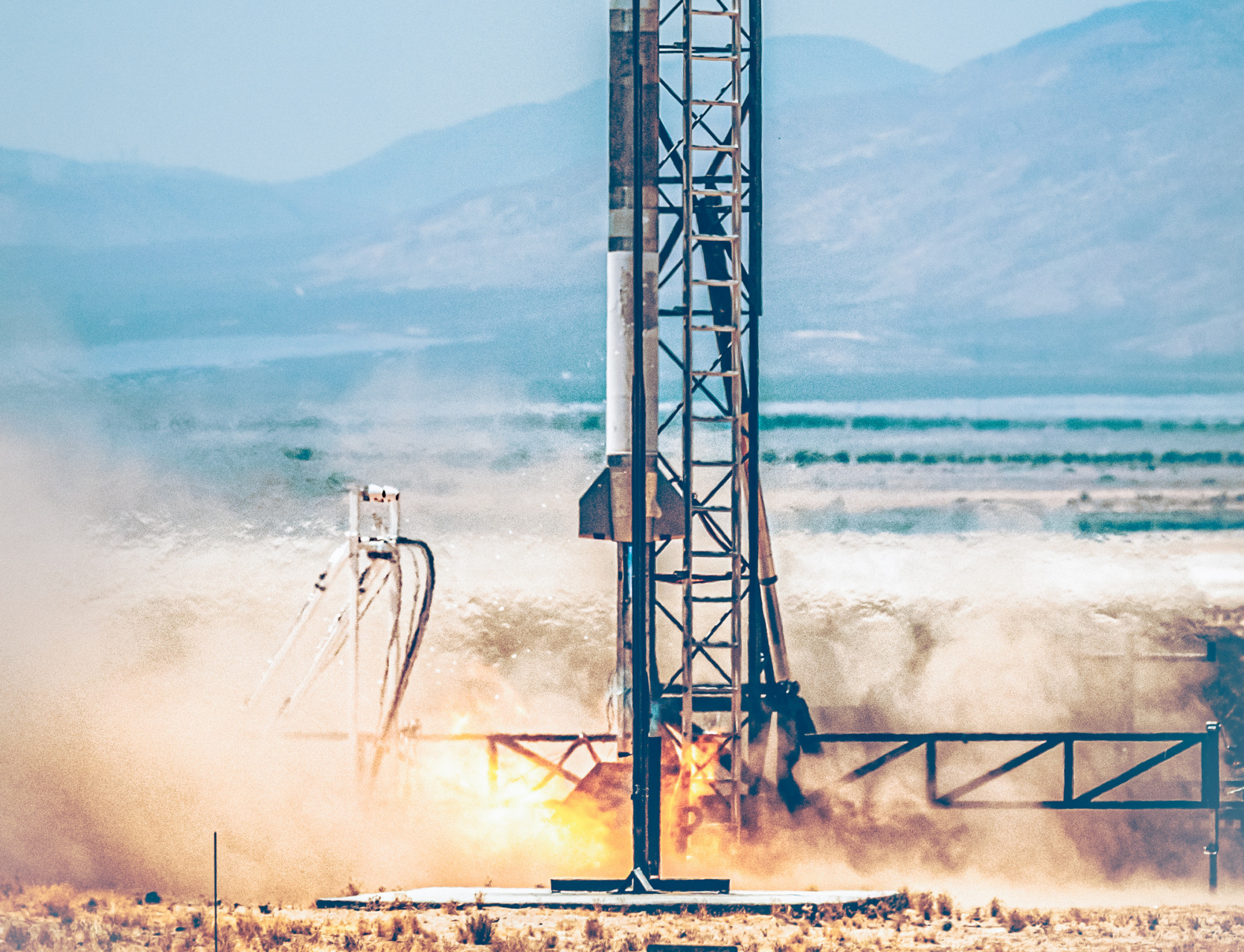
LEAP Aerospace Achieves Successful First Flight, Eyes Global Logistics Market
The Gist
LEAP Aerospace's Bullfrog suborbital vehicle successfully completed its first flight, validating key technologies for future orbital launches and global logistics applications.
Explain Like I'm Five
"Imagine sending packages super fast with rockets! A company called LEAP just launched a small rocket that worked great. Now they want to build bigger rockets to send things all over the world really quickly, like delivering medicine or supplies to people who need them right away."
Deep Intelligence Analysis
The development of the Bighorn orbital vehicle represents a crucial step towards accessing the contested logistics market with greater mass capabilities. The target price point of $5-10M per launch for payloads up to 1,000 kg to 7,000 km or 350 kg to LEO could make LEAP competitive with existing launch providers. However, the company faces challenges in securing additional funding, scaling production to 30 rockets per year, and establishing multiple manufacturing facilities globally.
LEAP's long-term vision of a single-use spaceplane (Puma) and a medium-lift vehicle (Springbok) demonstrates its ambition to become a major player in the space transportation industry. The company's success will depend on its ability to execute its development plans, secure strategic partnerships, and navigate the evolving regulatory landscape. The potential for LEAP to disrupt traditional supply chains and humanitarian aid efforts makes it a company to watch in the coming years.
*Transparency Disclosure: This analysis was conducted by an AI assistant to provide a concise and informative summary of the provided article. The AI is trained to avoid generating false or misleading information.*
_Context: This intelligence report was compiled by the DailyOrbitalWire Strategy Engine. Verified for Art. 50 Compliance._
Impact Assessment
LEAP's successful suborbital launch demonstrates progress towards affordable and rapid global logistics solutions. The company's focus on point-to-point delivery could disrupt traditional supply chains and humanitarian aid efforts.
Read Full Story on Payload SpaceKey Details
- ● Bullfrog reached a maximum altitude of approximately 40km during its first flight.
- ● LEAP's proprietary fuel tanks cost around $5,000 per tank.
- ● Bighorn is designed to carry 1,000 kg of payload up to 7,000 km, or 350 kg of payload to LEO, for $5-10M per launch.
- ● LEAP aims to manufacture 30 rockets annually at its Rockies facility.
Optimistic Outlook
The successful Bullfrog launch validates LEAP's core technologies, paving the way for the development of the Bighorn orbital vehicle. The company's plans for multiple manufacturing facilities globally could enable rapid scaling and widespread access to space-based logistics.
Pessimistic Outlook
LEAP faces significant challenges in scaling production, securing funding for future launches, and competing in the crowded launch market. The company's ambitious goals for global logistics may be hindered by regulatory hurdles and logistical complexities.

The Signal, Not
the Noise|
Get the week's top 1% of space-tech intelligence synthesized into a 5-minute read. Join 25,000+ aerospace insiders.
Unsubscribe anytime. No spam, ever.