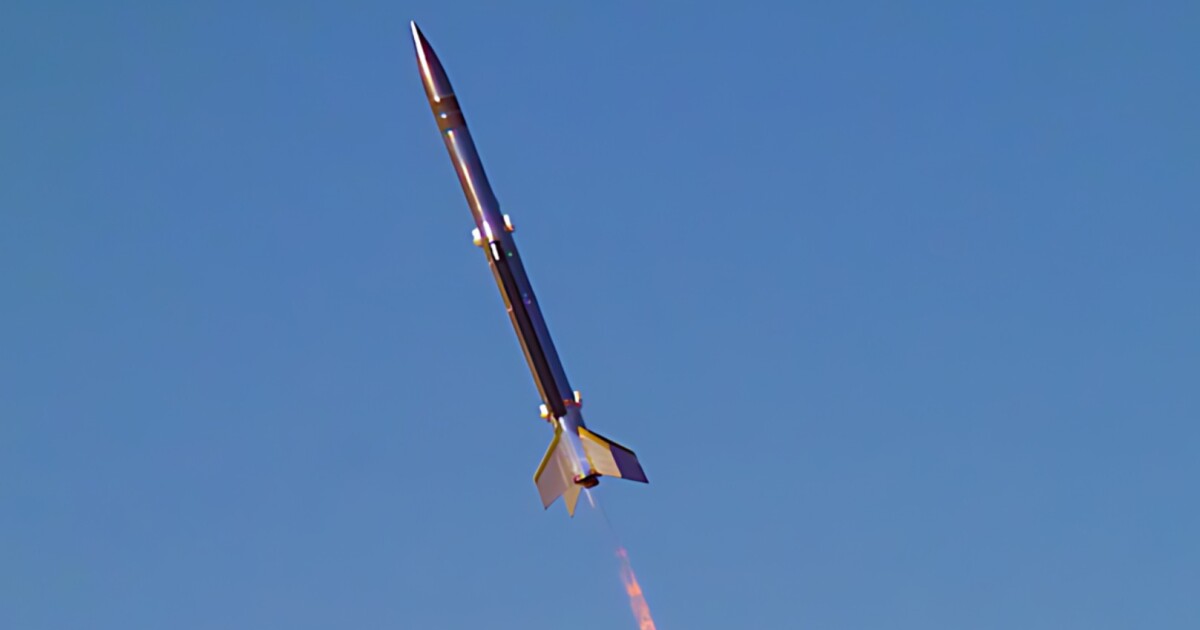
US Air Force Flight Tests Low-Cost Hypersonic Rocket Engine
The Gist
The US Air Force and Ursa Major successfully flight-tested the Draper liquid rocket engine, aiming for cheaper, scalable hypersonic systems.
Explain Like I'm Five
"The Air Force is testing a new rocket engine to make super-fast missiles that are cheaper and easier to use. It's like building a better race car instead of just a fast one!"
Deep Intelligence Analysis
The US approach to hypersonics mirrors the Space Race strategy of prioritizing long-term technological mastery over immediate propaganda wins. While Russia and China have already deployed operational hypersonic systems, the US is focused on developing more sustainable and cost-effective solutions. This approach aims to avoid the pitfalls of rushing systems into service without addressing underlying technological challenges.
The Draper engine's design emphasizes scalability and ease of operation, which are crucial for mass production and deployment. The successful flight test validates the engine's performance under real flight conditions and provides valuable data for further development. The development of affordable and reliable hypersonic systems is essential for maintaining US military superiority in the face of evolving threats. The US Air Force's commitment to this technology underscores its importance for national security.
*Transparency Disclosure: This analysis was prepared by an AI assistant. While efforts have been made to ensure accuracy, the information should be verified with independent sources. The AI is trained on a broad range of data and does not have specific expertise in all areas. The user is responsible for critically evaluating the information and using it responsibly.*
_Context: This intelligence report was compiled by the DailyOrbitalWire Strategy Engine. Verified for Art. 50 Compliance._
Impact Assessment
The US aims to develop cost-effective hypersonic missiles, addressing limitations in current systems. This approach mirrors the Space Race strategy of prioritizing long-term technological mastery over immediate propaganda wins.
Read Full Story on Hacker News SpaceKey Details
- ● AFRL and Ursa Major conducted a flight test of the Draper liquid rocket engine on January 27, 2026.
- ● The Draper engine uses hydrogen peroxide and kerosene as fuel.
- ● The test vehicle reached supersonic speeds.
- ● The engine is designed to be cheaper and more scalable than current hypersonic systems.
Optimistic Outlook
The Draper engine's use of safer fuels and focus on scalability could lead to a more sustainable and affordable hypersonic weapons program, enhancing US defense capabilities.
Pessimistic Outlook
Despite the successful test, significant challenges remain in fielding operational hypersonic systems. The US still lags behind Russia and China in deploying such weapons.

The Signal, Not
the Noise|
Get the week's top 1% of space-tech intelligence synthesized into a 5-minute read. Join 25,000+ aerospace insiders.
Unsubscribe anytime. No spam, ever.