BREAKING: Awaiting the latest intelligence wire...
Back to Wire
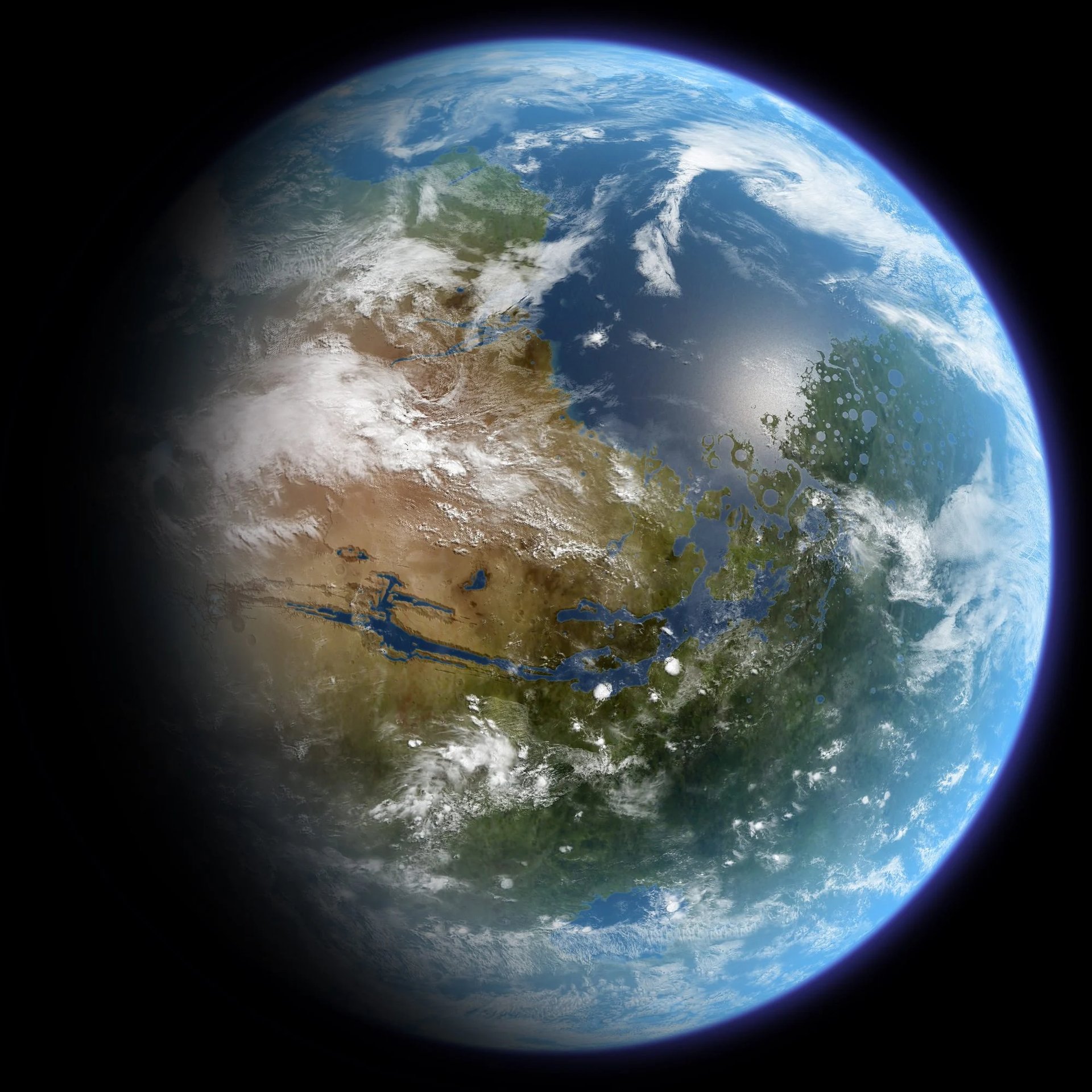
Roadmap for Mars Terraforming Explores Feasibility and Risks
Habitats & ISRU

Roadmap for Mars Terraforming Explores Feasibility and Risks

Source: Universe Today Original Author: Andy Tomaswick Intelligence Analysis by Gemini

The Gist

A new scientific paper examines the feasibility of terraforming Mars in three stages, focusing on technological challenges and potential environmental impacts.

Explain Like I'm Five

"Imagine turning Mars into a second Earth! Scientists are thinking about using giant mirrors and special dust to warm it up, but it's super tricky and might change Mars in ways we don't expect."

Deep Intelligence Analysis

The paper by Edwin Kite et al. presents a roadmap for terraforming Mars, outlining a three-stage process involving greenhouses, solar energy concentration, and engineered aerosols. The initial stage focuses on creating localized, warm oases using advanced materials like silica aerogel to trap heat and melt subsurface ice. Scaling this up to a planet-wide "World House" presents significant engineering challenges. The second stage involves using massive solar sails as orbital mirrors to direct additional sunlight onto the planet, particularly to sublimate CO2 deposits at the Martian South Pole, thickening the atmosphere. However, the current weight of solar sail technology is a major obstacle, requiring a significant reduction in mass. The third stage proposes using engineered aerosols, such as aluminum nanorods or nitrogen-doped graphene, to raise Mars' temperature. The effectiveness and environmental impact of this approach are still largely unknown. The roadmap highlights the technological and logistical complexities of terraforming Mars, emphasizing the need for further research and development in materials science, nanotechnology, and planetary engineering. The ethical considerations surrounding the modification of another planet's environment also warrant careful consideration. The economic viability of such a large-scale project remains a significant question, requiring a cost-benefit analysis that accounts for both the potential benefits and risks. The long-term sustainability of a terraformed Mars is also a concern, as ongoing maintenance and adjustments may be necessary to maintain a habitable environment. The success of any terraforming effort will depend on a combination of technological innovation, careful planning, and a thorough understanding of the Martian environment.

_Context: This intelligence report was compiled by the DailyOrbitalWire Strategy Engine. Verified for Art. 50 Compliance._

Impact Assessment

Terraforming Mars could open up new possibilities for human colonization and resource utilization. However, the environmental consequences and technological hurdles are significant and require careful consideration.

Read Full Story on Universe Today

Key Details

  • The paper proposes a three-stage process for terraforming Mars: building greenhouses, concentrating solar energy, and using engineered aerosols.
  • Solar sails would need to weigh less than 20 grams per square meter to be economically viable for warming the planet.
  • The third stage involves manufacturing and releasing millions of tons of nanoparticles, like aluminum nanorods, into the Martian atmosphere.

Optimistic Outlook

Advancements in materials science and nanotechnology could make terraforming technologies more feasible. Successful implementation could create habitable environments on Mars, expanding humanity's reach.

Pessimistic Outlook

The environmental impact of terraforming is uncertain, and unintended consequences could arise. The economic and logistical challenges are immense, potentially making the project unsustainable.

DailyOrbitalWire Logo

The Signal, Not
the Noise|

Get the week's top 1% of space-tech intelligence synthesized into a 5-minute read. Join 25,000+ aerospace insiders.

Unsubscribe anytime. No spam, ever.

```