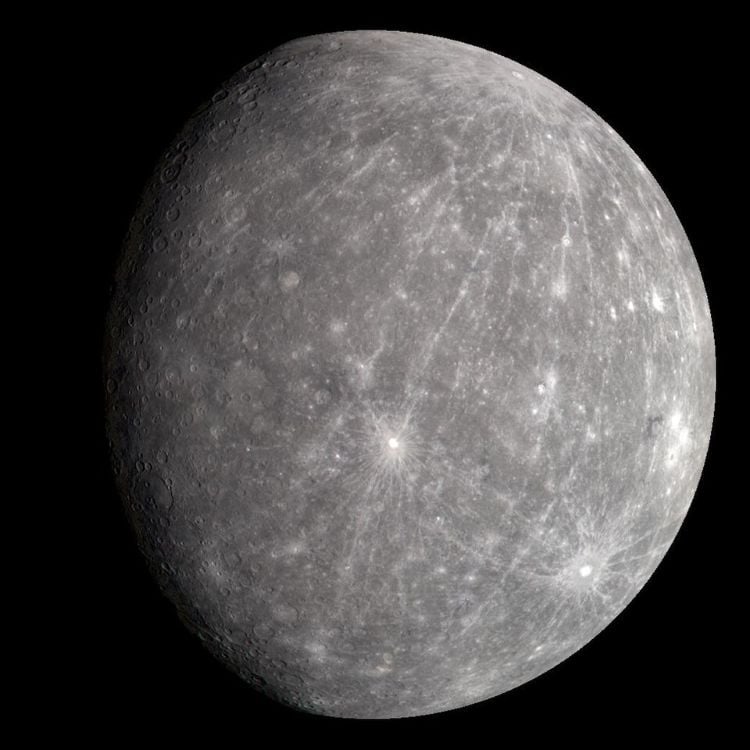
Mercury Scout Mission Concept Explores Solar Sail Propulsion
The Gist
Mercury Scout, a Discovery-class mission concept, proposes using solar sails for fuel-free Mercury exploration, potentially reducing mission costs.
Explain Like I'm Five
"Imagine using a giant sail to catch sunlight and push a spaceship to Mercury without needing any fuel! That's what Mercury Scout wants to do!"
Deep Intelligence Analysis
The mission's emphasis on high-resolution geological imaging using a narrow-angle camera (NAC) aligns with key scientific objectives, including understanding Mercury's crustal history and geological activity. The planned elliptical orbit is crucial for managing the extreme heat environment, but also presents engineering challenges in terms of maintaining stable communication and data acquisition.
The success of Mercury Scout hinges on the reliable deployment and operation of the solar sail, as well as the spacecraft's ability to withstand the harsh thermal conditions. The recent issues encountered by NASA's ACS3 mission highlight the inherent risks associated with this technology, underscoring the need for rigorous testing and validation. If successful, Mercury Scout could not only provide valuable scientific data about Mercury but also demonstrate the viability of solar sail propulsion for future deep-space missions. This could significantly impact the design and cost of future missions to other challenging destinations in the solar system.
Transparency Footnote: This analysis was generated by an AI model and reviewed by a human expert. While efforts have been made to ensure accuracy and objectivity, the analysis should be considered as informational and not definitive. Market analysis is speculative and based on current data.
_Context: This intelligence report was compiled by the DailyOrbitalWire Strategy Engine. Verified for Art. 50 Compliance._
Impact Assessment
Solar sail propulsion offers a potentially cost-effective and fuel-free method for exploring Mercury, a challenging destination due to the Sun's gravity. The Mercury Scout mission could provide valuable insights into Mercury's crustal history and geological activity.
Read Full Story on Universe TodayKey Details
- ● Mercury Scout is a proposed Discovery-class mission concept utilizing solar sail propulsion.
- ● The mission aims to conduct geological imaging of Mercury using a narrow-angle camera (NAC) with a resolution of up to 1 meter per pixel.
- ● Mercury Scout will employ a highly elliptical orbit ranging from 200 km to 10,000 km from Mercury's surface for heat control.
- ● Solar sail propulsion could prolong spacecraft lifetime due to reduced components and smaller spacecraft size.
Optimistic Outlook
Successful implementation of solar sail technology on Mercury Scout could pave the way for more affordable and sustainable deep-space missions. The mission's high-resolution imaging capabilities promise to significantly enhance our understanding of Mercury's geology and evolution.
Pessimistic Outlook
The tumbling experienced by NASA's ACS3 mission raises concerns about the reliability of solar sail technology in space. The extreme heat near Mercury poses a significant challenge to spacecraft components, potentially limiting the mission's lifespan and data collection.

The Signal, Not
the Noise|
Get the week's top 1% of space-tech intelligence synthesized into a 5-minute read. Join 25,000+ aerospace insiders.
Unsubscribe anytime. No spam, ever.