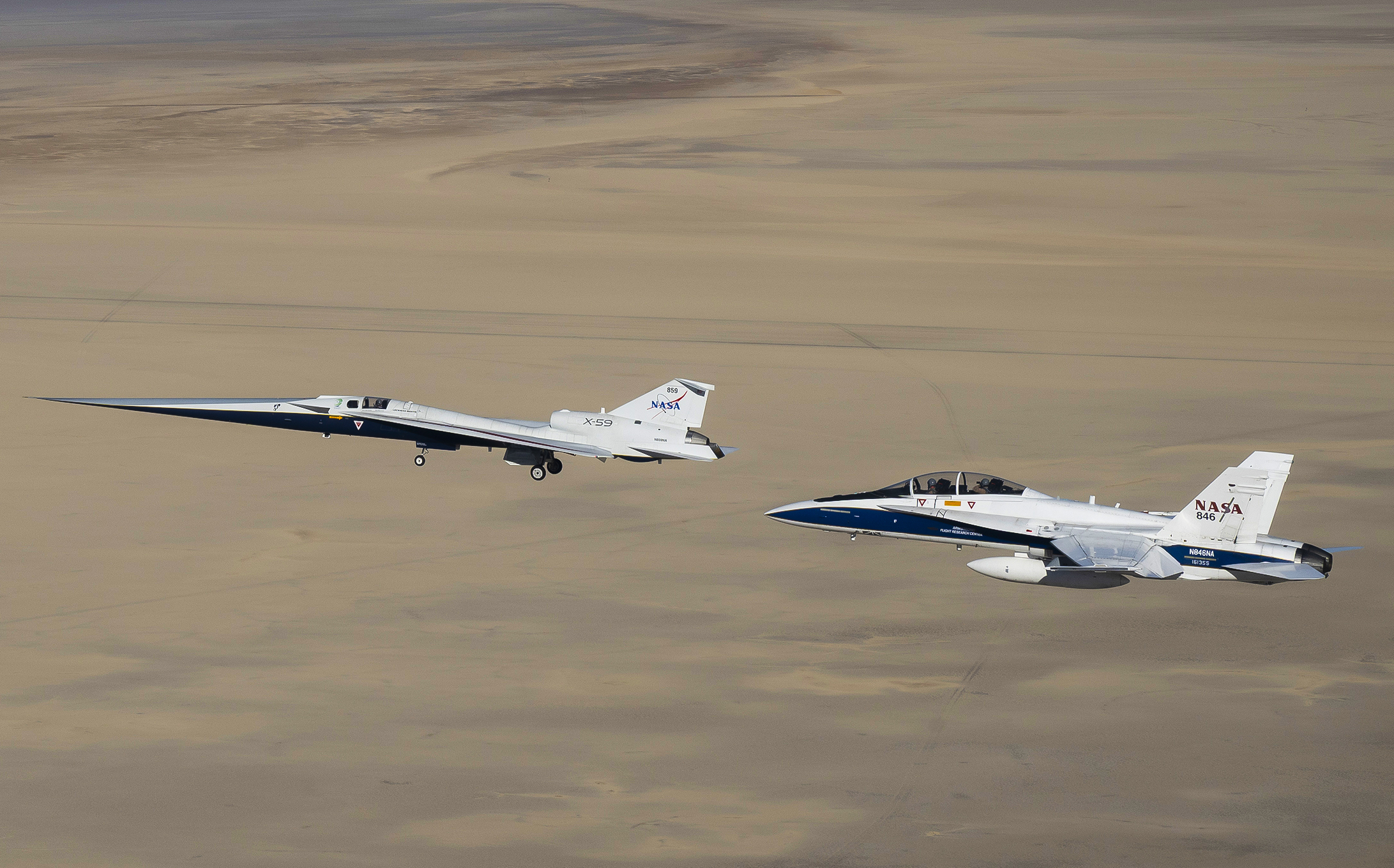
NASA Armstrong Expands Flight Research Capabilities
The Gist
NASA Armstrong Flight Research Center adds new aircraft to support aerospace research and airborne science missions.
Explain Like I'm Five
"NASA Armstrong is like a playground for airplanes! They test new planes and fly special missions to learn about our planet!"
Deep Intelligence Analysis
_Context: This intelligence report was compiled by the DailyOrbitalWire Strategy Engine. Verified for Art. 50 Compliance._
Impact Assessment
NASA Armstrong's expanded fleet enhances its ability to support cutting-edge aerospace research and critical airborne science missions. The center's unique capabilities contribute to advancements in aviation and environmental monitoring.
Read Full Story on NASA AeronauticsKey Details
- ● NASA Armstrong added two F-15s, a Pilatus PC-12, and a T-34 turboprop trainer this year.
- ● The center is located on Rogers Dry Lake, a 44-square-mile area used for aviation research.
- ● NASA Armstrong played a key role in the first supersonic flight with the Bell X-1.
- ● The center supports airborne science missions, collecting data on air pollution and glacier melt.
Optimistic Outlook
Continued investment in flight research at NASA Armstrong could lead to breakthroughs in aircraft design and performance. Airborne science missions provide valuable data for understanding and addressing environmental challenges.
Pessimistic Outlook
Budget constraints could limit the scope of flight research activities. The aging infrastructure at the center may require significant upgrades.

The Signal, Not
the Noise|
Get the week's top 1% of space-tech intelligence synthesized into a 5-minute read. Join 25,000+ aerospace insiders.
Unsubscribe anytime. No spam, ever.