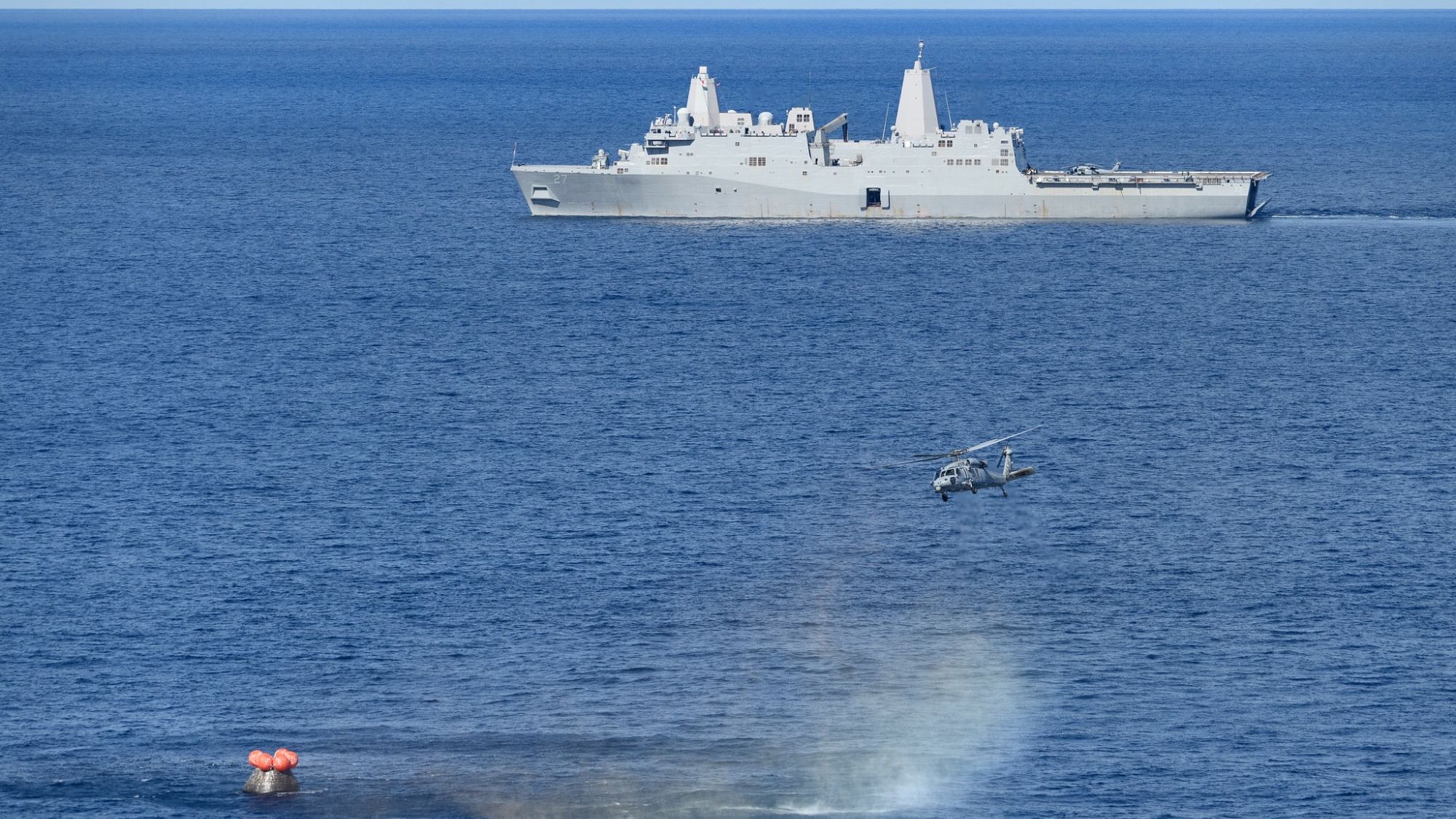
NASA's Artemis 2 Mission Splashes Down Near San Diego
The Gist
Artemis 2 successfully splashed down near San Diego, chosen for its predictable conditions and naval support.
Explain Like I'm Five
"The spaceship landed in the ocean near a big Navy base because it's safe and easy for the Navy to help the astronauts get back home!"
Deep Intelligence Analysis
Transparency: This analysis was generated by an AI model to provide an objective assessment of the provided news article. The AI model has been trained to avoid bias and provide factual information. However, as with any AI model, there is a possibility of errors or omissions. The user is advised to verify the information with other sources before making any decisions based on this analysis.
_Context: This intelligence report was compiled by the DailyOrbitalWire Strategy Engine. Verified for Art. 50 Compliance._
Impact Assessment
The selection of the San Diego area highlights the importance of logistical support and predictable conditions for crewed space missions. The collaboration between NASA and the U.S. Navy is crucial for safe and efficient astronaut recovery.
Read Full Story on Space.comKey Details
- ● Splashdown occurred at 8:07 p.m. EDT (0007 GMT on April 11) in the Pacific Ocean.
- ● The landing site was near San Diego due to the presence of Naval Base San Diego.
- ● The USS John Murtha recovered the Artemis 2 astronauts.
- ● Orion traveled nearly 24,000 mph (38,620 kph) upon atmospheric entry.
Optimistic Outlook
Future Artemis missions can leverage the established infrastructure and expertise in the San Diego area. This streamlined recovery process can reduce risks and improve the overall efficiency of lunar missions.
Pessimistic Outlook
Reliance on a specific location for splashdown could create vulnerabilities in case of unforeseen circumstances. Weather conditions or geopolitical events could disrupt recovery operations.

The Signal, Not
the Noise|
Get the week's top 1% of space-tech intelligence synthesized into a 5-minute read. Join 25,000+ aerospace insiders.
Unsubscribe anytime. No spam, ever.