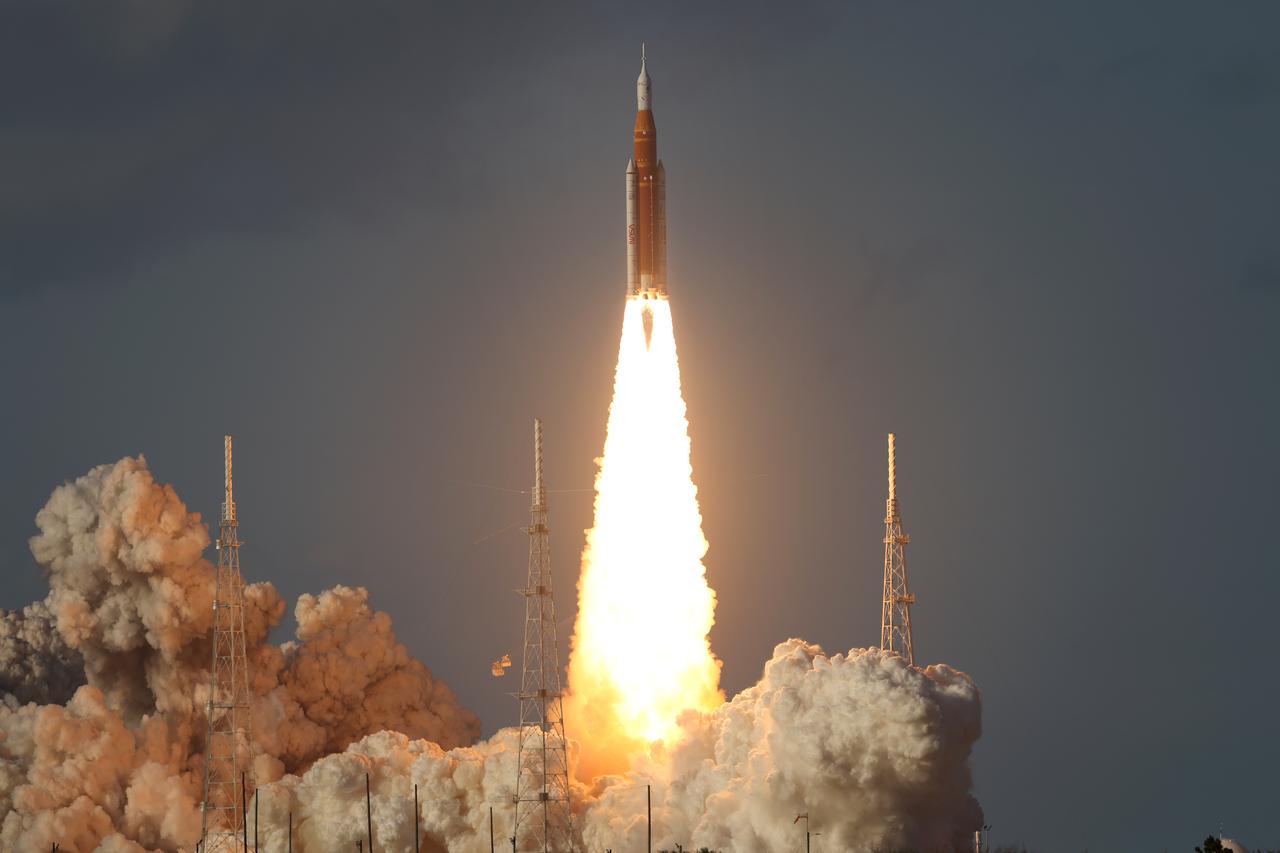
NASA Outlines Artemis III Mission Plan for 2027
The Gist
Artemis III, slated for 2027, will focus on in-LEO testing of lunar landing systems and spacecraft capabilities.
Explain Like I'm Five
"Imagine NASA is practicing for a trip to the Moon by playing in Earth's backyard first! They'll test their spaceship and how to dock with other spaceships before the real adventure."
Deep Intelligence Analysis
The mission architecture involves launching the Orion spacecraft via the Space Launch System (SLS), carrying four astronauts and a 'spacer' element to simulate a lunar-bound upper stage. Once in LEO, Orion's European Service Module will provide propulsion for orbital maneuvers. A significant portion of the mission will be dedicated to testing Orion's life support systems over an extended period, exceeding the duration of Artemis II. NASA also plans to evaluate an upgraded heat shield designed to accommodate a wider range of reentry profiles, enhancing mission safety and flexibility.
Artemis III also highlights NASA's increasing reliance on commercial partnerships. The agency is actively seeking partners to provide communication capabilities, given the mission's limited access to the Deep Space Network. Furthermore, NASA is soliciting proposals for CubeSat deployments in LEO, expanding the scope of scientific investigations during the mission. The success of Artemis III hinges on the seamless integration of these commercial elements and the thorough validation of critical technologies, paving the way for a sustainable lunar presence.
*Transparency Disclosure: This analysis was composed by an AI model. While efforts have been made to ensure accuracy and objectivity, the content should be critically evaluated and cross-referenced with original sources.*
_Context: This intelligence report was compiled by the DailyOrbitalWire Strategy Engine. Verified for Art. 50 Compliance._
Impact Assessment
Artemis III is crucial for integrating commercial partners like SpaceX and Blue Origin into NASA's lunar program. Testing docking procedures and life support systems in LEO will de-risk the 2028 Moon landing.
Read Full Story on Payload SpaceKey Details
- ● Artemis III is planned for 2027 and will bring astronauts to LEO.
- ● The mission will test capabilities needed for the 2028 Moon landing.
- ● Orion's European Service Module will provide propulsion in LEO.
- ● NASA will test an upgraded heat shield designed for a wider range of reentry profiles.
Optimistic Outlook
Successful integration of commercial landers and thorough testing of Orion's systems in LEO could accelerate the timeline for future lunar missions. The upgraded heat shield will enhance mission flexibility and safety.
Pessimistic Outlook
Delays in commercial lander development or unforeseen issues with Orion's systems could push back the 2028 Moon landing. Dependence on multiple partners introduces potential points of failure.

The Signal, Not
the Noise|
Get the week's top 1% of space-tech intelligence synthesized into a 5-minute read. Join 25,000+ aerospace insiders.
Unsubscribe anytime. No spam, ever.