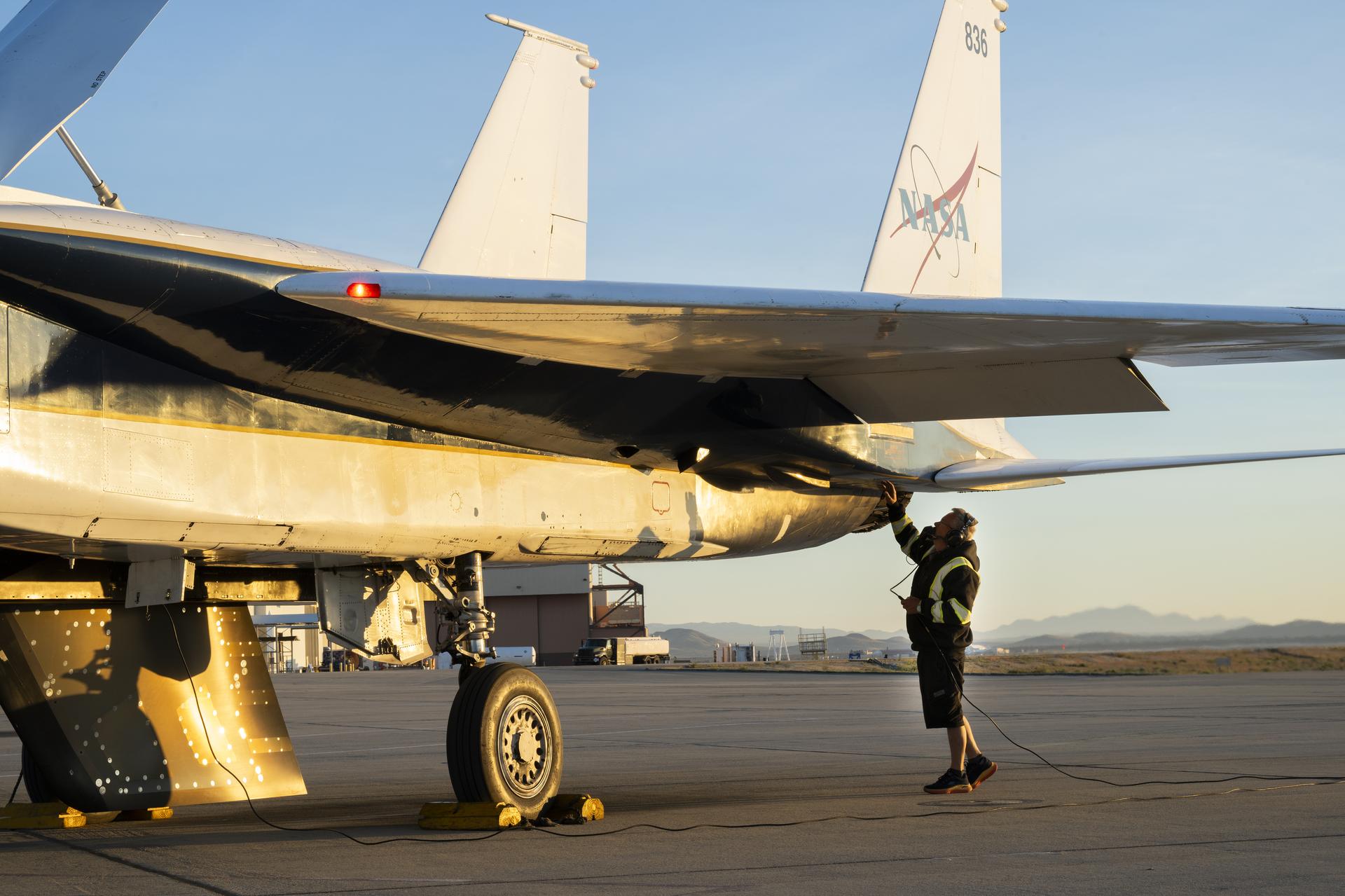
NASA Ground Crews Ensure Aircraft Readiness for Missions
The Gist
NASA's Armstrong Flight Research Center relies on skilled ground crews to maintain aircraft readiness.
Explain Like I'm Five
"NASA has special airplane doctors who make sure the planes are always ready to fly and do important science missions!"
Deep Intelligence Analysis
The maintenance crews' responsibilities encompass a wide range of tasks, from checking ejection seats and fuel levels to replacing brakes, wheels, wiring, and hardware. These components can degrade with each flight, necessitating continuous monitoring and maintenance. The crews work continuously to ensure NASA can make aeronautics and science advancements safely. On any given day, multiple NASA Armstrong aircraft may be in the air, supporting various missions, such as science research, chase plane operations, and rocket launches.
The maintenance teams consist of mechanics with both military and civilian backgrounds, and the job involves extensive on-the-job training. Each aircraft has a dedicated crew chief responsible for its integrity, along with avionics technicians, quality assurance personnel, and additional mechanics. After the maintenance crew ensures the aircraft is in optimal condition, the team tows it to the flightline, where the NASA pilot conducts a final safety check with the crew chief before flight.
*Transparency: This analysis was conducted by an AI, focusing on factual information and avoiding subjective opinions. The AI has no conflicts of interest.*
_Context: This intelligence report was compiled by the DailyOrbitalWire Strategy Engine. Verified for Art. 50 Compliance._
Impact Assessment
The readiness of NASA's aircraft is crucial for supporting high-speed research, science campaigns, and rocket launches. Dedicated maintenance ensures mission success and safety.
Read Full Story on NASA AeronauticsKey Details
- ● NASA added two F-15s and a Pilatus PC-12 to its Armstrong fleet this year.
- ● Maintenance crews adapt to changes, including instrument loading and aircraft reconfiguration.
- ● Crews check ejection seats, fuel levels, brakes, wheels, wiring, and hardware.
- ● The X-59 is often flying twice per day with a chase plane.
Optimistic Outlook
Continuous maintenance and upgrades ensure NASA's aircraft remain at the forefront of research capabilities. This allows for continued advancements in aeronautics and science.
Pessimistic Outlook
Aging aircraft and demanding missions require constant vigilance and maintenance. Delays or failures in maintenance could impact research schedules and safety.

The Signal, Not
the Noise|
Get the week's top 1% of space-tech intelligence synthesized into a 5-minute read. Join 25,000+ aerospace insiders.
Unsubscribe anytime. No spam, ever.