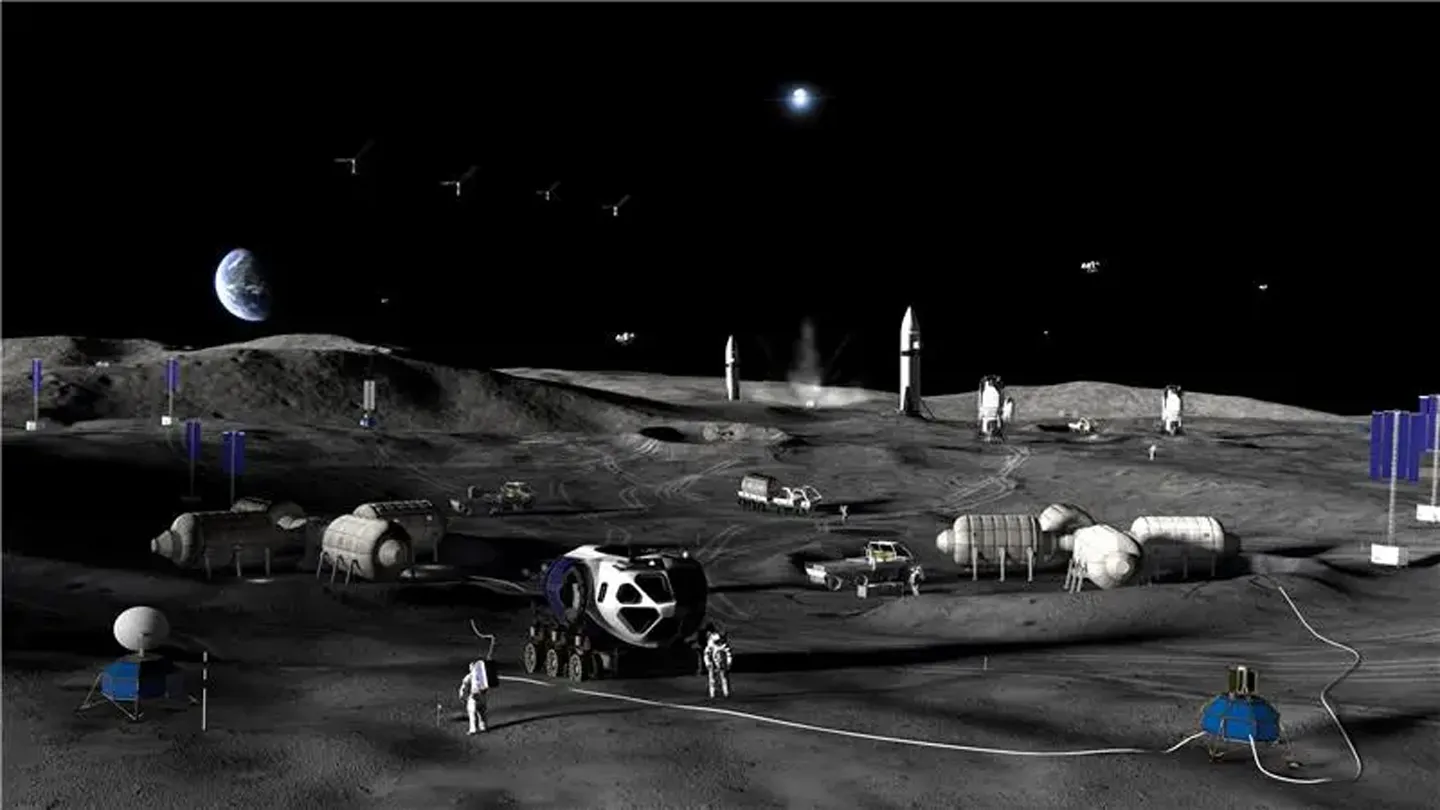
NASA Aims for Lunar Base and Nuclear Propulsion by 2030
The Gist
NASA plans a permanent moon base by 2030 and a nuclear-powered spacecraft launch in 2028, despite budget and workforce concerns.
Explain Like I'm Five
"NASA wants to build a house on the moon and a spaceship that uses tiny explosions to go to Mars super fast, but it might be hard because they don't have as much money or as many people as they used to."
Deep Intelligence Analysis
However, the agency faces considerable headwinds. Proposed budget cuts and recent workforce reductions raise serious concerns about NASA's ability to execute these ambitious projects within the stated timelines. The article highlights internal concerns within NASA regarding declining productivity and missed deadlines, further compounding the challenges. The success of these initiatives hinges on securing adequate funding, rebuilding workforce capacity, and effectively managing complex technological development programs.
Ultimately, the feasibility of NASA's plans will depend on a combination of political will, technological breakthroughs, and efficient resource management. The agency's ability to navigate these challenges will determine whether its vision of a permanent lunar presence and rapid interplanetary travel becomes a reality or remains a distant dream.
*Transparency Footnote: This analysis was composed by an AI model to provide an objective summary of the provided news article. No subjective opinions or endorsements are expressed. The AI model was trained on a diverse dataset of scientific and technical information to ensure accuracy and avoid bias.*
_Context: This intelligence report was compiled by the DailyOrbitalWire Strategy Engine. Verified for Art. 50 Compliance._
Impact Assessment
Establishing a permanent lunar base and developing nuclear propulsion could revolutionize space exploration, enabling longer and more ambitious missions. However, budget constraints and workforce challenges could hinder NASA's ability to achieve these goals.
Read Full Story on Hacker News SpaceKey Details
- ● NASA aims to establish a permanent lunar outpost near the moon's south pole by 2030.
- ● The agency plans to launch the Space Reactor-1 Freedom, a nuclear propulsion interplanetary spacecraft, in 2028.
- ● NASA plans to launch dozens of robotic missions to the moon at an estimated cost of $20 billion over the next seven years.
- ● A survey indicates that approximately 38% of NASA employees believe their teams are worse at delivering quality output compared to last year.
Optimistic Outlook
Successful development of nuclear propulsion would drastically reduce travel times for interplanetary missions, opening up new possibilities for exploring Mars and beyond. A permanent lunar base would provide a platform for scientific research and resource utilization, potentially paving the way for a sustainable presence on the moon.
Pessimistic Outlook
Budget cuts and workforce reductions could significantly delay or derail NASA's ambitious plans. The history of spaceflight is filled with unrealized timelines, and NASA must overcome significant challenges to achieve its goals within the proposed timeframe.

The Signal, Not
the Noise|
Get the week's top 1% of space-tech intelligence synthesized into a 5-minute read. Join 25,000+ aerospace insiders.
Unsubscribe anytime. No spam, ever.