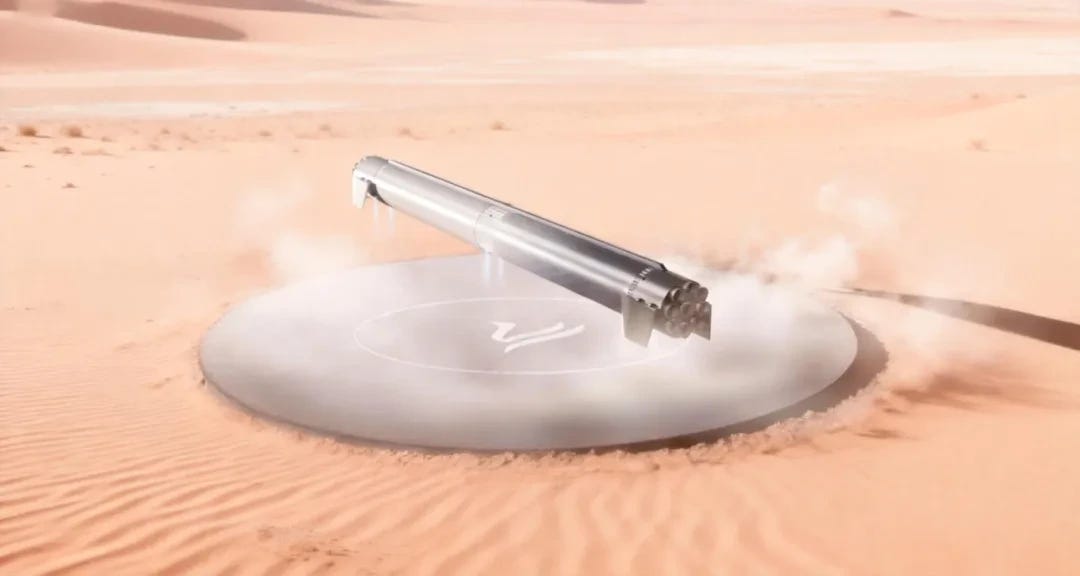
Nayuta Space Advances 'Bellyflopping' Rocket Booster Development
The Gist
Nayuta Space is developing a partially reusable 'Black Bird-R' launch vehicle featuring a unique 'bellyflop' landing system for its first-stage booster.
Explain Like I'm Five
"Imagine a rocket booster that falls back to Earth like a skydiver, using its sides to slow down before landing gently. That's what Nayuta Space is building!"
Deep Intelligence Analysis
The 'bellyflop' landing system, where the booster descends horizontally and lands on its side, aims to improve payload margins and reduce costs compared to traditional vertical landing methods. This approach, however, introduces significant engineering challenges related to aerodynamic control and structural integrity during landing. The company is actively conducting wind tunnel tests and component testing to validate the design and mitigate risks.
Nayuta Space's progress in developing the Black Bird-R could have broader implications for the space industry. Successful implementation of the 'bellyflop' landing system could pave the way for more efficient and cost-effective reusable launch vehicles, potentially accelerating the growth of the space economy and enabling more ambitious space exploration missions. The company's focus on liquid methane and liquid oxygen propellant also aligns with the growing trend towards more sustainable and readily available rocket fuels. The development of electrical systems and cabling is also underway, indicating a holistic approach to vehicle production. The company plans to complete several enabling tests in 2026.
_Context: This intelligence report was compiled by the DailyOrbitalWire Strategy Engine. Verified for Art. 50 Compliance._
Impact Assessment
Nayuta Space's innovative 'bellyflop' landing system could significantly reduce launch costs and increase payload margins. Successful development may influence future reusable rocket designs and multi-planetary logistics.
Read Full Story on Hacker News SpaceKey Details
- ● Nayuta Space completed Pre-A1 to Pre-A3 funding rounds to support Black Bird-R development.
- ● The Black Bird-R first stage will use aerodynamic surfaces for unpowered descent and a 'bellyflop' landing.
- ● The first stage will be powered by 13 engines, each generating 70 tons of thrust.
- ● The Black Bird-R is planned to be 70 meters tall and 3.8 meters in diameter, using liquid methane and liquid oxygen.
Optimistic Outlook
Nayuta Space's progress, supported by recent funding, suggests potential for successful static fire tests and aerodynamic validation. The unique landing system, if proven, could offer a competitive advantage in the launch market, attracting further investment and partnerships.
Pessimistic Outlook
The 'bellyflop' landing system introduces significant aerodynamic and control challenges, increasing development risk. Delays in testing or component sourcing could push back the Black Bird-R's first flight beyond the currently anticipated 2026 timeframe.

The Signal, Not
the Noise|
Get the week's top 1% of space-tech intelligence synthesized into a 5-minute read. Join 25,000+ aerospace insiders.
Unsubscribe anytime. No spam, ever.