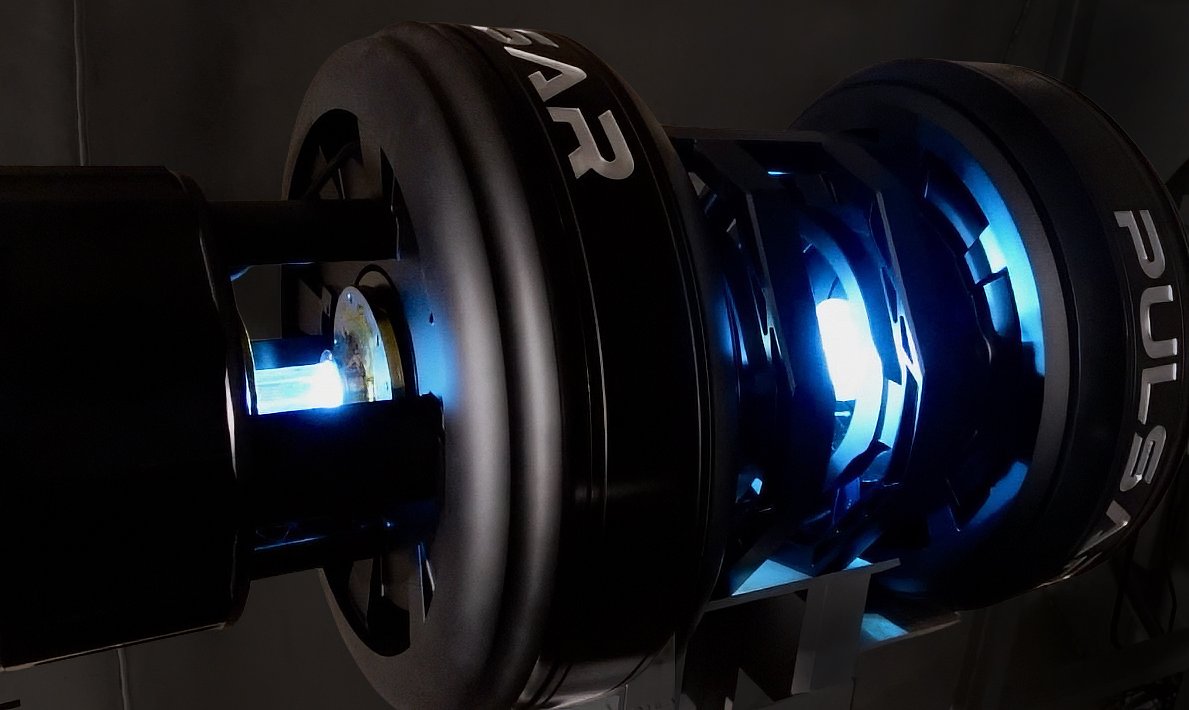
Pulsar Fusion Achieves First Plasma in Nuclear Rocket Exhaust System
The Gist
Pulsar Fusion successfully generated plasma in its Sunbird nuclear fusion rocket, a key step towards faster interplanetary travel.
Explain Like I'm Five
"Imagine making a tiny star in a bottle to push a rocket super fast! Pulsar Fusion did just that, making a hot ball of stuff called plasma to test their new rocket engine."
Deep Intelligence Analysis
While fusion propulsion offers the promise of significantly reduced transit times and increased payload capacity, substantial engineering challenges remain. Scaling the technology to a fully operational engine requires overcoming hurdles related to plasma confinement, heat management, and overall system integration. The development of materials capable of withstanding the extreme conditions within a fusion reactor is also crucial.
Competing technologies, such as Nuclear Thermal Propulsion (NTP), are being actively pursued and may offer more near-term solutions for advanced propulsion needs. NTP uses a fission reactor to heat a propellant, providing a simpler and potentially more readily deployable alternative to fusion. However, fusion propulsion, if successfully developed, could ultimately offer superior performance and efficiency for long-duration missions.
The successful demonstration of plasma generation validates Pulsar Fusion's approach and provides a foundation for further development and testing. The company's plans for static tests and an in-orbit demonstration will be crucial in assessing the viability and scalability of the technology.
_Context: This intelligence report was compiled by the DailyOrbitalWire Strategy Engine. Verified for Art. 50 Compliance._
Impact Assessment
This achievement marks a significant advancement in fusion propulsion, potentially enabling faster and more efficient interplanetary travel. The successful plasma generation addresses a major hurdle in developing fusion-powered rockets.
Read Full Story on Hacker News SpaceKey Details
- ● Pulsar Fusion's Sunbird DDFD aims for 10,000–15,000 s specific impulse.
- ● The DDFD system is planned to generate 2 MW of power.
- ● The Sunbird's design uses superconducting magnets to contain the fusion reaction.
- ● The system could theoretically reach speeds over 500,000 miles per hour.
Optimistic Outlook
The successful demonstration of plasma generation in Pulsar Fusion's engine suggests a viable path toward high-speed interplanetary travel. If the technology scales effectively, it could revolutionize deep-space exploration and logistics, enabling rapid transit times and increased payload capacity.
Pessimistic Outlook
Fusion propulsion faces significant engineering challenges, and scaling the technology from plasma generation to a fully functional engine will be difficult. Competing technologies like Nuclear Thermal Propulsion (NTP), with near-term flight plans, may offer more immediate solutions for advanced propulsion needs.

The Signal, Not
the Noise|
Get the week's top 1% of space-tech intelligence synthesized into a 5-minute read. Join 25,000+ aerospace insiders.
Unsubscribe anytime. No spam, ever.