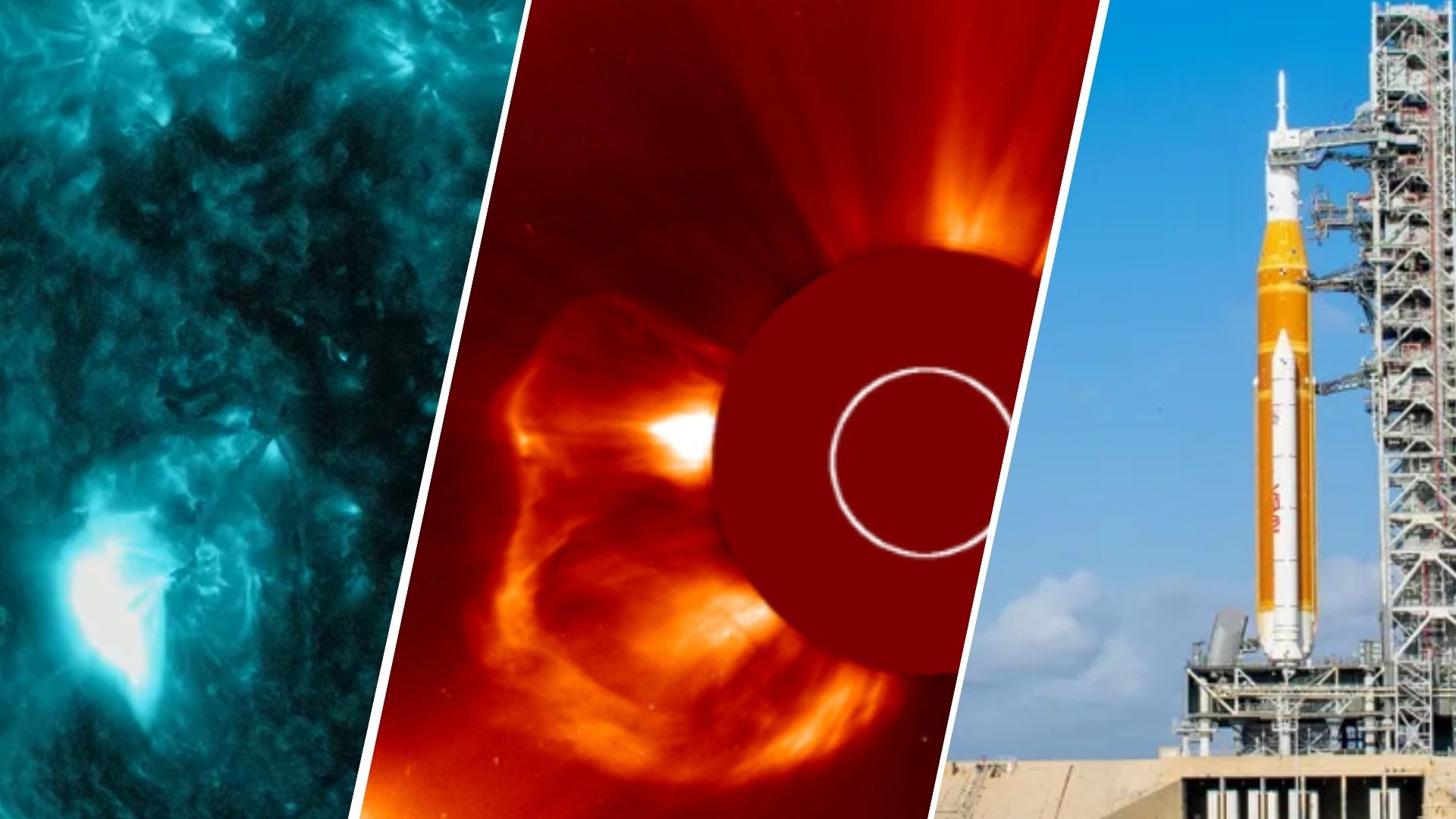
X-Class Solar Flare Triggers Radio Blackout Ahead of Artemis 2 Launch
The Gist
A powerful X1.4 solar flare caused radio blackouts and a CME, potentially impacting NASA's Artemis 2 launch preparations.
Explain Like I'm Five
"The sun burped out a big ball of energy that messed with radios on Earth and might delay the trip to the moon!"
Deep Intelligence Analysis
_Context: This intelligence report was compiled by the DailyOrbitalWire Strategy Engine. Verified for Art. 50 Compliance._
Impact Assessment
Solar flares and CMEs can disrupt radio communications and pose risks to spacecraft and astronauts. The timing of this flare raises concerns about potential impacts on the Artemis 2 mission.
Read Full Story on Space.comKey Details
- ● An X1.4 solar flare peaked at 11:19 p.m. EDT (0319 GMT).
- ● The flare caused widespread degradation of high-frequency radio signals.
- ● The eruption originated from active region 4405.
- ● A coronal mass ejection (CME) was launched with a possible Earth-directed component.
- ● NOAA issued a moderate (G2) geomagnetic storm watch for March 31.
Optimistic Outlook
Space weather forecasting is improving, allowing for better prediction and mitigation of solar events. NASA is closely monitoring the situation and can adjust launch plans if necessary to ensure astronaut safety.
Pessimistic Outlook
Intense solar activity can damage spacecraft electronics and expose astronauts to harmful radiation. Delays to the Artemis 2 launch could impact the overall timeline and budget of the program.

The Signal, Not
the Noise|
Get the week's top 1% of space-tech intelligence synthesized into a 5-minute read. Join 25,000+ aerospace insiders.
Unsubscribe anytime. No spam, ever.