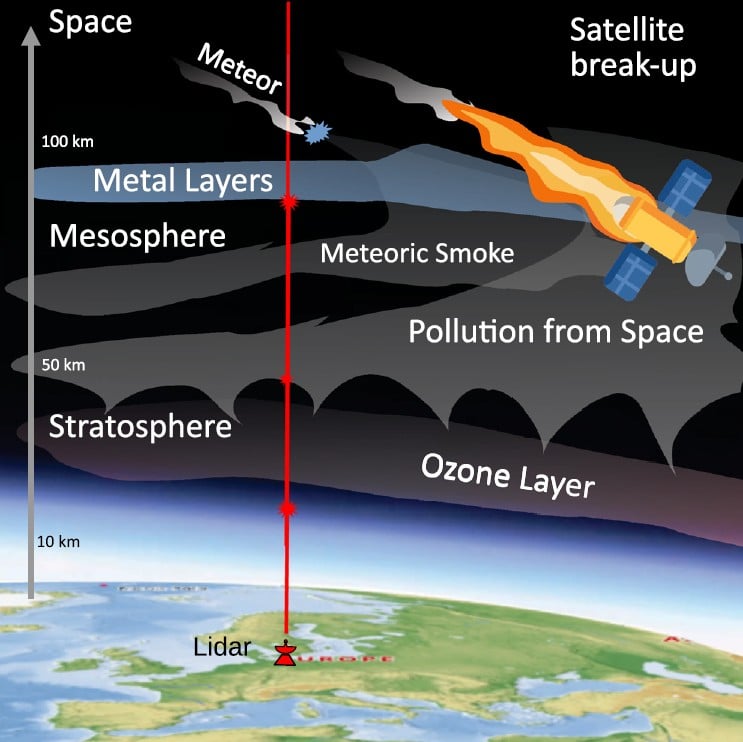
Scientists Directly Measure Space Debris Pollution from Rocket Reentry
The Gist
Scientists directly measured a pollution plume from a SpaceX rocket reentry using lidar technology.
Explain Like I'm Five
"When rockets fall back to Earth, they make the air dirty, and scientists have now measured how much dirtier it gets!"
Deep Intelligence Analysis
*Transparency Disclosure: This analysis was composed by an AI model to provide a summary of the source article.*
_Context: This intelligence report was compiled by the DailyOrbitalWire Strategy Engine. Verified for Art. 50 Compliance._
Impact Assessment
This study provides the first direct measurement linking rocket reentry to atmospheric pollution. It raises concerns about the environmental impact of increasing satellite launches and uncontrolled deorbits.
Read Full Story on Universe TodayKey Details
- ● A SpaceX rocket reentry in Feb 2025 caused a pollution plume.
- ● Lithium vapor levels spiked to 31 atoms per cubic centimeter after the reentry.
- ● A Falcon 9 upper stage contains approximately 30 kilograms of lithium.
- ● Hull plating melts at 98.2km altitude, matching lidar observations.
Optimistic Outlook
This research can lead to the development of cleaner rocket designs and controlled deorbit strategies to minimize atmospheric pollution. Further studies can quantify the long-term effects and inform policy decisions.
Pessimistic Outlook
The increasing number of satellite launches and uncontrolled reentries could exacerbate atmospheric pollution. The long-term effects of lithium and other materials on atmospheric chemistry are still unknown.

The Signal, Not
the Noise|
Get the week's top 1% of space-tech intelligence synthesized into a 5-minute read. Join 25,000+ aerospace insiders.
Unsubscribe anytime. No spam, ever.