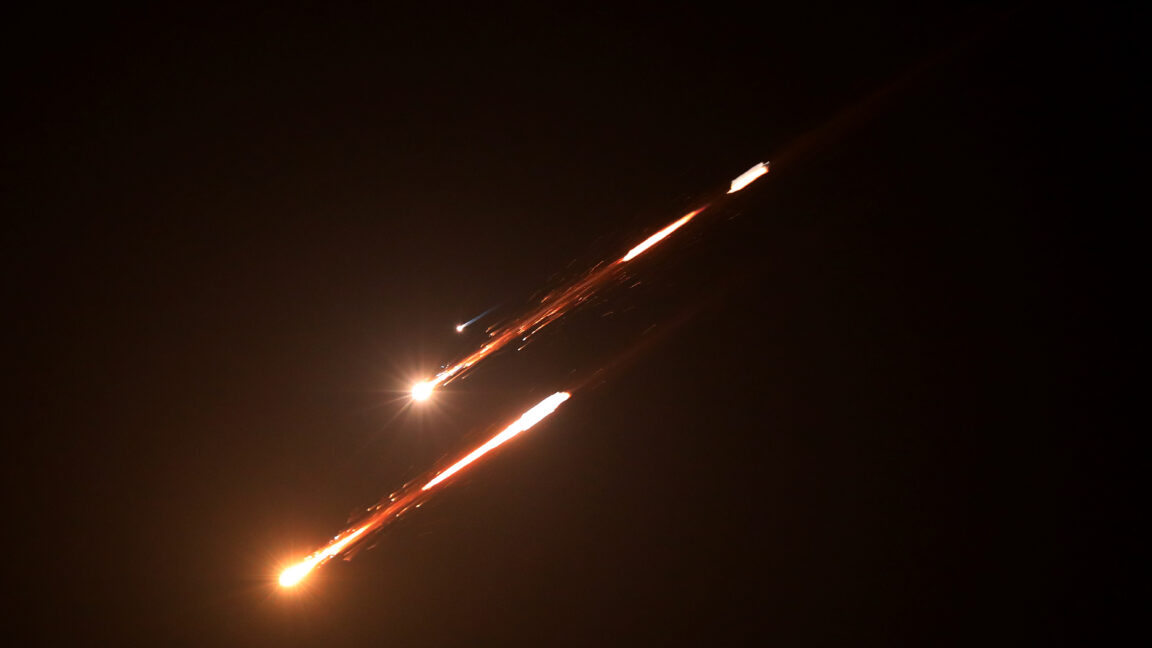
Space Force Enlists 12 Companies for 'Golden Dome' Space-Based Interceptor Development
The Gist
The US Space Force has contracted 12 companies to develop Space-Based Interceptors (SBI) under the 'Golden Dome' initiative.
Explain Like I'm Five
"Imagine a shield in space that protects us from bad guys shooting missiles. The Space Force is paying 12 different companies to help build it!"
Deep Intelligence Analysis
The $3.2 billion investment underscores the strategic importance of this program, which seeks to establish a multi-layered defense system against a range of threats, including ballistic, hypersonic, and cruise missiles. However, the program's early stage of development means that full-scale production and deployment are still years away, and the ultimate cost could be significantly higher. Furthermore, the operational security restrictions surrounding the SBI program limit transparency and hinder public scrutiny.
The success of the 'Golden Dome' initiative hinges on the ability of these contractors to translate early-stage development into tangible, operational capabilities. The program's impact on international relations and the broader issue of space weaponization remains a critical consideration.
_Context: This intelligence report was compiled by the DailyOrbitalWire Strategy Engine. Verified for Art. 50 Compliance._
Impact Assessment
The 'Golden Dome' initiative aims to create a multi-layered defense system against missile attacks. These contracts signify a move towards testing space-based interceptors in low-Earth orbit, potentially reshaping national security strategies.
Read Full Story on Hacker News SpaceKey Details
- ● The contracts, awarded in late 2025 and early 2026, utilize Other Transaction Authority (OTA) agreements.
- ● The combined value of the agreements is up to $3.2 billion.
- ● Companies include SpaceX, Lockheed Martin, Northrop Grumman, Anduril, and True Anomaly.
Optimistic Outlook
The diverse skill sets of the contractors, ranging from established aerospace giants to innovative startups, could accelerate the development of advanced defense technologies. The OTA agreements facilitate rapid prototyping and attract a wider range of participants, potentially leading to faster innovation cycles.
Pessimistic Outlook
Operational security restrictions limit transparency, hindering public oversight and independent evaluation of the program's progress. The focus on early-stage development and tech demos suggests full-scale production is still distant, and the ultimate cost remains uncertain.

The Signal, Not
the Noise|
Get the week's top 1% of space-tech intelligence synthesized into a 5-minute read. Join 25,000+ aerospace insiders.
Unsubscribe anytime. No spam, ever.