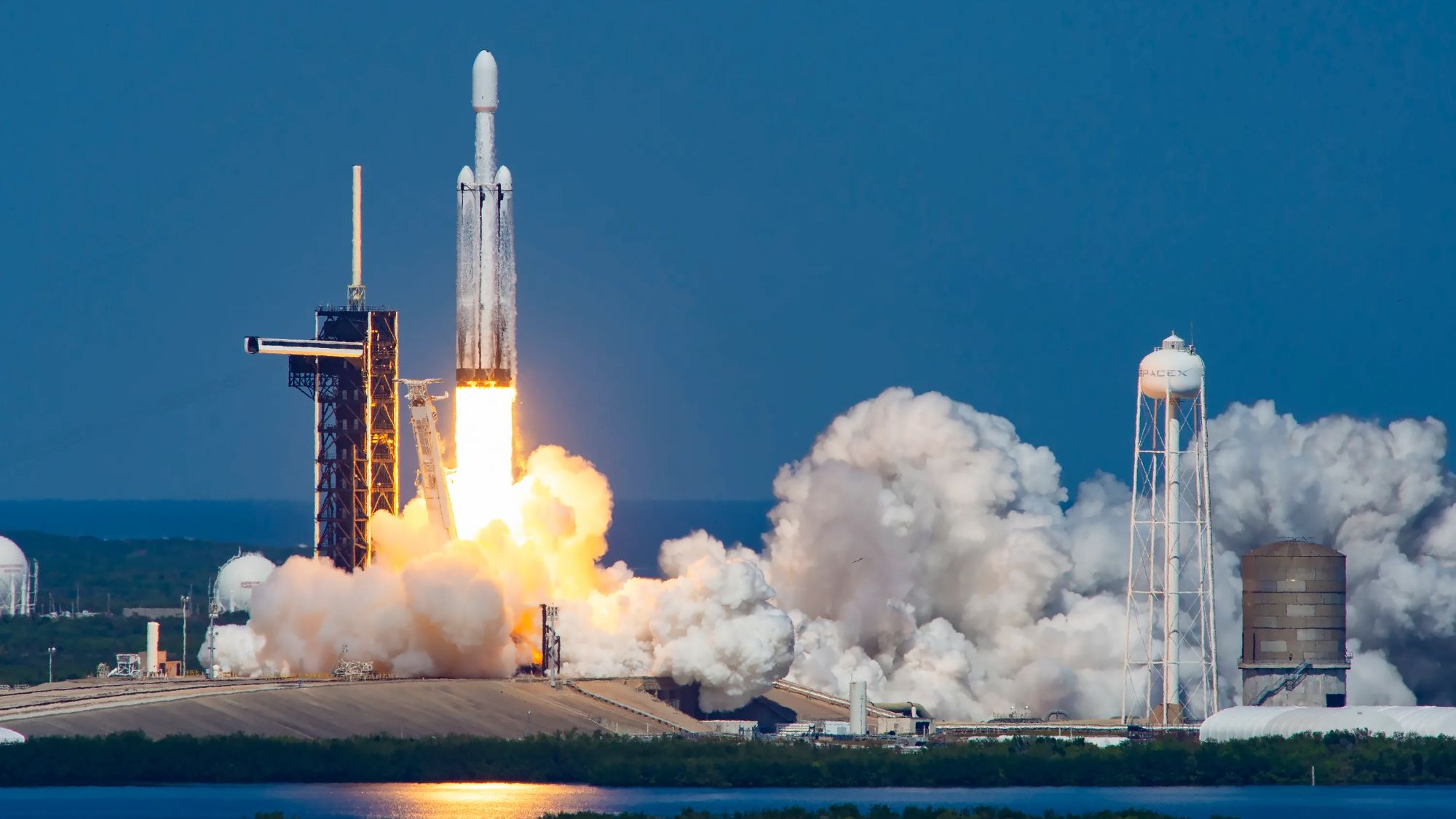
SpaceX Falcon Heavy Launches After 18-Month Hiatus
The Gist
SpaceX's Falcon Heavy rocket launched on April 27 after an 18-month break, carrying the ViaSat-3 F3 satellite.
Explain Like I'm Five
"Imagine three rockets strapped together to launch a giant satellite! SpaceX's Falcon Heavy is like a super-strong truck that can carry heavy things really far into space."
Deep Intelligence Analysis
The launch demonstrates SpaceX's continued ability to deliver heavy payloads to high-energy orbits. The recovery of the two side boosters further highlights the company's commitment to reusability, which helps to reduce launch costs. However, the central booster was not recovered, which adds to the overall mission expense. The ViaSat-3 F3 satellite is the third in the ViaSat-3 constellation, designed to provide global broadband coverage. The successful deployment of this satellite will significantly improve connectivity in the Asia-Pacific region, benefiting both commercial and consumer users.
Looking ahead, the Falcon Heavy's capabilities position it as a key player in future space missions, including potential lunar and interplanetary endeavors. The rocket's heavy-lift capacity and reusability features make it an attractive option for both government and commercial customers. However, delays in Falcon Heavy launches can impact the deployment schedules of critical satellites and scientific payloads, highlighting the need for reliable and consistent launch services.
*Transparency Disclosure: This analysis was generated by an AI model. While efforts have been made to ensure accuracy, the content should be critically evaluated and cross-referenced with reliable sources. The AI is trained on a broad range of data, and its interpretations may reflect prevailing viewpoints in that data.*
_Context: This intelligence report was compiled by the DailyOrbitalWire Strategy Engine. Verified for Art. 50 Compliance._
Impact Assessment
The Falcon Heavy launch demonstrates SpaceX's continued capability to deploy heavy payloads to geostationary orbit. The ViaSat-3 F3 satellite will expand broadband access in the Asia-Pacific region, improving connectivity for consumers and businesses.
Read Full Story on Space.comKey Details
- ● Falcon Heavy generates 5.1 million pounds of thrust at liftoff.
- ● The ViaSat-3 F3 satellite weighs 6.6 tons and will provide broadband service to the Asia-Pacific region.
- ● The Falcon Heavy's side boosters will return to Cape Canaveral, while the central booster will not be recovered.
Optimistic Outlook
Successful Falcon Heavy launches pave the way for future heavy-lift missions, including potential lunar and interplanetary endeavors. The reusability of the side boosters reduces launch costs and increases the frequency of Falcon Heavy flights.
Pessimistic Outlook
The loss of the central booster increases the overall cost of the mission. Delays in Falcon Heavy launches can impact the deployment schedules of critical satellites and scientific payloads.

The Signal, Not
the Noise|
Get the week's top 1% of space-tech intelligence synthesized into a 5-minute read. Join 25,000+ aerospace insiders.
Unsubscribe anytime. No spam, ever.