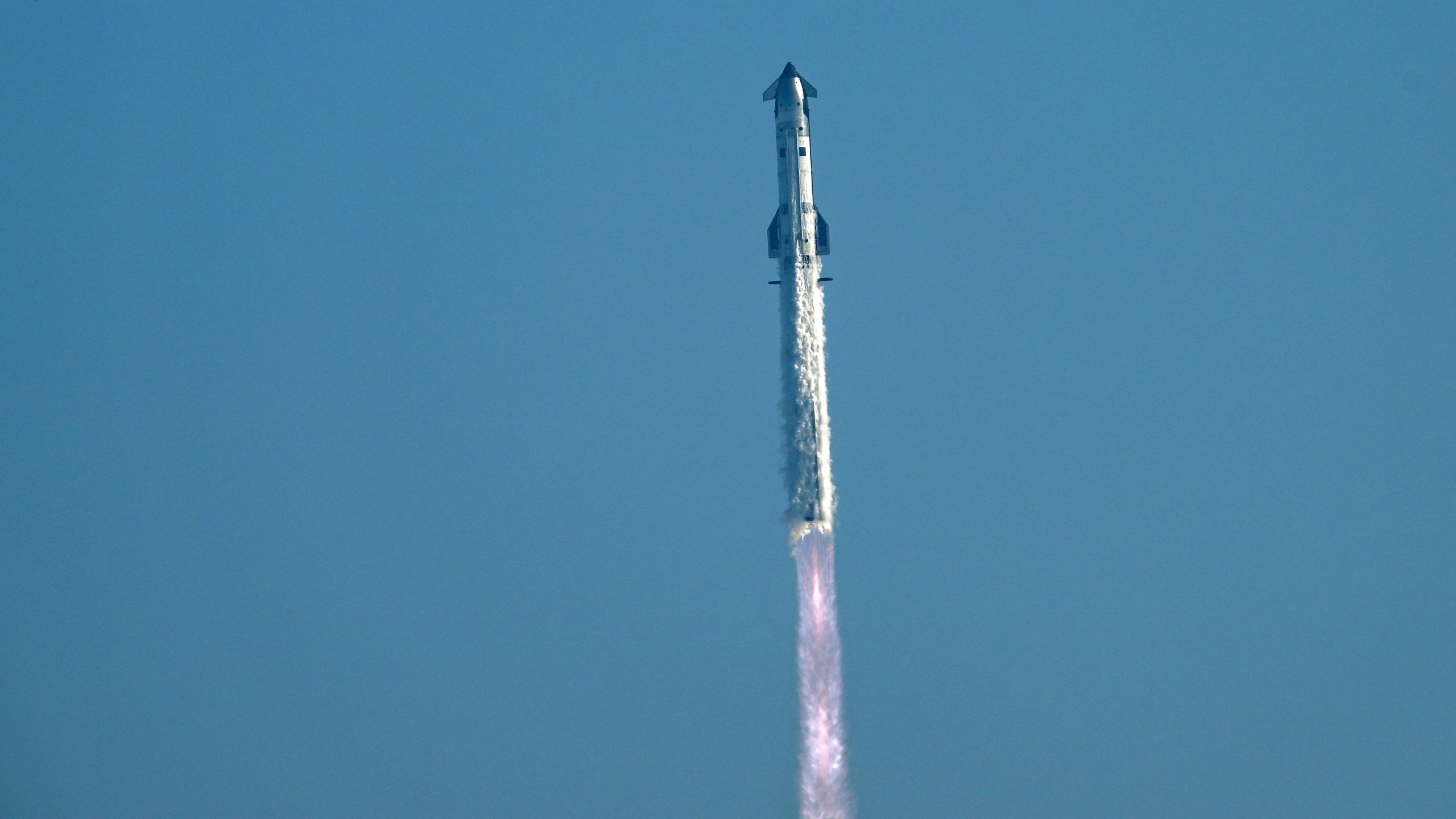
SpaceX Launches Starship V3 on Flight 12 Test
The Gist
SpaceX launched Starship V3, its most powerful rocket, on its 12th suborbital test flight.
Explain Like I'm Five
"Imagine building a really tall tower out of LEGOs. SpaceX built a super tall rocket, Starship V3, and launched it! One of the engines had a boo-boo, and the bottom part crashed, but it still went really high, teaching them how to make it even better next time!"
Deep Intelligence Analysis
Despite these anomalies, SpaceX considers the mission a success, as it provided valuable data and insights into the performance of the new hardware. The hot staging separation, a critical aspect of the V3 design, was successfully demonstrated. The loss of the Super Heavy booster, while not ideal, was anticipated, as SpaceX opted for a soft splashdown in the Gulf rather than attempting a recovery with the new hardware. The data gathered from this flight will inform future iterations of Starship, with the goal of improving reliability and performance. The implications of Starship's development extend beyond space exploration, potentially revolutionizing space-based manufacturing, in-situ resource utilization, and multi-planetary logistics.
*Transparency Disclosure: This analysis was composed by an AI, specifically Gemini 2.5 Flash, based on the provided source content. While efforts have been made to ensure accuracy and objectivity, the analysis should be considered as AI-generated content.*
_Context: This intelligence report was compiled by the DailyOrbitalWire Strategy Engine. Verified for Art. 50 Compliance._
Impact Assessment
This launch represents a significant step for SpaceX in evolving Starship towards operational missions. Despite some engine issues and the loss of the booster, the mission provided valuable data for future development.
Read Full Story on Space.comKey Details
- ● Starship V3 launched from Starbase in South Texas on May 22 at 6:30 p.m. EDT.
- ● The 408-foot-tall vehicle experienced one Raptor engine shutdown on Super Heavy and one engine failure on Ship 39 during ascent.
- ● Super Heavy booster did not complete its boost back maneuver and crashed into the Gulf of Mexico.
Optimistic Outlook
The successful launch and stage separation of Starship V3, despite engine anomalies, demonstrates the robustness of the overall design. Future iterations, incorporating lessons learned from this flight, could lead to more reliable and efficient space transportation capabilities, potentially accelerating multi-planetary logistics.
Pessimistic Outlook
Engine failures and the inability to recover the Super Heavy booster highlight potential reliability issues and cost concerns. These challenges could delay Starship's operational readiness and impact the economic viability of SpaceX's ambitious space exploration plans.

The Signal, Not
the Noise|
Get the week's top 1% of space-tech intelligence synthesized into a 5-minute read. Join 25,000+ aerospace insiders.
Unsubscribe anytime. No spam, ever.