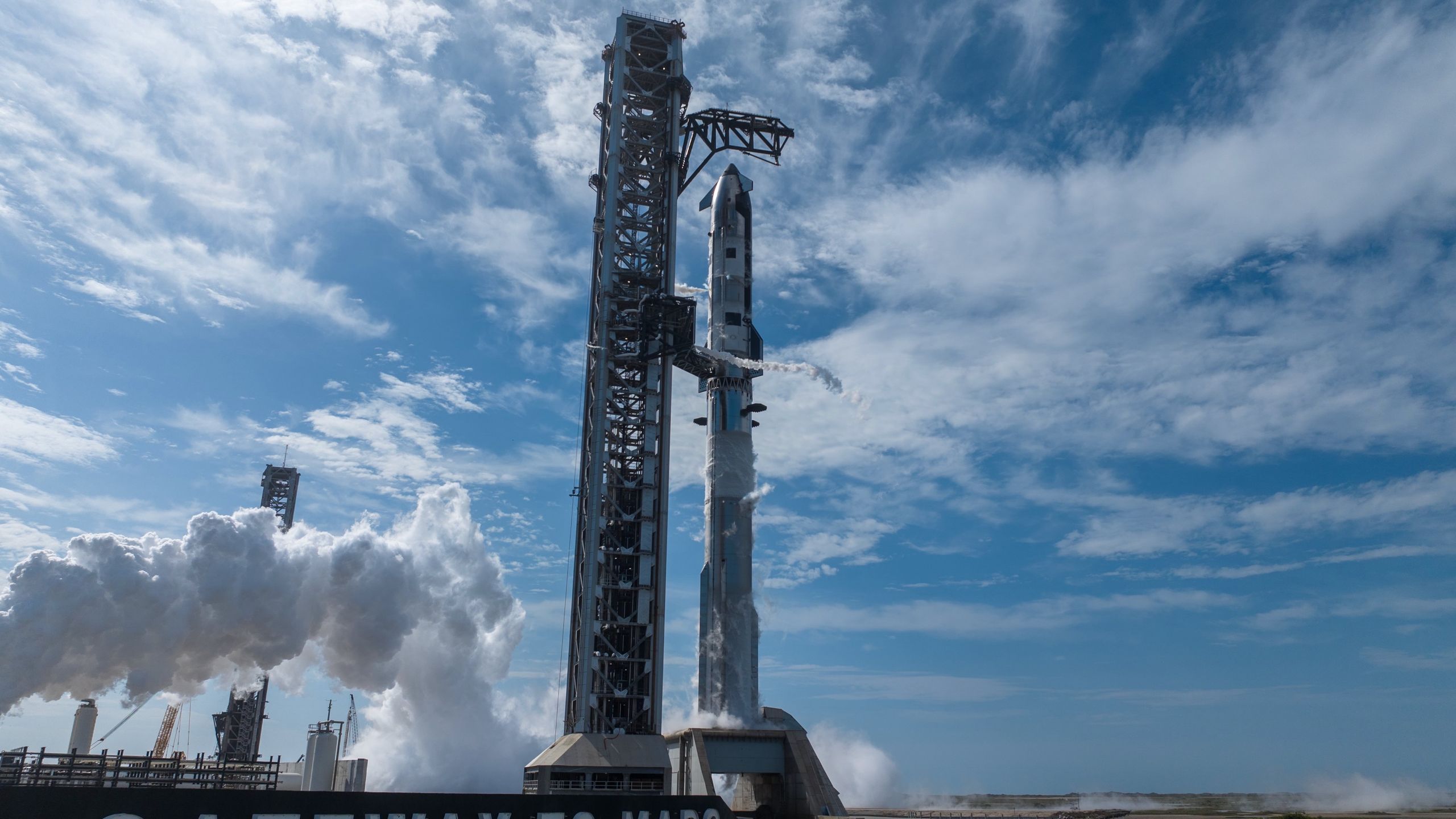
SpaceX's Starship V3 Targets May 19 Debut with Enhanced Capabilities
The Gist
SpaceX aims to launch its upgraded Starship V3 on May 19, featuring significant design improvements for reusability and deep-space missions.
Explain Like I'm Five
"Imagine a super big rocket, Starship, getting a big upgrade! It's like giving it bigger wings and a better engine so it can fly to the Moon and Mars, and even come back to Earth to fly again!"
Deep Intelligence Analysis
The debut of Pad 2 at Starbase further underscores SpaceX's commitment to rapid launch cadence and operational efficiency. The faster fueling capabilities and modified booster-catching infrastructure are designed to streamline launch operations and minimize turnaround time. The successful integration of these new elements is essential for unlocking Starship's core functions, including full and rapid reuse, in-space propellant transfer, and the deployment of Starlink satellites and orbital data centers.
However, the development and testing of Starship V3 also present significant technical and operational risks. The simultaneous startup of 33 Raptor engines, the in-space propellant transfer, and the precise landing of the Super Heavy booster are complex maneuvers that require precise control and coordination. Any failure in these areas could result in mission delays or even catastrophic loss of hardware. The outcome of the May 19 launch will provide valuable data and insights into the performance and reliability of the Starship V3 system, shaping the future direction of SpaceX's deep-space exploration program.
*Transparency Disclosure: This analysis was composed by an AI model to provide a high-density summary of the provided article. While efforts have been made to ensure accuracy, the AI may produce errors or omissions.*
_Context: This intelligence report was compiled by the DailyOrbitalWire Strategy Engine. Verified for Art. 50 Compliance._
Impact Assessment
Starship V3's advancements are crucial for SpaceX's goals of full reusability and in-space propellant transfer, essential for lunar and Martian missions. The upgrades aim to unlock core functionalities needed for deep-space exploration and satellite deployment.
Read Full Story on Space.comKey Details
- ● Starship V3 launch targeted for May 19 from Starbase, South Texas.
- ● Super Heavy booster features three larger, stronger grid fins for improved recovery.
- ● Hot-staging is integrated into Super Heavy, eliminating stage discarding.
- ● Ship V3 includes a redesigned propulsion system and increased propellant tank volume.
- ● Pad 2 at Starbase offers faster fueling and modified booster-catching infrastructure.
Optimistic Outlook
The enhanced capabilities of Starship V3, including improved reusability and in-space propellant transfer, could accelerate the timeline for establishing a sustained presence on the Moon and Mars. Successful demonstration of these technologies would significantly reduce the cost of space travel and open new possibilities for space-based industries.
Pessimistic Outlook
Despite the upgrades, the launch carries inherent risks associated with new rocket designs and complex operations. Failure to achieve key objectives, such as successful booster recovery or in-space propellant transfer, could delay SpaceX's ambitious timelines and impact investor confidence.

The Signal, Not
the Noise|
Get the week's top 1% of space-tech intelligence synthesized into a 5-minute read. Join 25,000+ aerospace insiders.
Unsubscribe anytime. No spam, ever.