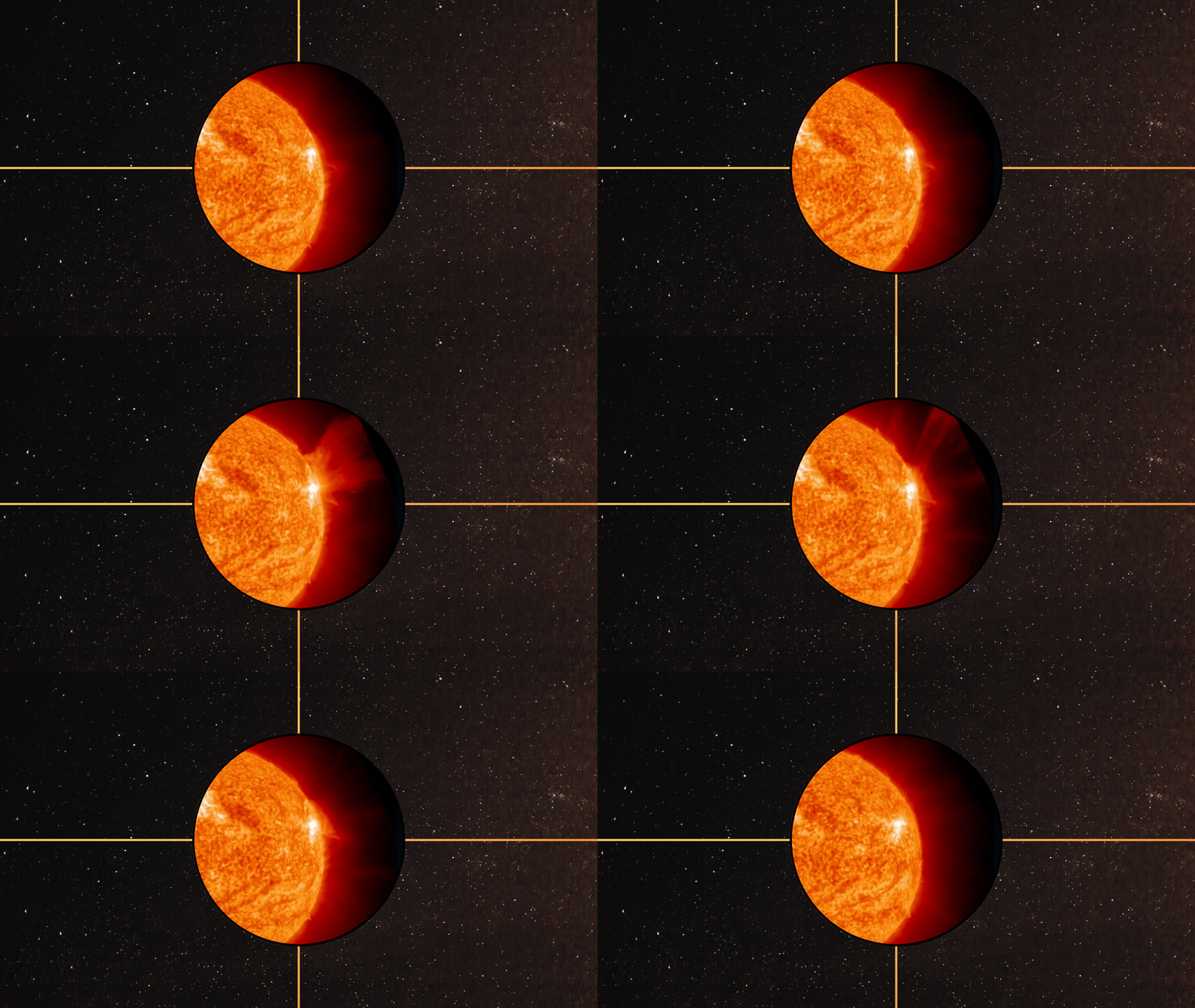
Sun Erupts with Twin X-Flares, Disrupting Earth's Radio Signals
The Gist
Two powerful X2.5 solar flares emitted from the sun disrupted radio signals on Earth's sunlit side.
Explain Like I'm Five
"Imagine the sun burping really hard! These burps, called solar flares, can mess with the radio waves we use to talk to each other, especially over long distances."
Deep Intelligence Analysis
While the flares themselves are concerning, the potential for associated coronal mass ejections (CMEs) adds another layer of complexity. Although the location of the sunspot suggests a low probability of a direct impact, even a glancing blow from a CME could trigger geomagnetic storms. Such storms can induce significant disruptions to power grids, satellite operations, and navigation systems. The ability to accurately model and predict the trajectory of CMEs is therefore paramount for mitigating potential damage.
The increasing frequency of strong solar flares raises questions about long-term trends in solar activity and their potential impact on the space-based economy. As reliance on satellite services continues to grow, understanding and predicting space weather events becomes increasingly critical for ensuring the resilience of critical infrastructure. Further investment in space weather monitoring and forecasting capabilities is essential for protecting both terrestrial and space-based assets.
_Context: This intelligence report was compiled by the DailyOrbitalWire Strategy Engine. Verified for Art. 50 Compliance._
Impact Assessment
Solar flares can disrupt satellite communications and navigation systems. Understanding their behavior is crucial for protecting space-based assets and ensuring reliable communication on Earth.
Read Full Story on Space.comKey Details
- ● Two X2.5 class solar flares erupted within 7 hours.
- ● Flares originated from sunspot region AR4419.
- ● Radio blackouts impacted the Pacific Ocean, Australia, and East Asia.
- ● Flares may have been accompanied by coronal mass ejections (CMEs).
Optimistic Outlook
Advanced modeling of CME paths allows for potential mitigation of geomagnetic storm impacts. Continued research into solar activity could lead to more accurate predictions and improved protective measures for critical infrastructure.
Pessimistic Outlook
Even a glancing blow from a CME could trigger geomagnetic storms and disrupt essential services. Dependence on satellite technology makes society vulnerable to severe space weather events.

The Signal, Not
the Noise|
Get the week's top 1% of space-tech intelligence synthesized into a 5-minute read. Join 25,000+ aerospace insiders.
Unsubscribe anytime. No spam, ever.