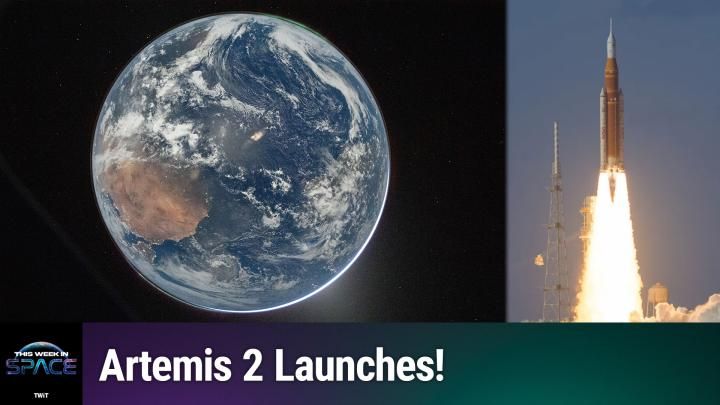
This Week In Space: Artemis 2 and NASA's New Direction
The Gist
Podcast discusses the Artemis 2 mission and significant changes at NASA under new administrator Jared Isaacman.
Explain Like I'm Five
"NASA is changing! They're going to build houses on the Moon instead of a hotel in space, and they're sending a helicopter to Mars using a special rocket!"
Deep Intelligence Analysis
The podcast also touches upon the broader context of the space industry, including the rise of private space stations and the increasing role of commercial partners in space exploration. The discussion of the Estes' Falcon 9 model rocket highlights the growing public interest in space and the accessibility of space-related activities. The insights provided by Rod Pyle and Tariq Malik, seasoned space journalists and experts, offer a comprehensive overview of the challenges and opportunities facing NASA and the space industry as a whole. The shift towards Moon bases and interplanetary missions signals a bold new era for space exploration, with the potential to unlock new scientific discoveries and economic opportunities.
*Transparency: This analysis was generated by an AI model to provide an objective perspective on the provided news articles.*
_Context: This intelligence report was compiled by the DailyOrbitalWire Strategy Engine. Verified for Art. 50 Compliance._
Impact Assessment
The podcast highlights key developments in space exploration, including the Artemis 2 mission and NASA's shifting priorities. The move towards Moon bases and interplanetary missions signals a bold new era for space exploration.
Read Full Story on Space.comKey Details
- ● Artemis 2 launched flawlessly.
- ● Jared Isaacman is the new NASA administrator.
- ● NASA's lunar Gateway space station is out; Moon bases are in.
- ● NASA plans a nuclear-powered interplanetary spacecraft to send Skyfall helicopters to Mars in 2028.
Optimistic Outlook
The focus on Moon bases and interplanetary missions suggests a more ambitious and sustainable approach to space exploration. The development of nuclear-powered spacecraft could revolutionize deep space travel.
Pessimistic Outlook
Shifting priorities and program cancellations could lead to delays and increased costs. The transition to a new administrator may also create uncertainty within NASA.

The Signal, Not
the Noise|
Get the week's top 1% of space-tech intelligence synthesized into a 5-minute read. Join 25,000+ aerospace insiders.
Unsubscribe anytime. No spam, ever.