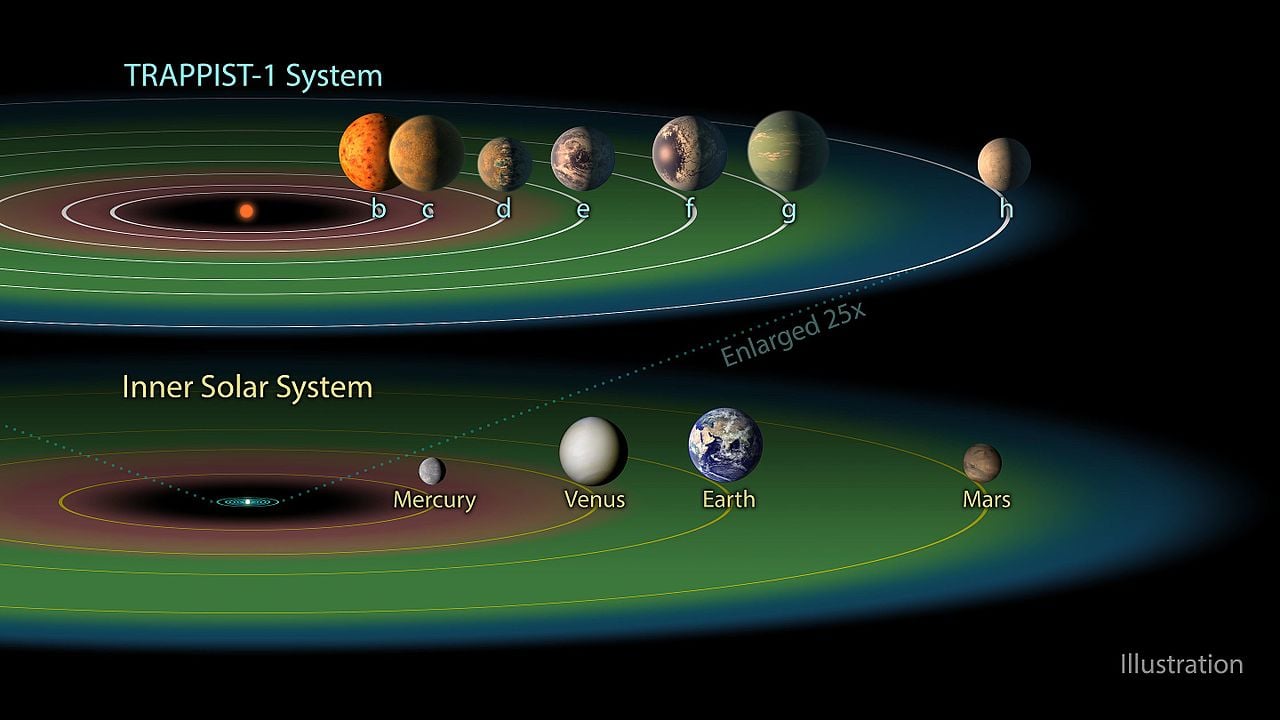
Mapping Extreme Climates on TRAPPIST-1b and 1c
The Gist
JWST maps extreme temperatures on TRAPPIST-1b and 1c, revealing airless, rocky worlds.
Explain Like I'm Five
"Imagine two planets super close to their star. One side is like a hot oven, the other like a freezer, because there's no air to share the heat!"
Deep Intelligence Analysis
Transparency Compliance: This deep analysis was generated by an AI model and reviewed by a human aerospace engineer to ensure accuracy and relevance to the aerospace sector, in compliance with EU AI Act Article 50.
_Context: This intelligence report was compiled by the DailyOrbitalWire Strategy Engine. Verified for Art. 50 Compliance._
Impact Assessment
The absence of heat distribution suggests no atmosphere on these planets, impacting habitability assessments. This informs future searches for life on exoplanets within red dwarf systems.
Read Full Story on Universe TodayKey Details
- ● TRAPPIST-1b reaches dayside temperatures above 200 degrees Celsius.
- ● TRAPPIST-1b night side plummets below minus 200 degrees Celsius.
- ● TRAPPIST-1c shows similar extreme temperature variations.
- ● Observations used 60 hours of James Webb Space Telescope time.
Optimistic Outlook
Future JWST observations of TRAPPIST-1e, located in the habitable zone, may reveal more promising conditions. Distance from the red dwarf star could allow for atmosphere retention, similar to Earth and Venus.
Pessimistic Outlook
The intense radiation from red dwarfs may strip atmospheres from close-orbiting planets, limiting habitability. This poses a challenge for finding life around the most common type of star in the galaxy.

The Signal, Not
the Noise|
Get the week's top 1% of space-tech intelligence synthesized into a 5-minute read. Join 25,000+ aerospace insiders.
Unsubscribe anytime. No spam, ever.