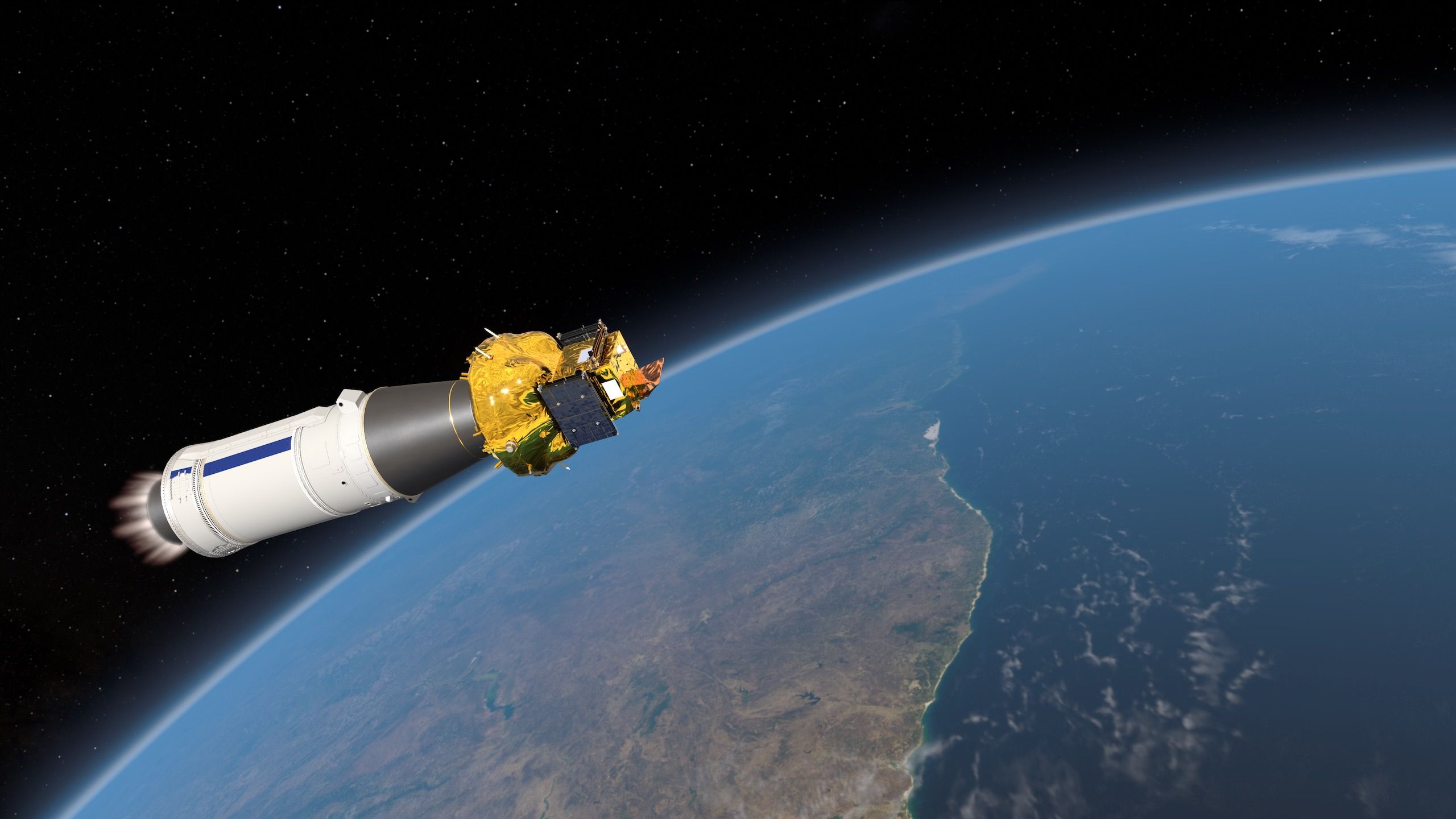
Vega C Rocket to Launch European-Chinese SMILE Space Weather Satellite
The Gist
A Vega C rocket will launch the European-Chinese SMILE spacecraft to study the effects of solar wind on Earth.
Explain Like I'm Five
"Imagine the sun is blowing wind at Earth. This wind can cause problems with our satellites and power grids. The SMILE satellite will study this wind to help us protect ourselves."
Deep Intelligence Analysis
The mission's success hinges on the reliable performance of the Vega C rocket, which has experienced some setbacks in the past. However, if the launch proceeds as planned, SMILE will be deployed into a highly elliptical orbit, allowing it to observe the Earth's magnetosphere from a unique vantage point. The data collected by SMILE will be crucial for validating and improving space weather models, which are used to predict and mitigate the effects of solar storms.
The collaboration between ESA and the Chinese Academy of Sciences highlights the growing importance of international cooperation in space exploration and research. By combining their expertise and resources, these two organizations are able to tackle complex scientific challenges that would be difficult to address independently. The SMILE mission is expected to provide valuable insights into the fundamental processes that govern space weather, ultimately leading to more effective strategies for protecting our technological infrastructure from the hazards of the space environment.
*Transparency Disclosure: The AI model used to generate this analysis has been trained on a diverse range of publicly available information. While efforts have been made to ensure accuracy and objectivity, the analysis may contain biases or inaccuracies inherent in the training data. Users are advised to critically evaluate the information presented and consult with human experts for further clarification.*
_Context: This intelligence report was compiled by the DailyOrbitalWire Strategy Engine. Verified for Art. 50 Compliance._
Impact Assessment
Understanding the interaction between solar wind and Earth is crucial for predicting and mitigating space weather events. SMILE's observations will improve our understanding of solar and geomagnetic storms.
Read Full Story on Space.comKey Details
- ● The SMILE spacecraft will launch atop a Vega C rocket from Kourou, French Guiana.
- ● SMILE will study how Earth is affected by the solar wind using four science instruments.
- ● The Chinese Academy of Sciences is responsible for SMILE's satellite platform and three instruments.
- ● The Vega C rocket will deploy SMILE in a circular orbit 435 miles above Earth.
- ● The planned mission lifetime is three years.
Optimistic Outlook
SMILE's data could lead to more accurate space weather forecasts, protecting satellites and ground-based infrastructure. The collaboration between ESA and the Chinese Academy of Sciences demonstrates international cooperation in space science.
Pessimistic Outlook
The Vega C rocket has experienced some launch failures in the past, posing a risk to the mission. The success of SMILE depends on the proper functioning of its four science instruments.

The Signal, Not
the Noise|
Get the week's top 1% of space-tech intelligence synthesized into a 5-minute read. Join 25,000+ aerospace insiders.
Unsubscribe anytime. No spam, ever.