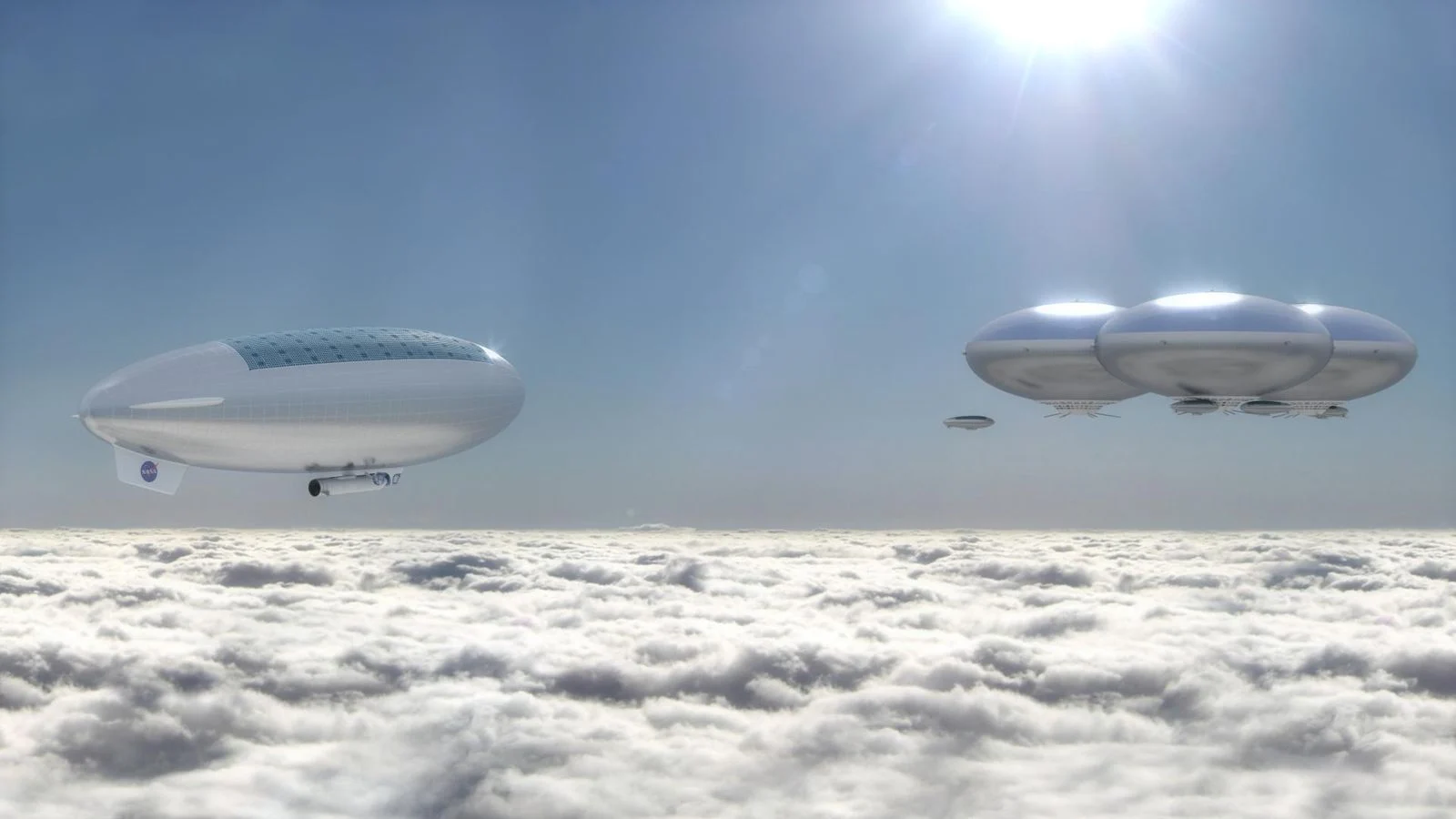
Venus Aerobot Concept Leverages ISRU for Extended Missions
The Gist
MIT researchers propose using in-situ resource utilization (ISRU) on Venus to extend aerobot mission lifetimes.
Explain Like I'm Five
"Imagine a balloon robot on Venus that makes its own air to float longer and study the planet!"
Deep Intelligence Analysis
_Context: This intelligence report was compiled by the DailyOrbitalWire Strategy Engine. Verified for Art. 50 Compliance._
Impact Assessment
Extending mission duration on Venus allows for more comprehensive data collection. ISRU could be a key enabler for long-term robotic exploration in extreme environments.
Read Full Story on Universe TodayKey Details
- ● The aerobot design includes a 12.5m diameter balloon.
- ● It will carry a 20 kg scientific instrument suite.
- ● The aerobot will operate at an altitude of 61 km, dropping to 50 km for helium replenishment.
- ● The system will use Solid Oxide Electrolysis (SOE) to convert CO2 into oxygen and carbon monoxide.
- ● The aerobot is designed for a nominal lifespan of four months, with a maximum operational lifespan of 10 years.
Optimistic Outlook
ISRU-based aerobots could unlock long-duration Venus exploration, enabling detailed geophysical and atmospheric studies. This technology could be adapted for other planetary environments with abundant CO2.
Pessimistic Outlook
The SOE process requires continuous power, potentially limiting operational time if solar arrays are insufficient. The harsh Venusian environment poses significant engineering challenges for long-term system reliability.

The Signal, Not
the Noise|
Get the week's top 1% of space-tech intelligence synthesized into a 5-minute read. Join 25,000+ aerospace insiders.
Unsubscribe anytime. No spam, ever.