BREAKING: • European Satellites Enhance Earth Monitoring and Connectivity • Detailed Spectrum of High Frequency Primordial Gravitational Waves • Deep Learning for Galaxy Cluster Structural Parameter Estimation • Self-Supervised Denoising Improves Astronomical Imaging Detection Limits • Machine Learning Identifies Solar Wind Electron Heating Events
European Satellites Enhance Earth Monitoring and Connectivity
Satellites May 04
ESA News // 2026-05-04

European Satellites Enhance Earth Monitoring and Connectivity

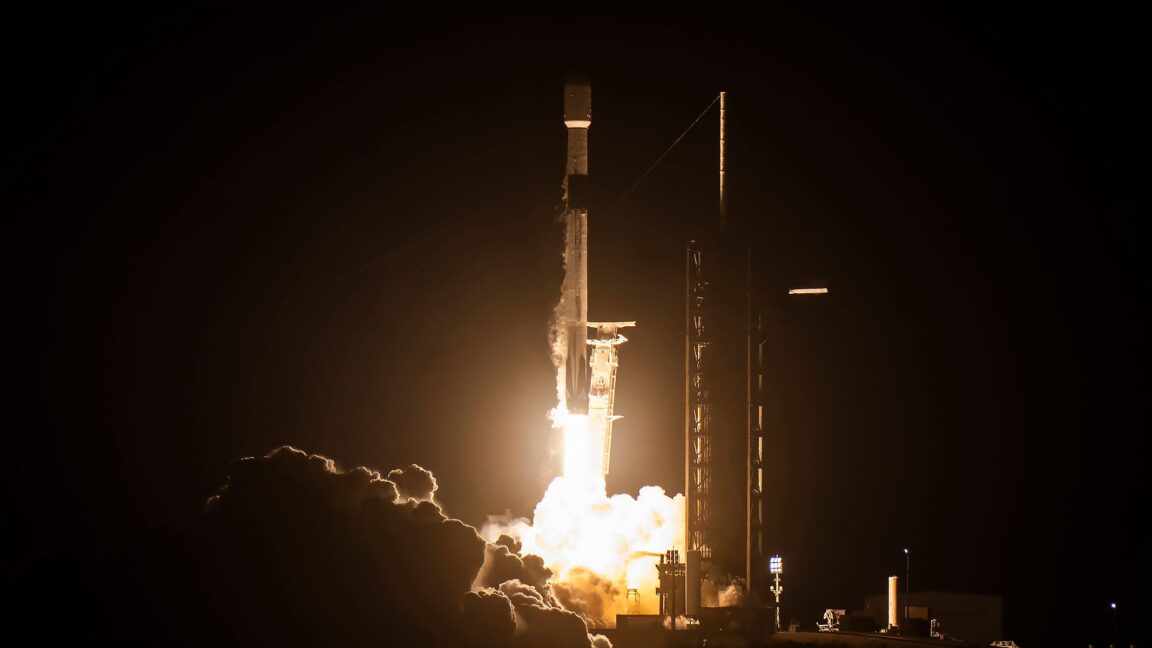
THE GIST: A SpaceX Falcon-9 launch successfully deployed 13 European satellites, enhancing Earth observation and connectivity capabilities for Italy and Greece.

IMPACT: This launch signifies advancements in European sovereign space capabilities, particularly in Earth observation and disaster management. The IRIDE constellation and Hellenic Fire System demonstrate the potential of space-based solutions for national needs and economic revitalization.
Optimistic
Pessimistic
ELI5
Deep Dive // Full Analysis
Detailed Spectrum of High Frequency Primordial Gravitational Waves
Satellites May 04
arXiv Cosmology // 2026-05-04

Detailed Spectrum of High Frequency Primordial Gravitational Waves

THE GIST: The spectrum of high-frequency gravitational waves produced during and after inflation is calculated, showing it can distinguish inflation models.

IMPACT: Understanding the spectrum of primordial gravitational waves can provide insights into the early universe and the process of inflation. This can help refine our cosmological models.
Optimistic
Pessimistic
ELI5
Deep Dive // Full Analysis
Deep Learning for Galaxy Cluster Structural Parameter Estimation
Satellites May 04
arXiv Cosmology // 2026-05-04

Deep Learning for Galaxy Cluster Structural Parameter Estimation

THE GIST: Convolutional Neural Networks (CNNs) are used to efficiently infer galaxy cluster structural parameters from weak lensing observations with high accuracy.

IMPACT: Automated analysis methods are crucial for processing the large data volumes expected from upcoming surveys. This allows for efficient study of galaxy clusters and cosmic evolution.
Optimistic
Pessimistic
ELI5
Deep Dive // Full Analysis
Self-Supervised Denoising Improves Astronomical Imaging Detection Limits
Satellites May 04
arXiv Instrumentation // 2026-05-04

Self-Supervised Denoising Improves Astronomical Imaging Detection Limits

THE GIST: ASTERIS, a self-supervised denoising algorithm, enhances astronomical imaging, revealing previously undetectable features and improving detection limits by 1.0 magnitude.

IMPACT: Improved detection limits allow astronomers to observe fainter and more distant objects, expanding our understanding of the universe. This is particularly important for studying early galaxy formation.
Optimistic
Pessimistic
ELI5
Deep Dive // Full Analysis
Machine Learning Identifies Solar Wind Electron Heating Events
Satellites May 04
arXiv Instrumentation // 2026-05-04

Machine Learning Identifies Solar Wind Electron Heating Events

THE GIST: EMBER, an open-source pipeline, uses machine learning to detect electron heating events in the solar wind data from Parker Solar Probe.

IMPACT: Automated detection of these events allows for more efficient analysis of solar wind dynamics. This can improve our understanding of space weather and its effects on satellites.
Optimistic
Pessimistic
ELI5
Deep Dive // Full Analysis
Cosmic Ray Impacts on Cryogenic High Sensitivity Detectors Studied
Satellites May 04
arXiv Instrumentation // 2026-05-04

Cosmic Ray Impacts on Cryogenic High Sensitivity Detectors Studied

THE GIST: A study investigates the susceptibility of cryogenic high sensitivity detectors to cosmic ray impacts using the DRACuLA facility.

IMPACT: Understanding the effects of cosmic rays on detectors is crucial for designing future space-based instruments. This research helps mitigate data corruption and improve the reliability of scientific observations.
Optimistic
Pessimistic
ELI5
Deep Dive // Full Analysis
Hybrid Metasurface-Bragg Mirror Design Reduces Thermal Noise in Gravitational Wave Telescopes
Satellites May 04
arXiv Instrumentation // 2026-05-04

Hybrid Metasurface-Bragg Mirror Design Reduces Thermal Noise in Gravitational Wave Telescopes

THE GIST: A hybrid metasurface-Bragg mirror design reduces coating thermal noise in gravitational wave detectors, enhancing sensitivity.

IMPACT: Reducing thermal noise is crucial for improving the sensitivity of future gravitational wave detectors. This hybrid design offers a path to achieving high reflectance with reduced coating thickness.
Optimistic
Pessimistic
ELI5
Deep Dive // Full Analysis
Neural Network Identifies Gravitational Wave Events in Lower Mass Gap
Satellites May 04
arXiv Instrumentation // 2026-05-04

Neural Network Identifies Gravitational Wave Events in Lower Mass Gap

THE GIST: A neural network, GWSkyNet-MassGap, rapidly identifies gravitational wave events with components in the lower mass gap.

IMPACT: Rapid identification of these events can inform decisions for follow-up electromagnetic observations. This helps constrain the physics governing the boundary between neutron stars and black holes.
Optimistic
Pessimistic
ELI5
Deep Dive // Full Analysis
Biofabrication Consortium Uses Martian Regolith for Resource-Limited Production
Habitats & ISRU May 04
arXiv Earth & Planetary // 2026-05-04

Biofabrication Consortium Uses Martian Regolith for Resource-Limited Production

THE GIST: Engineered microbial consortia can autonomously produce biomaterials from Martian regolith simulant, paving the way for in-situ resource utilization.

IMPACT: This research demonstrates the potential for creating self-sustaining systems for biomaterial production on Mars, reducing reliance on Earth-based resources. It also highlights opportunities for coupling metabolism with material synthesis in extreme environments.
Optimistic
Pessimistic
ELI5
Deep Dive // Full Analysis
NGA Prioritizes AI to Manage Geospatial Data Surge
Defense & Policy May 03
SpaceNews // 2026-05-03

NGA Prioritizes AI to Manage Geospatial Data Surge

THE GIST: NGA is expanding AI use to process geospatial data, but acknowledges limitations in achieving constant real-time intelligence.
IMPACT: The increasing volume of geospatial data necessitates AI-driven solutions for timely analysis. NGA's adoption of AI, particularly multimodal models, aims to enhance analyst productivity and maintain continuity despite data degradation.
Optimistic
Pessimistic
ELI5
Deep Dive // Full Analysis
Falcon 9 Upper Stage Predicted to Impact Moon in August 2026
Launch Vehicles May 03
Hacker News Space // 2026-05-03

Falcon 9 Upper Stage Predicted to Impact Moon in August 2026

THE GIST: A Falcon 9 upper stage is predicted to impact the Moon on August 5, 2026.

IMPACT: This event highlights the long-term tracking of space debris and the potential for unintended lunar impacts. While the impact is not expected to be visible from Earth, it underscores the growing need for space traffic management.
Optimistic
Pessimistic
ELI5
Deep Dive // Full Analysis
SpaceX Launches South Korean Earth Observation Satellite and 44 Other Payloads
Launch Vehicles May 02
Spaceflight Now // 2026-05-02

SpaceX Launches South Korean Earth Observation Satellite and 44 Other Payloads

THE GIST: SpaceX launched a Falcon 9 carrying the South Korean CAS500-2 Earth observation satellite and 44 other payloads on a rideshare mission.

IMPACT: This launch demonstrates SpaceX's rideshare capabilities and its role in providing access to space for international partners. The mission also highlights the growing demand for small satellite launch services and the increasing importance of Earth observation data.
Optimistic
Pessimistic
ELI5
Deep Dive // Full Analysis
Previous
Page 38 of 134
Next
```