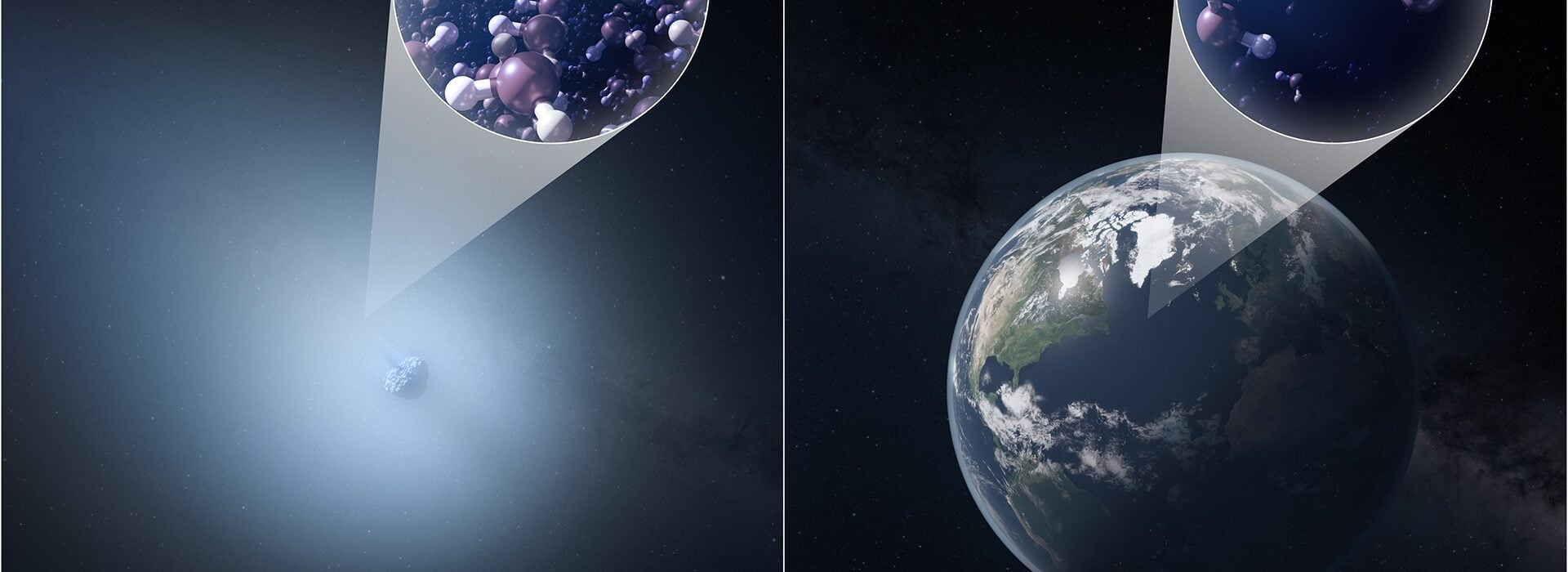
3I/ATLAS Formed in a System Colder Than Our Own
The Gist
New research indicates that interstellar comet 3I/ATLAS originated in a star system significantly colder than our own.
Explain Like I'm Five
"Imagine a space snowball made in a super cold place far, far away! Scientists found special water in it that tells us it was made in a colder place than where our Earth is!"
Deep Intelligence Analysis
_Context: This intelligence report was compiled by the DailyOrbitalWire Strategy Engine. Verified for Art. 50 Compliance._
Impact Assessment
The high deuterated water content suggests 3I/ATLAS formed in a colder, less irradiated environment. This provides insights into the diversity of star systems and the conditions under which comets can form.
Read Full Story on Universe TodayKey Details
- ● ALMA detected deuterated water (HDO) in 3I/ATLAS, the first such measurement in an interstellar object.
- ● Observations were made in December 2025, six days after 3I/ATLAS's closest approach to the Sun.
- ● The ratio of deuterated water to normal water (D/H) in 3I/ATLAS is at least 30 times higher than in Solar System comets.
- ● 3I/ATLAS's D/H ratio is 40 times higher than the abundance of HDO and water in Earth's oceans.
Optimistic Outlook
Further analysis of interstellar objects will reveal more about the range of conditions in other star systems. ALMA's unique capabilities will continue to contribute to our understanding of the chemical composition of these objects.
Pessimistic Outlook
The limited observation window and the faintness of interstellar objects pose challenges for detailed analysis. The unique characteristics of 3I/ATLAS may not be representative of all interstellar comets.

The Signal, Not
the Noise|
Get the week's top 1% of space-tech intelligence synthesized into a 5-minute read. Join 25,000+ aerospace insiders.
Unsubscribe anytime. No spam, ever.