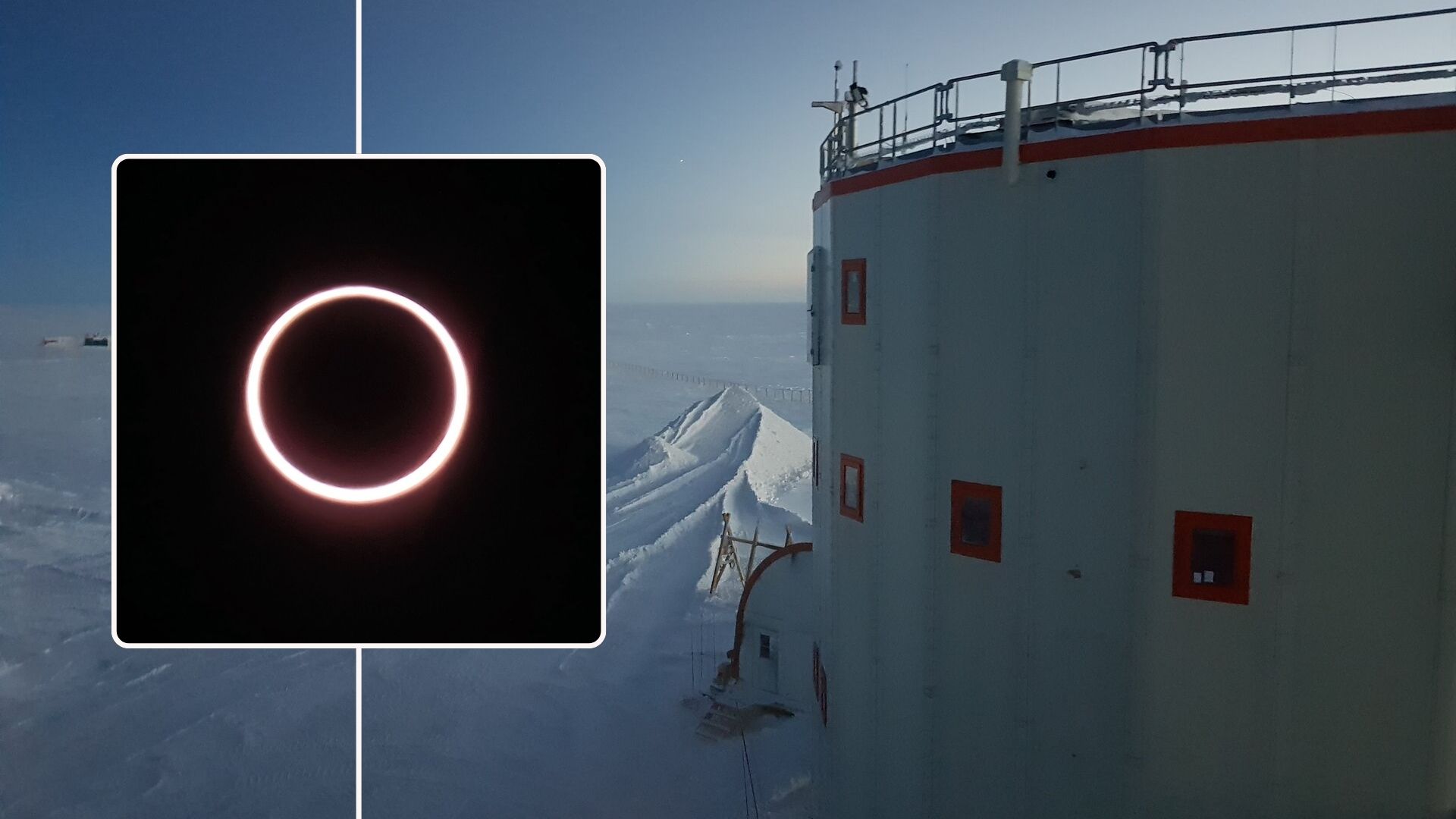
Antarctic Team Witnesses Rare Annular Solar Eclipse
The Gist
A remote Antarctic research team was the only group on Earth to witness a rare annular solar eclipse.
Explain Like I'm Five
"Imagine the sun is a cookie, and the moon takes a bite, but it's not big enough to cover the whole cookie, so you see a ring of sunlight around it! Only a few people in Antarctica saw it happen."
Deep Intelligence Analysis
*Transparency Footnote: This analysis was conducted by an AI model and reviewed by human experts to ensure accuracy and relevance. The AI model used publicly available information to generate insights and predictions. No proprietary data was used in the creation of this analysis.*
_Context: This intelligence report was compiled by the DailyOrbitalWire Strategy Engine. Verified for Art. 50 Compliance._
Impact Assessment
Witnessing such events from remote locations highlights the importance of Antarctic research stations for scientific observation. The harsh conditions underscore the dedication of researchers in advancing our understanding of space and atmospheric phenomena.
Read Full Story on Space.comKey Details
- ● The eclipse occurred on Feb 17, 2026.
- ● Concordia Research Station is located 750 miles inland at an altitude of 10,600 feet.
- ● The Concordia team endures average winter temperatures of -58 degrees Fahrenheit.
- ● Andrea Traverso, a scientist at Concordia, captured a photo of the eclipse.
Optimistic Outlook
Continued research at Concordia and similar stations could lead to further discoveries in astronomy and space medicine. The unique vantage points and environmental conditions offer opportunities for groundbreaking observations.
Pessimistic Outlook
The extreme isolation and harsh conditions at Concordia pose significant logistical and safety challenges. Reliance on a single location for unique observations makes the research vulnerable to unforeseen circumstances.

The Signal, Not
the Noise|
Get the week's top 1% of space-tech intelligence synthesized into a 5-minute read. Join 25,000+ aerospace insiders.
Unsubscribe anytime. No spam, ever.