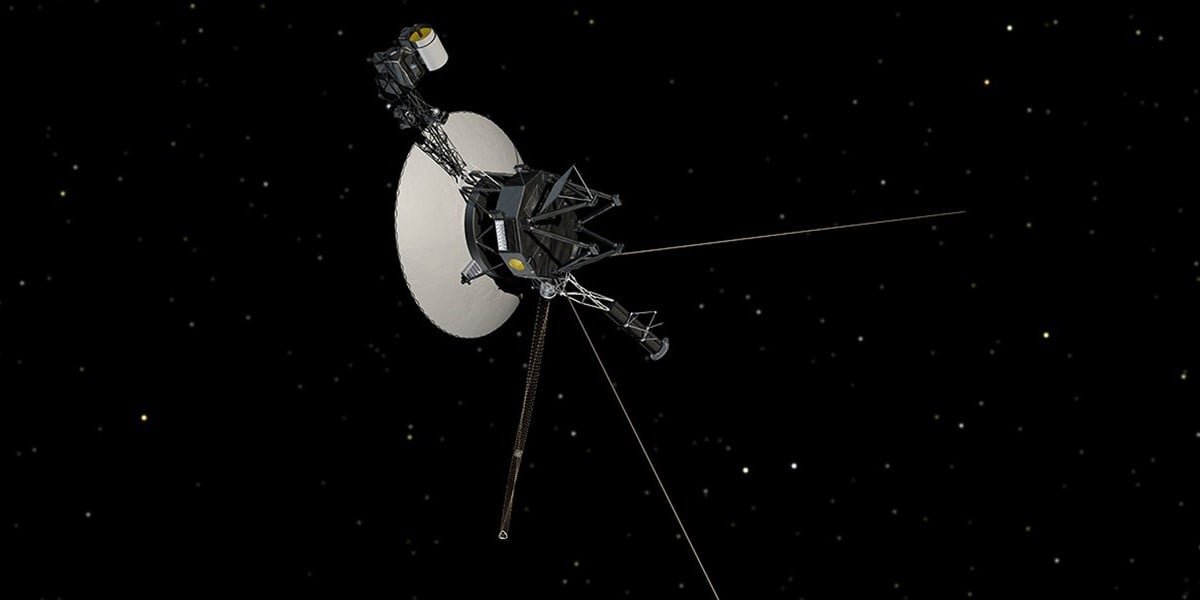
NASA's 'Big Bang' Upgrade Aims to Extend Voyager Missions
The Gist
NASA is developing a power-saving upgrade, 'Big Bang', to extend the operational life of the Voyager probes.
Explain Like I'm Five
"Imagine your toy robot is running out of batteries. NASA is trying to give the Voyager robots in space new, long-lasting batteries so they can keep sending us cool science stuff!"
Deep Intelligence Analysis
The planned testing of the 'Big Bang' upgrade on Voyager 2 in May and June, followed by Voyager 1 in July, underscores the urgency and methodical approach being taken. Success hinges on the ability to maintain critical spacecraft functions while significantly reducing power draw. The potential reactivation of Voyager 1's LECP instrument is a key objective, as it would restore a valuable scientific capability. However, even with a successful upgrade, the eventual decline in power output from the probes' radioisotope thermoelectric generators remains an unavoidable constraint.
From a market perspective, this situation highlights the ongoing demand for innovative power solutions in the space sector, particularly for long-duration missions. Companies specializing in advanced battery technology, energy harvesting, and efficient power management systems stand to benefit from this trend. Furthermore, the Voyager mission's longevity serves as a testament to the importance of robust design and redundancy in spacecraft engineering. This has implications for the design and development of future deep-space exploration missions, as well as the growing market for small satellites and other space-based assets.
_Context: This intelligence report was compiled by the DailyOrbitalWire Strategy Engine. Verified for Art. 50 Compliance._
Impact Assessment
The Voyager missions, far exceeding their initial four-year lifespan, continue to provide valuable data from deep space. Extending their operational life allows for continued scientific discovery and reinforces the longevity of space exploration technology.
Read Full Story on Hacker News SpaceKey Details
- ● Voyager 1 experienced a power drop during a February 27 roll maneuver.
- ● The 'Big Bang' upgrade involves swapping powered devices for lower-power alternatives.
- ● NASA plans to test 'Big Bang' on Voyager 2 in May and June, and Voyager 1 in July.
- ● Voyager 1's Low-energy Charged Particles experiment (LECP) was shut off to conserve power.
Optimistic Outlook
The 'Big Bang' upgrade could restore functionality to Voyager 1's LECP and significantly extend the mission's lifespan. Successful implementation promises continued data collection from the outer solar system, furthering our understanding of the heliosphere.
Pessimistic Outlook
The 'Big Bang' upgrade's success is not guaranteed, and failure could lead to further instrument shutdowns. The probes' radioisotope thermoelectric generators will eventually cease to provide sufficient power, limiting the mission's ultimate lifespan despite NASA's efforts.

The Signal, Not
the Noise|
Get the week's top 1% of space-tech intelligence synthesized into a 5-minute read. Join 25,000+ aerospace insiders.
Unsubscribe anytime. No spam, ever.