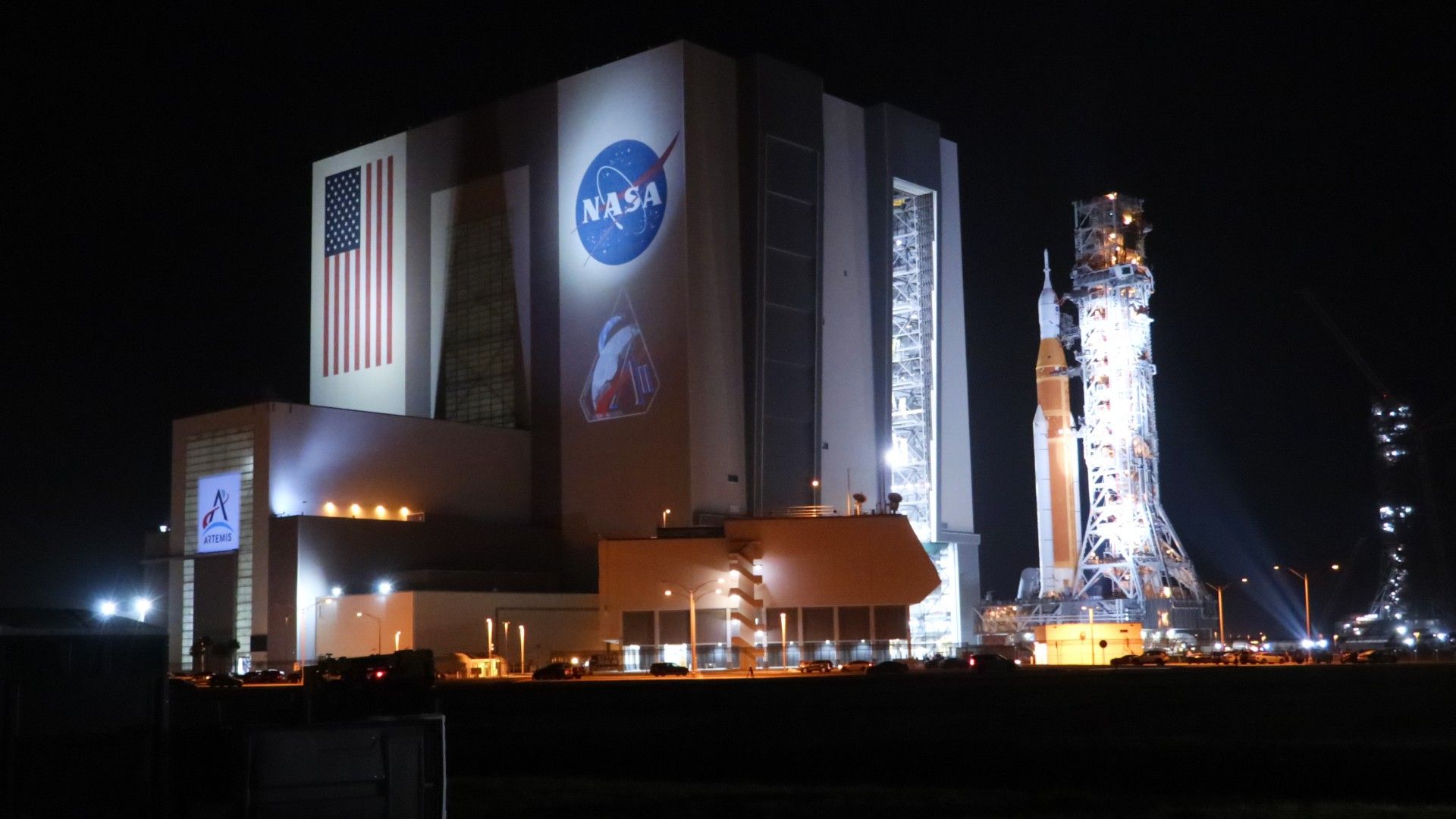
Artemis 2 Moon Rocket Returns to Launch Pad for Second Attempt
The Gist
NASA's Artemis 2 SLS rocket rolls back to Launch Pad 39B for its second launch attempt.
Explain Like I'm Five
"Imagine a giant rocket is going to take astronauts to the Moon! It had a practice run but sprung a leak, so they fixed it and are trying again. If it works, people will fly around the Moon for the first time in a long time!"
Deep Intelligence Analysis
The successful rollout of the SLS to Launch Pad 39B signifies progress in overcoming technical challenges that have plagued the program. The initial wet dress rehearsal revealed a liquid hydrogen leak, which was subsequently addressed. However, the identification of a helium flow issue necessitated a return to the Vehicle Assembly Building (VAB) for further repairs. These setbacks highlight the complexities inherent in developing and operating a new heavy-lift launch vehicle.
The Artemis 2 mission's success is crucial for validating the SLS rocket's performance and reliability. A successful flight would not only demonstrate the rocket's capabilities but also provide valuable data for future lunar missions, including the planned Artemis 3 landing. Conversely, further delays or technical issues could jeopardize the program's timeline and increase costs, potentially impacting the overall feasibility of NASA's lunar exploration goals. The mission's outcome will have significant implications for the future of human space exploration and the broader aerospace industry.
*Transparency Disclosure: This analysis was composed by an AI Large Language Model. While efforts have been made to ensure accuracy, the analysis should be considered critically and verified against source material.*
_Context: This intelligence report was compiled by the DailyOrbitalWire Strategy Engine. Verified for Art. 50 Compliance._
Impact Assessment
Artemis 2 marks a significant step in returning humans to the Moon, being the first crewed mission beyond low Earth orbit since 1972. Successful launch and mission completion will validate the SLS rocket's capabilities and pave the way for future lunar missions.
Read Full Story on Space.comKey Details
- ● The rollout began March 19 at 8 p.m. EDT, taking 12 hours to cover the 4-mile distance.
- ● Artemis 2 aims to launch no earlier than April 1, 2026.
- ● The mission will send four astronauts around the moon and back in the Orion spacecraft.
- ● The first rollout on Jan. 17 was followed by a wet dress rehearsal that revealed a liquid hydrogen leak.
Optimistic Outlook
If the April launch window is successful, Artemis 2 will reinvigorate human space exploration and provide invaluable data for future lunar missions. Subsequent launches within the month or in May could further accelerate the Artemis program's timeline.
Pessimistic Outlook
Delays beyond the April launch window could impact the Artemis program's schedule and increase costs. Recurring technical issues, such as the helium flow problem, pose a risk to mission success and could necessitate further redesigns or modifications.

The Signal, Not
the Noise|
Get the week's top 1% of space-tech intelligence synthesized into a 5-minute read. Join 25,000+ aerospace insiders.
Unsubscribe anytime. No spam, ever.