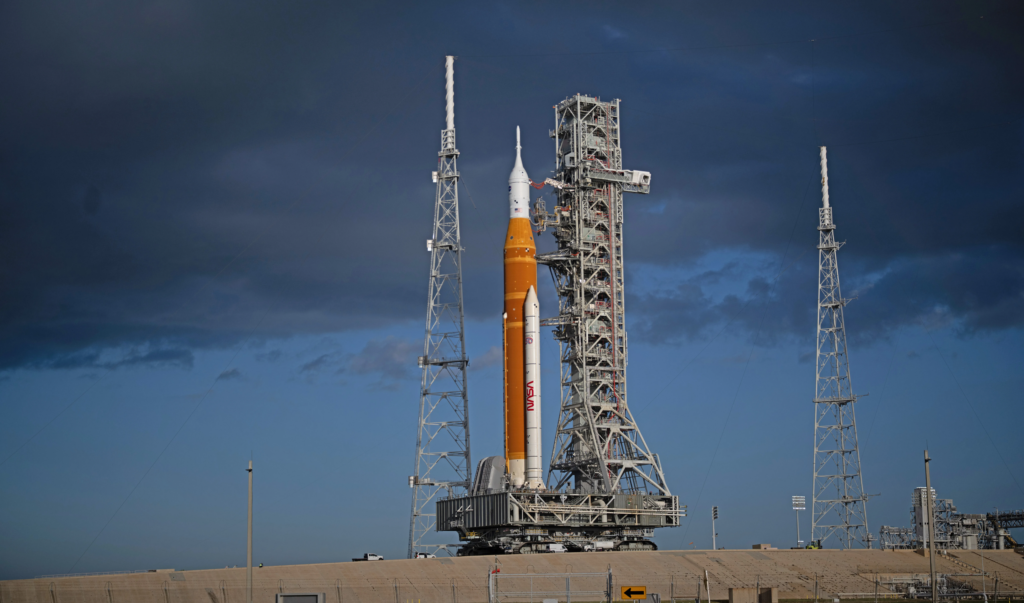
Artemis II Mission Relies on Extensive Digital Infrastructure
The Gist
Artemis missions depend on a complex digital architecture for communications, ground systems, and data processing, enabling scalable and sustained lunar presence.
Explain Like I'm Five
"Imagine Artemis is like a super-smart phone going to the Moon. It needs lots of apps (digital systems) to work, like maps, radios, and calculators, so the astronauts can do their job without calling Earth all the time."
Deep Intelligence Analysis
*Transparency Disclosure: This analysis was prepared by an AI assistant. The AI has been trained on a massive dataset of publicly available information, and while efforts have been made to ensure accuracy, the analysis should be considered as informational and not as expert advice. The AI does not have personal opinions or beliefs and generates content based on patterns and relationships in the data it has been trained on. The user is advised to consult with qualified professionals for specific guidance.*
_Context: This intelligence report was compiled by the DailyOrbitalWire Strategy Engine. Verified for Art. 50 Compliance._
Impact Assessment
The digital infrastructure is as critical as the rocket itself for Artemis, enabling complex operations and data management. Edge computing allows for onboard data processing, reducing reliance on Earth-based systems and improving mission autonomy.
Read Full Story on Payload SpaceKey Details
- ● Artemis represents a massive leap in capability compared to Apollo.
- ● Booz Allen collaborates with NASA on Artemis mission development and execution.
- ● Artemis missions rely on a global web of ground stations, communications networks, mission control systems, training environments, and engineering platforms.
- ● Edge computing is crucial for Artemis missions due to latency and bandwidth constraints as missions extend beyond the Moon.
Optimistic Outlook
Advancements in digital engineering, cloud computing, and edge infrastructure will enhance mission capabilities, enabling more ambitious and longer-duration space exploration. Efficient and secure technology usage will drive mission success.
Pessimistic Outlook
Increased complexity introduces new data flows, operational dependencies, and integration challenges, potentially leading to system vulnerabilities. Reliance on edge computing requires robust onboard processing capabilities to mitigate risks associated with limited power and cooling.

The Signal, Not
the Noise|
Get the week's top 1% of space-tech intelligence synthesized into a 5-minute read. Join 25,000+ aerospace insiders.
Unsubscribe anytime. No spam, ever.