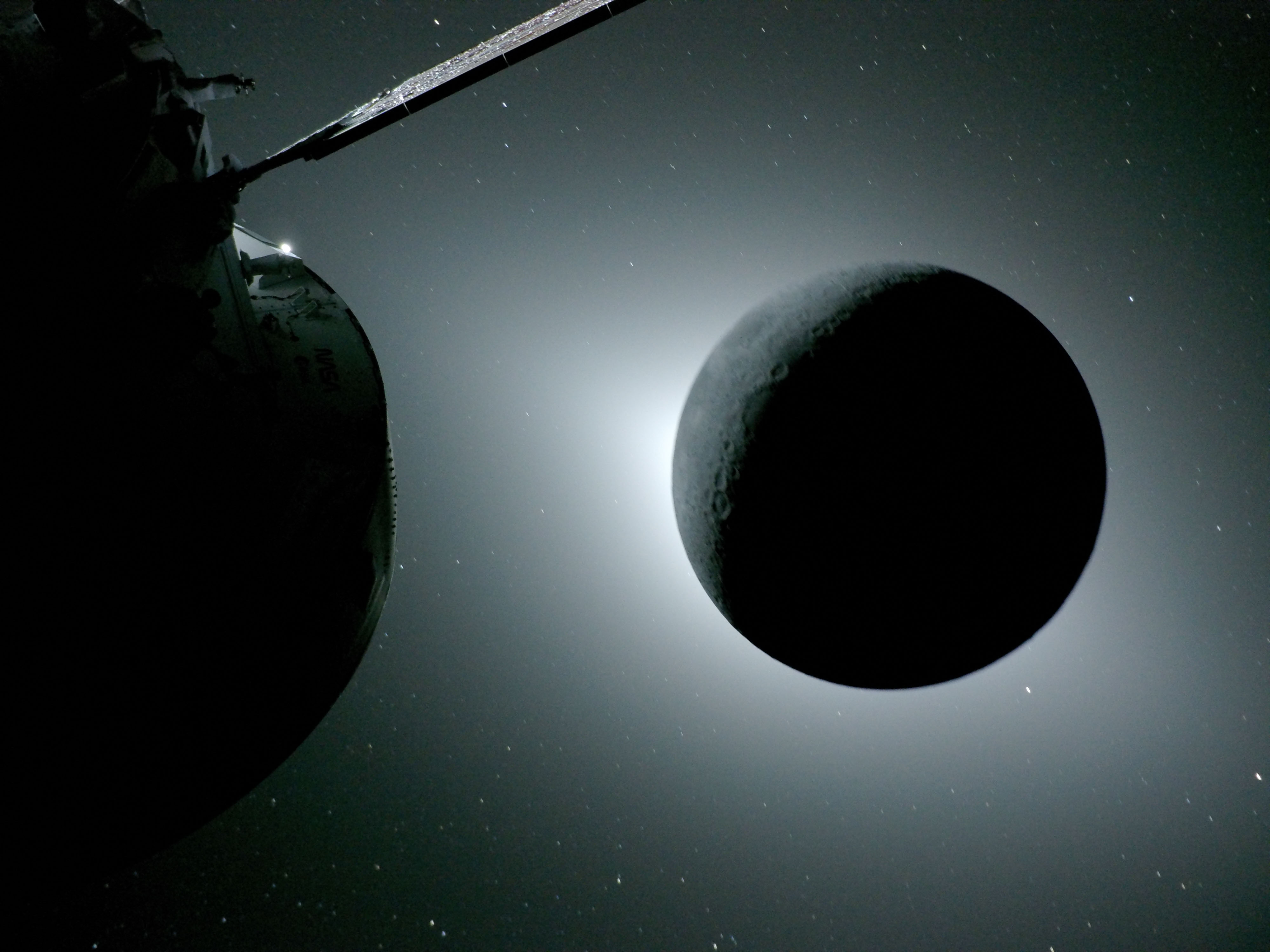
Artemis II Captures Solar Eclipse During Lunar Flyby in 2026
The Gist
Artemis II astronauts observed a solar eclipse during their lunar flyby on April 6, 2026.
Explain Like I'm Five
"Imagine you're on a spaceship flying around the Moon, and you see the Earth block the Sun, making a cool shadow show! That's what the Artemis II astronauts saw!"
Deep Intelligence Analysis
_Context: This intelligence report was compiled by the DailyOrbitalWire Strategy Engine. Verified for Art. 50 Compliance._
Impact Assessment
This event showcases the capabilities of the Artemis II mission and provides unique scientific observation opportunities. The imagery captured contributes to our understanding of solar phenomena and lunar interactions.
Read Full Story on NASA ArtemisKey Details
- ● The solar eclipse was observed on April 6, 2026.
- ● The eclipse was photographed by cameras on the Orion spacecraft's solar array wings.
- ● The Artemis II crew were in a unique position to observe the eclipse.
Optimistic Outlook
The successful capture of the solar eclipse demonstrates the advanced technology and operational capabilities of the Artemis program. This bodes well for future lunar missions and deep space exploration, potentially leading to further scientific discoveries and advancements in space technology.
Pessimistic Outlook
While the eclipse observation was successful, it highlights the dependence on mission-specific positioning for unique scientific opportunities. Future missions may require more flexible and adaptable observation platforms to maximize scientific return.

The Signal, Not
the Noise|
Get the week's top 1% of space-tech intelligence synthesized into a 5-minute read. Join 25,000+ aerospace insiders.
Unsubscribe anytime. No spam, ever.