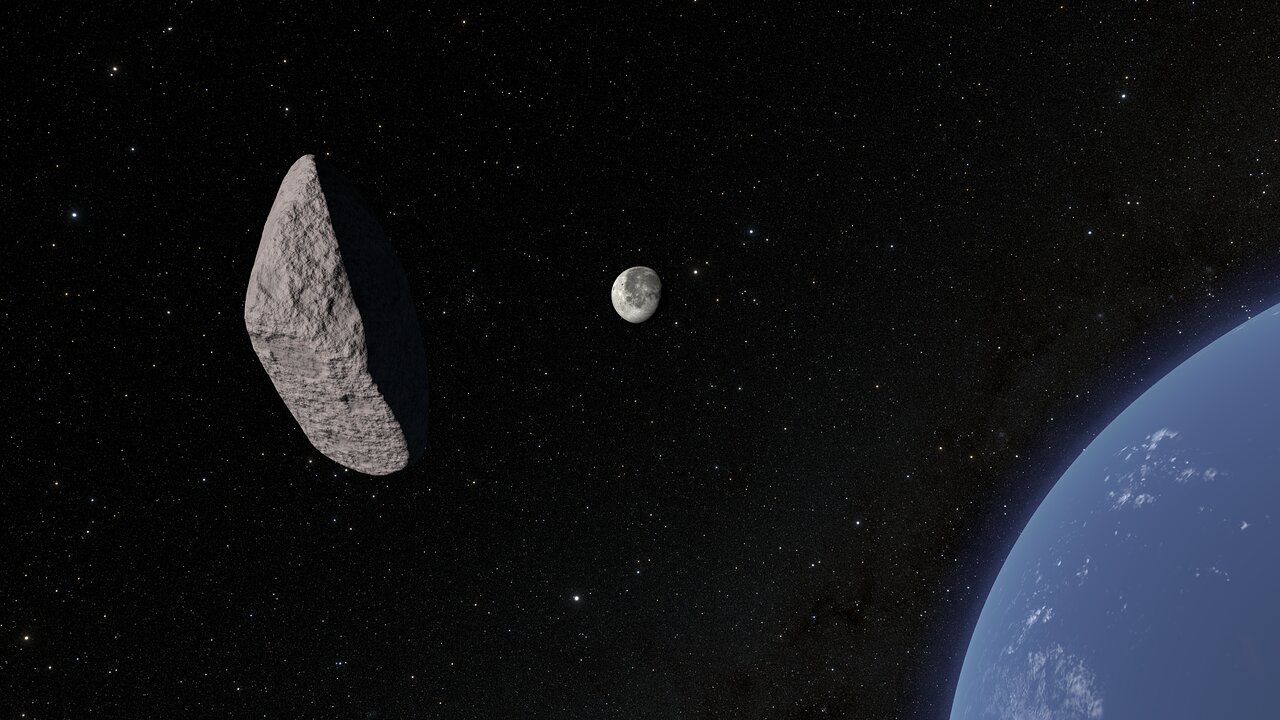
Asteroid 2024 YR4 Will Not Hit the Moon in 2032, JWST Confirms
The Gist
James Webb Space Telescope data confirms asteroid 2024 YR4 will safely pass the moon in 2032, averting a potential impact.
Explain Like I'm Five
"Imagine a ball (asteroid) almost hitting a smaller ball (moon). Scientists used a super-powerful telescope (JWST) to see exactly where the big ball is going, and it will miss the moon!"
Deep Intelligence Analysis
The averted impact, while positive, serves as a reminder of the ongoing need for improved asteroid detection and tracking capabilities. Many more undiscovered asteroids pose potential risks to Earth and the moon, and continuous monitoring and research are essential to ensure planetary safety. The success of JWST in this instance validates its use for planetary defense and highlights the potential for future space-based observatories to play a critical role in mitigating impact risks.
*Transparency Footnote: This analysis was conducted by an AI, model: Gemini 2.5 Flash, and is intended to provide insights into the strategic implications of the asteroid's trajectory based on the provided source material. No independent research or external data sources were used.*
_Context: This intelligence report was compiled by the DailyOrbitalWire Strategy Engine. Verified for Art. 50 Compliance._
Impact Assessment
This highlights the importance of space-based telescopes like JWST in refining asteroid orbits and mitigating potential impact risks. It also demonstrates international collaboration in planetary defense efforts.
Read Full Story on Space.comKey Details
- ● Asteroid 2024 YR4, once considered a potential lunar impactor, will miss the moon.
- ● JWST observations refined 2024 YR4's orbit, ruling out a collision.
- ● The asteroid will pass the moon at an altitude of 13,200 miles (21,200 kilometers).
- ● 2024 YR4 has a diameter of about 197 feet (60 meters).
- ● Originally, there was a 4.3% chance of lunar impact on Dec 22, 2032.
Optimistic Outlook
Improved asteroid tracking capabilities will reduce uncertainty and enhance our ability to predict and prevent future impacts. This success validates the use of JWST for planetary defense.
Pessimistic Outlook
While this specific threat is averted, many more undiscovered asteroids pose potential risks. Continuous monitoring and research are crucial to ensure planetary safety.

The Signal, Not
the Noise|
Get the week's top 1% of space-tech intelligence synthesized into a 5-minute read. Join 25,000+ aerospace insiders.
Unsubscribe anytime. No spam, ever.