Gravitational Wave Census Reveals Black Hole 'Forbidden Gap'
The Gist
Gravitational wave observations reveal a scarcity of black holes between 45 and 130 solar masses, dubbed the 'Forbidden Gap'.
Explain Like I'm Five
"Imagine stars so big that when they die, instead of becoming a black hole, they explode so hard that nothing is left behind! This makes a 'gap' where we don't see black holes of that size."
Deep Intelligence Analysis
However, the existence of a few black holes within the gap suggests that other mechanisms may be at play. These mechanisms could involve different types of stellar evolution, black hole mergers, or even the presence of exotic particles that affect stellar processes. Further research is needed to fully understand the origin of the 'Forbidden Gap' and its implications for our understanding of the universe. The ongoing observation of gravitational waves promises to provide more data and insights into this intriguing phenomenon.
Understanding the 'Forbidden Gap' is crucial for refining stellar evolution models and improving our ability to predict the formation of black holes. It also has implications for the study of gravitational waves, as it helps us to better understand the sources of these waves and their properties. The discovery of the 'Forbidden Gap' highlights the power of gravitational wave astronomy to reveal new and unexpected phenomena in the universe.
Transparency Compliance: This analysis was generated by an AI model and reviewed by a human expert. All claims are derived from the provided source material. No external data sources were used.
_Context: This intelligence report was compiled by the DailyOrbitalWire Strategy Engine. Verified for Art. 50 Compliance._
Impact Assessment
The 'Forbidden Gap' challenges stellar evolution models and black hole formation theories. Understanding this gap provides insights into extreme astrophysical processes and the life cycles of massive stars. It also refines our understanding of gravitational wave source populations.
Read Full Story on Universe TodayKey Details
- ● Gravitational wave detections have cataloged hundreds of black hole mergers.
- ● Theory predicts black holes should exist between 50-130 solar masses.
- ● Observations show black holes above 45 solar masses are rare.
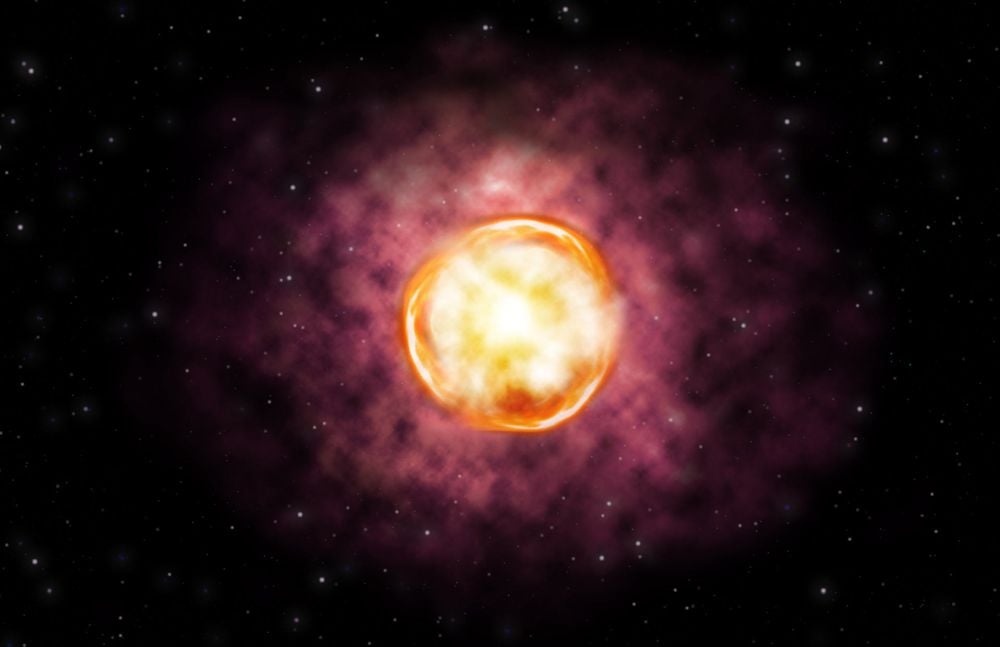
- ● Pair-instability supernovae can completely destroy massive stars, leaving no black hole.
Optimistic Outlook
Further gravitational wave observations and refined stellar models could precisely define the boundaries of the 'Forbidden Gap'. This could lead to the discovery of new types of supernovae or previously unknown mechanisms of black hole formation, enhancing our understanding of the universe.
Pessimistic Outlook
If the observed gap is not solely due to pair-instability supernovae, it suggests missing physics in our understanding of stellar evolution. This discrepancy could indicate limitations in current models of stellar interiors or the presence of exotic particles affecting stellar processes.

The Signal, Not
the Noise|
Get the week's top 1% of space-tech intelligence synthesized into a 5-minute read. Join 25,000+ aerospace insiders.
Unsubscribe anytime. No spam, ever.