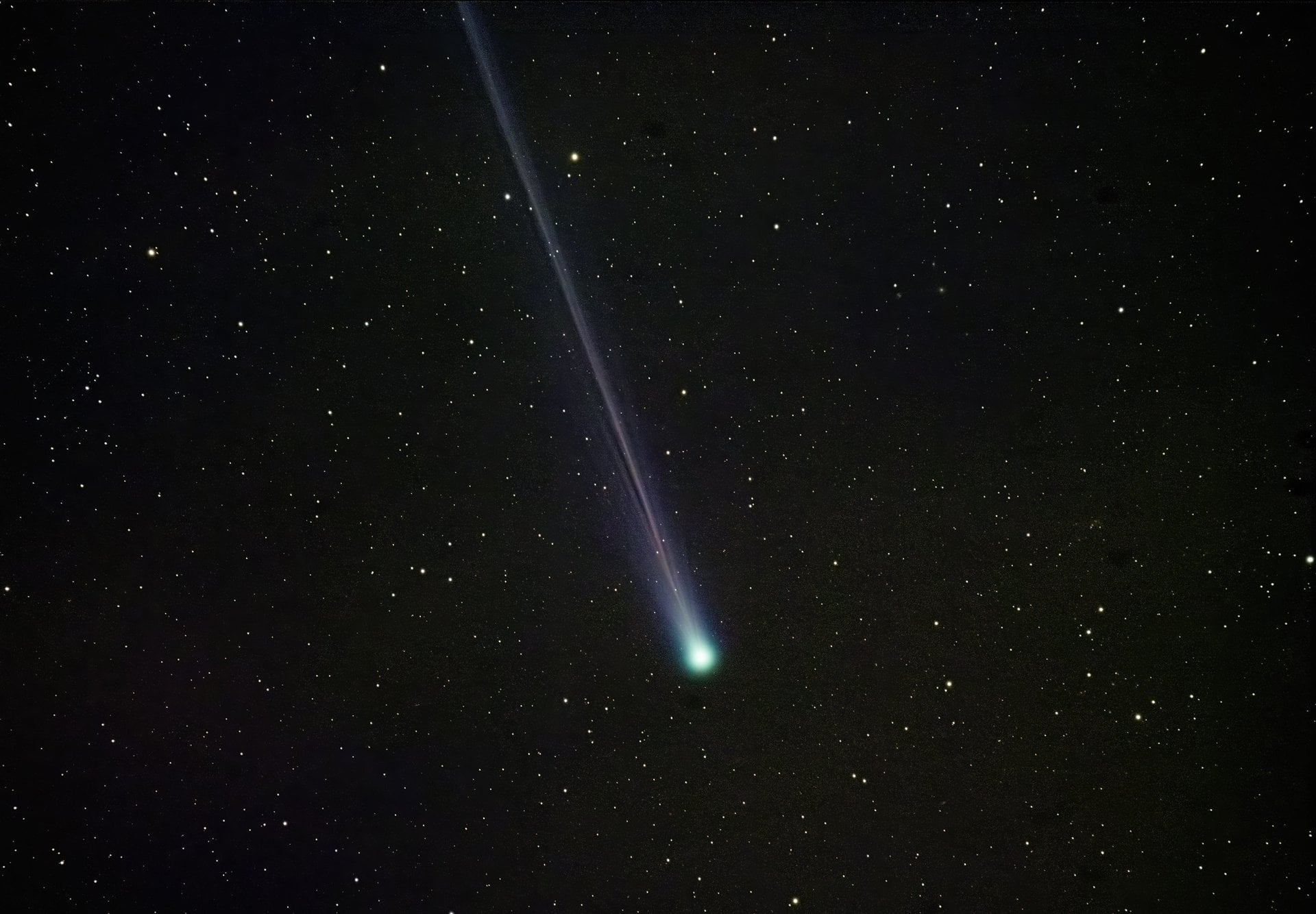
Comet R3 Pan-STARRS Reaches Perihelion, Offers Dawn Display
The Gist
Comet R3 Pan-STARRS reached perihelion in April 2026, providing a dawn showing for observers and capturing attention via space-based observatories.
Explain Like I'm Five
"A giant snowball from space, called Comet R3, got really close to the Sun! Even though it was hard to see from Earth, special telescopes in space watched it and learned about what it's made of."
Deep Intelligence Analysis
_Context: This intelligence report was compiled by the DailyOrbitalWire Strategy Engine. Verified for Art. 50 Compliance._
Impact Assessment
The comet's perihelion passage offers valuable data for understanding cometary behavior near the Sun. Observations from SOHO and GOES-19 provide insights into the comet's dust tail and coma composition.
Read Full Story on Universe TodayKey Details
- ● Comet R3 Pan-STARRS reached perihelion on April 19th at 0.499 AU from the Sun.
- ● It made its closest Earth approach on April 26th at 0.523 AU.
- ● The comet was discovered on September 8th, 2025, by the Pan-STARRS sky survey.
Optimistic Outlook
The survival of Comet R3 Pan-STARRS through perihelion suggests a robust composition, offering opportunities for extended observation as it recedes. Continued monitoring by space-based observatories will yield further data on its evolution and interaction with the solar wind.
Pessimistic Outlook
The comet's close proximity to the Sun and relatively small size could lead to its eventual disintegration. The limited viewing window from Earth poses challenges for ground-based observations.

The Signal, Not
the Noise|
Get the week's top 1% of space-tech intelligence synthesized into a 5-minute read. Join 25,000+ aerospace insiders.
Unsubscribe anytime. No spam, ever.