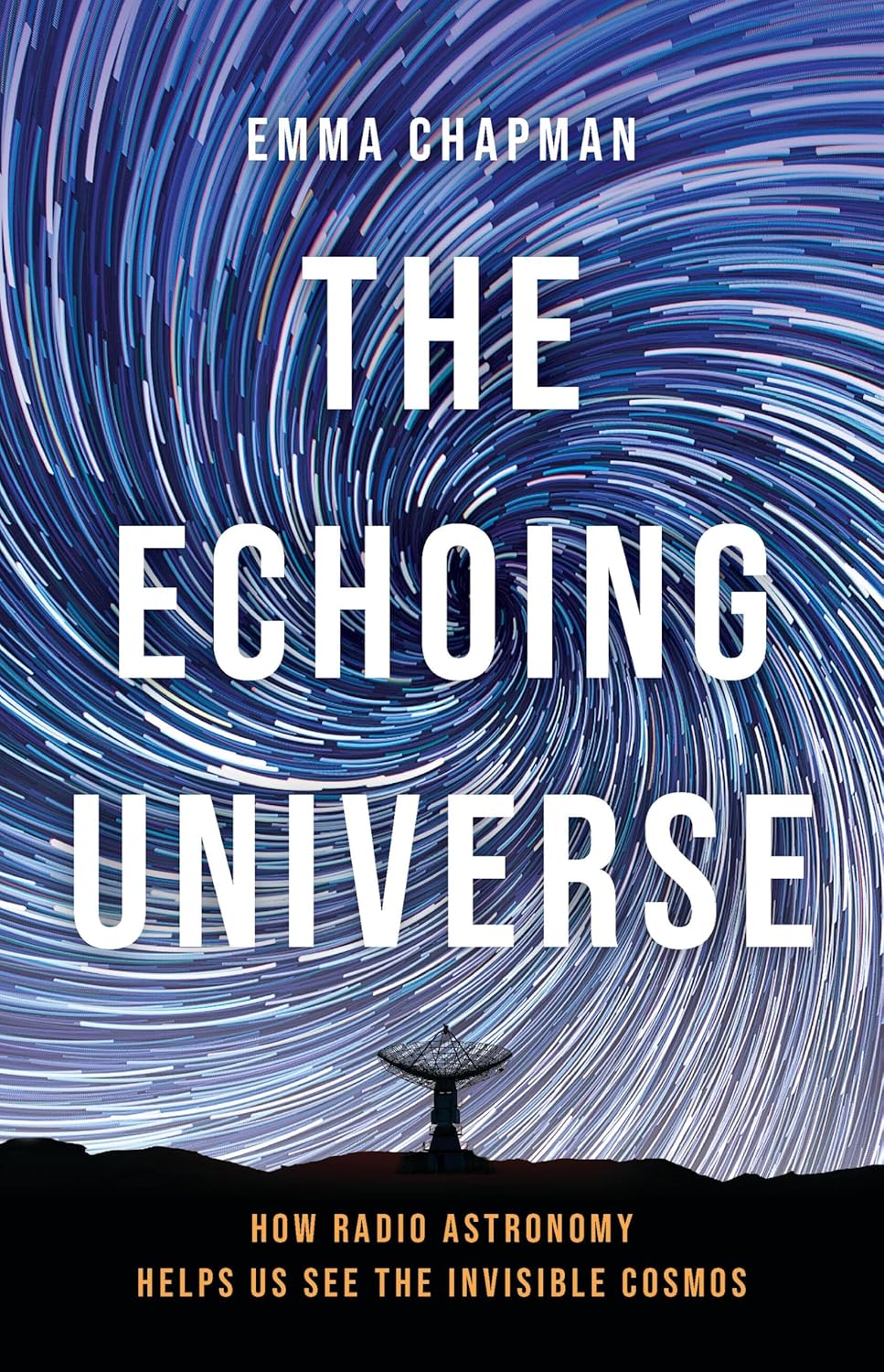
The Echoing Universe: Radio Astronomy's Impact on Understanding the Cosmos
The Gist
A review of 'The Echoing Universe' highlights radio astronomy's crucial role in exploring the invisible universe.
Explain Like I'm Five
"Imagine using giant ears to listen to space! Radio telescopes hear sounds from stars and planets that we can't see with our eyes, helping us learn about the universe."
Deep Intelligence Analysis
_Context: This intelligence report was compiled by the DailyOrbitalWire Strategy Engine. Verified for Art. 50 Compliance._
Impact Assessment
Radio astronomy provides unique insights into the universe, from mapping planetary surfaces to detecting hazardous space weather events. The development of new radio telescopes like the Square Kilometer Array promises further discoveries.
Read Full Story on Universe TodayKey Details
- ● Radio astronomy uses long wavelengths to study celestial objects.
- ● The book traces radio astronomy from Karl Jansky's antenna to the Event Horizon Telescope.
- ● Radio waves can penetrate Venus' clouds and detect coronal mass ejections.
Optimistic Outlook
Advancements in radio astronomy, such as the Square Kilometer Array, will enable deeper exploration of the universe, potentially revealing new information about dark matter and the early universe. This could lead to breakthroughs in our understanding of cosmology and astrophysics.
Pessimistic Outlook
Increasing radio frequency interference on Earth poses a challenge to radio astronomy, potentially limiting the ability to detect faint signals from distant objects. Securing funding for large-scale radio telescope projects may also be difficult.

The Signal, Not
the Noise|
Get the week's top 1% of space-tech intelligence synthesized into a 5-minute read. Join 25,000+ aerospace insiders.
Unsubscribe anytime. No spam, ever.