Exoplanet Spin Survey Confirms Planetary Mass-Rotation Link
The Gist
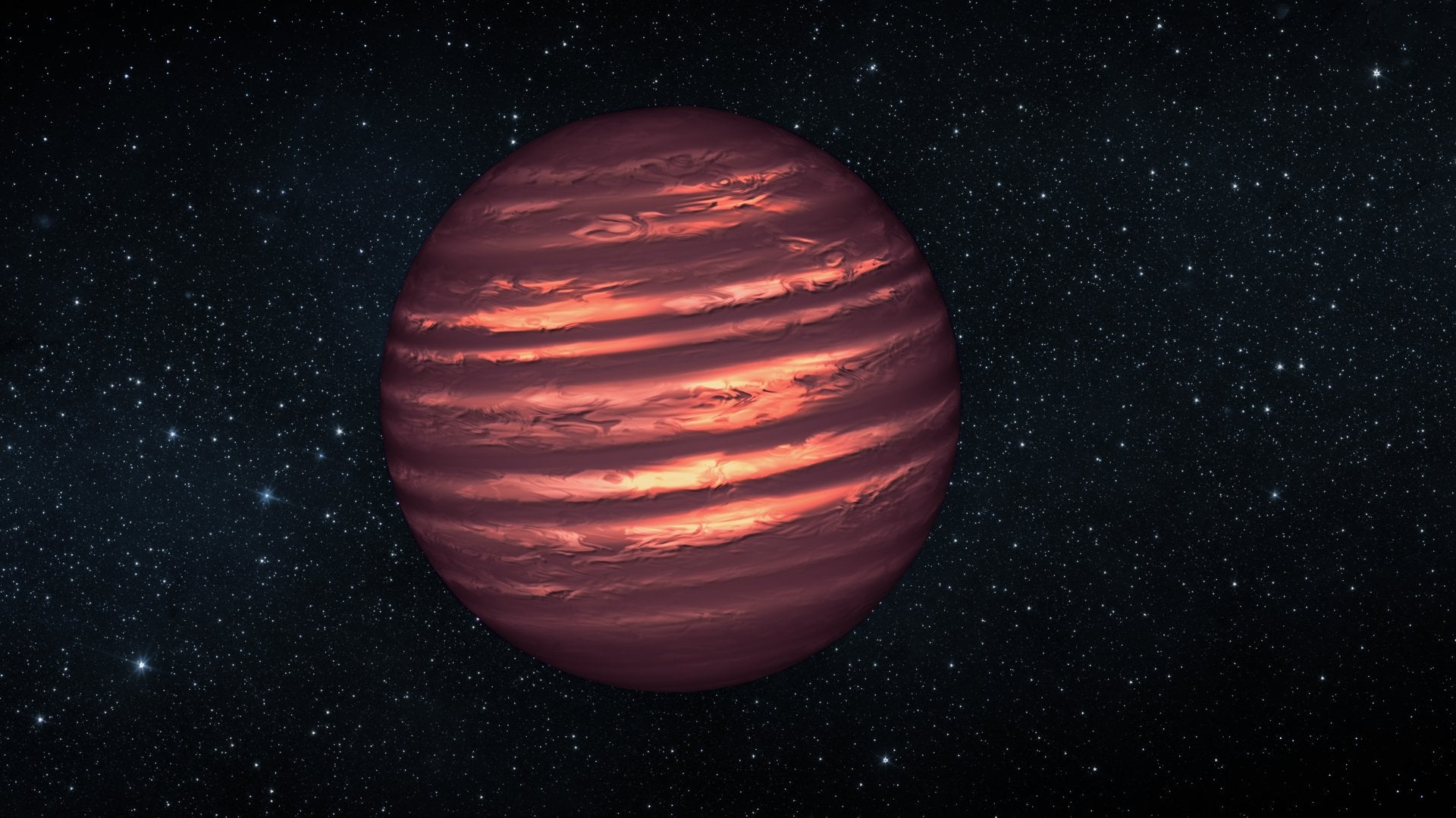
A large survey of exoplanets confirms that gas giants spin faster than more massive brown dwarfs, influenced by mass and star-planet mass ratio.
Explain Like I'm Five
"Imagine spinning a basketball and a bowling ball. The basketball spins faster because it's lighter! Scientists found something similar with planets and big, heavy space balls called brown dwarfs."
Deep Intelligence Analysis
The study also highlights the importance of considering the ratio between a planet's mass and its star's mass when analyzing planetary spin. This suggests that interactions between the planet and its host star can influence the planet's rotational speed. The example of the HR 8799 system, where a gas giant spins significantly faster than a more massive brown dwarf companion, illustrates the complexity of these interactions. The findings contribute to a more nuanced understanding of the factors that shape planetary systems and pave the way for future research into the dynamics of exoplanets.
*Transparency Footnote: This analysis was conducted by an AI model to provide an objective assessment of the exoplanet spin survey, focusing on its scientific methodology, key findings, and potential implications for our understanding of planetary formation. The AI model is trained on a vast dataset of astronomical literature, ensuring that the analysis is grounded in factual information and avoids subjective opinions.*
_Context: This intelligence report was compiled by the DailyOrbitalWire Strategy Engine. Verified for Art. 50 Compliance._
Impact Assessment
Understanding exoplanet spin rates provides insights into planetary formation processes and the evolution of planetary systems. This research helps refine models of planetary dynamics and magnetic field interactions.
Read Full Story on Universe TodayKey Details
- ● The study analyzed 32 gas giants and brown dwarfs using the Keck Observatory.
- ● Gas giant planets spin faster than more massive brown dwarfs.
- ● The study consulted historical data to create a sample of 43 stellar/substellar companions and giant planets.
- ● The team used the KPIC instrument to isolate light from rotating planets.
Optimistic Outlook
Improved understanding of exoplanet formation could lead to the discovery of more habitable planets and a better understanding of the conditions necessary for life. This research could also inform the search for extraterrestrial intelligence.
Pessimistic Outlook
The complexity of planetary formation processes makes it difficult to draw definitive conclusions about the habitability of exoplanets. Further research is needed to fully understand the factors that influence planetary spin and evolution.

The Signal, Not
the Noise|
Get the week's top 1% of space-tech intelligence synthesized into a 5-minute read. Join 25,000+ aerospace insiders.
Unsubscribe anytime. No spam, ever.