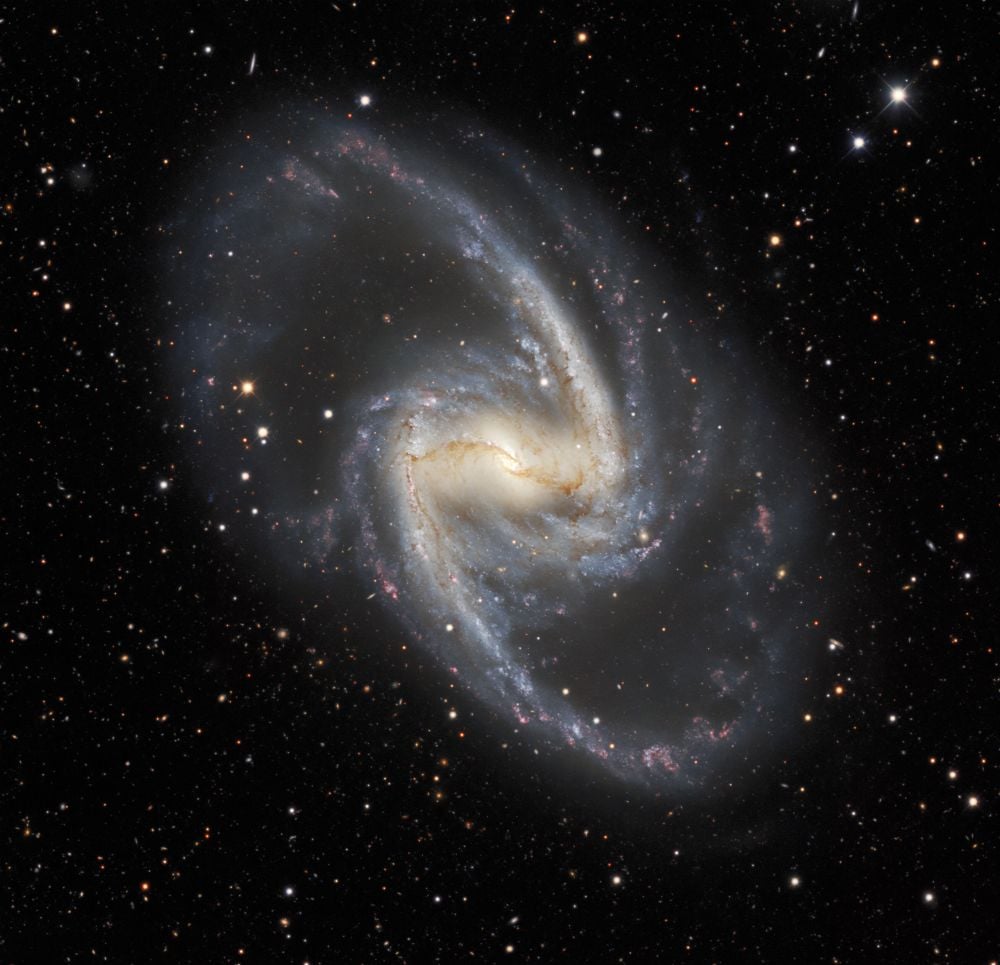
Extragalactic Archaeology Uses Oxygen to Map Galaxy Evolution
The Gist
Researchers are using oxygen abundance to trace the growth history of galaxies, including NGC 1365.
Explain Like I'm Five
"Scientists are using oxygen like a map to understand how galaxies grow and change over billions of years!"
Deep Intelligence Analysis
_Context: This intelligence report was compiled by the DailyOrbitalWire Strategy Engine. Verified for Art. 50 Compliance._
Impact Assessment
This method provides insights into galaxy formation and evolution beyond our own Milky Way. Understanding galactic history helps explain the origins of elements like oxygen.
Read Full Story on Universe TodayKey Details
- ● Oxygen abundance indicates star formation rates in different galaxy regions.
- ● The TYPHOON survey maps oxygen in 44 nearby galaxies.
- ● NGC 1365, the Great Barred Spiral Galaxy, is 56 million light-years away.
Optimistic Outlook
The TYPHOON survey's high-resolution maps could reveal new details about galaxy mergers and gas infall. This technique may refine models of galactic evolution and star formation.
Pessimistic Outlook
Resolving oxygen abundance in distant galaxies remains challenging. The method relies on accurate measurements and interpretations of complex data.

The Signal, Not
the Noise|
Get the week's top 1% of space-tech intelligence synthesized into a 5-minute read. Join 25,000+ aerospace insiders.
Unsubscribe anytime. No spam, ever.