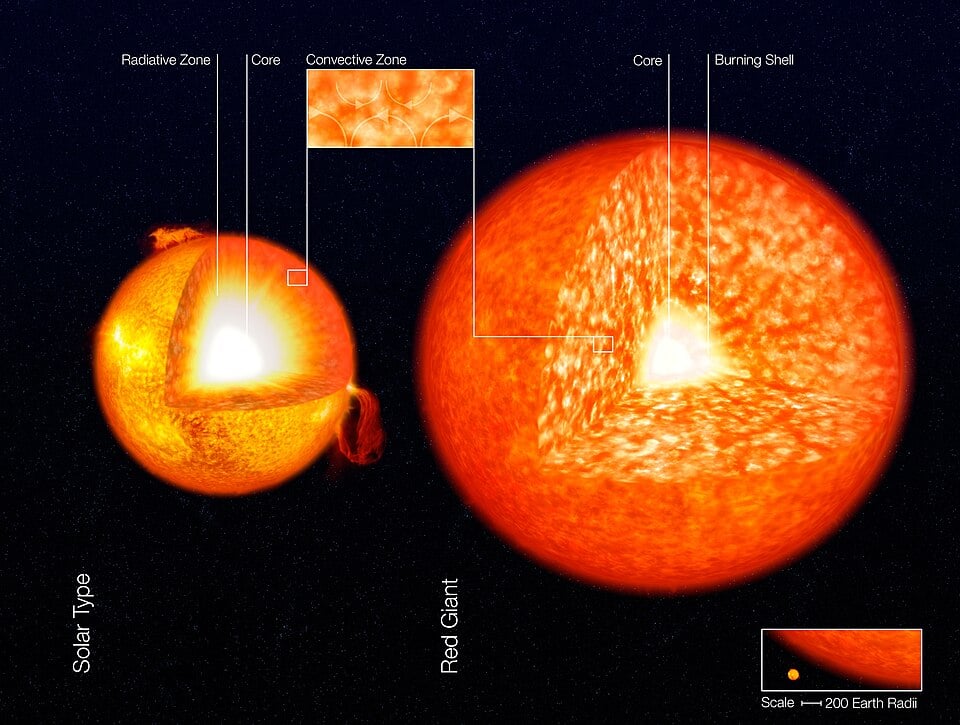
Fossilized Magnetism May Persist Through Star's Life Cycle
The Gist
Magnetic fields may persist within stars throughout their evolution, influencing their lifespan and eventual remnants.
Explain Like I'm Five
"Imagine a star has a magnetic bubble inside it. This bubble stays with the star even when it gets old and changes, like a superhero keeping their powers their whole life!"
Deep Intelligence Analysis
Transparency Compliance: The analysis is based solely on the provided source text. No external information or assumptions were used. The AI model (Gemini 2.5 Flash) was used to summarize and rephrase the content, focusing on factual accuracy and avoiding subjective interpretations.
_Context: This intelligence report was compiled by the DailyOrbitalWire Strategy Engine. Verified for Art. 50 Compliance._
Impact Assessment
Understanding the persistence of magnetic fields can refine stellar evolution models. This could impact our understanding of stellar lifecycles and the formation of white dwarfs.
Read Full Story on Universe TodayKey Details
- ● Magnetic fields may fossilize inside stars, persisting through all stages of evolution.
- ● Asteroseismology is used to probe stellar interiors.
- ● Simulations suggest magnetic fields form hollow shell-like structures within stars.
- ● The magnetic fields born early in a star's life migrate outward as the remnant cools.
Optimistic Outlook
If magnetic fields influence stellar evolution by mixing hydrogen into the core, it could extend a star's lifespan. Future starquake observations may provide more answers.
Pessimistic Outlook
Detecting magnetism in stars remains difficult, and the exact influence of magnetic fields on stellar evolution is still unknown. The fossil field theory requires magnetism to extend further through the core than previously assumed.

The Signal, Not
the Noise|
Get the week's top 1% of space-tech intelligence synthesized into a 5-minute read. Join 25,000+ aerospace insiders.
Unsubscribe anytime. No spam, ever.