BREAKING: Awaiting the latest intelligence wire...
Back to Wire
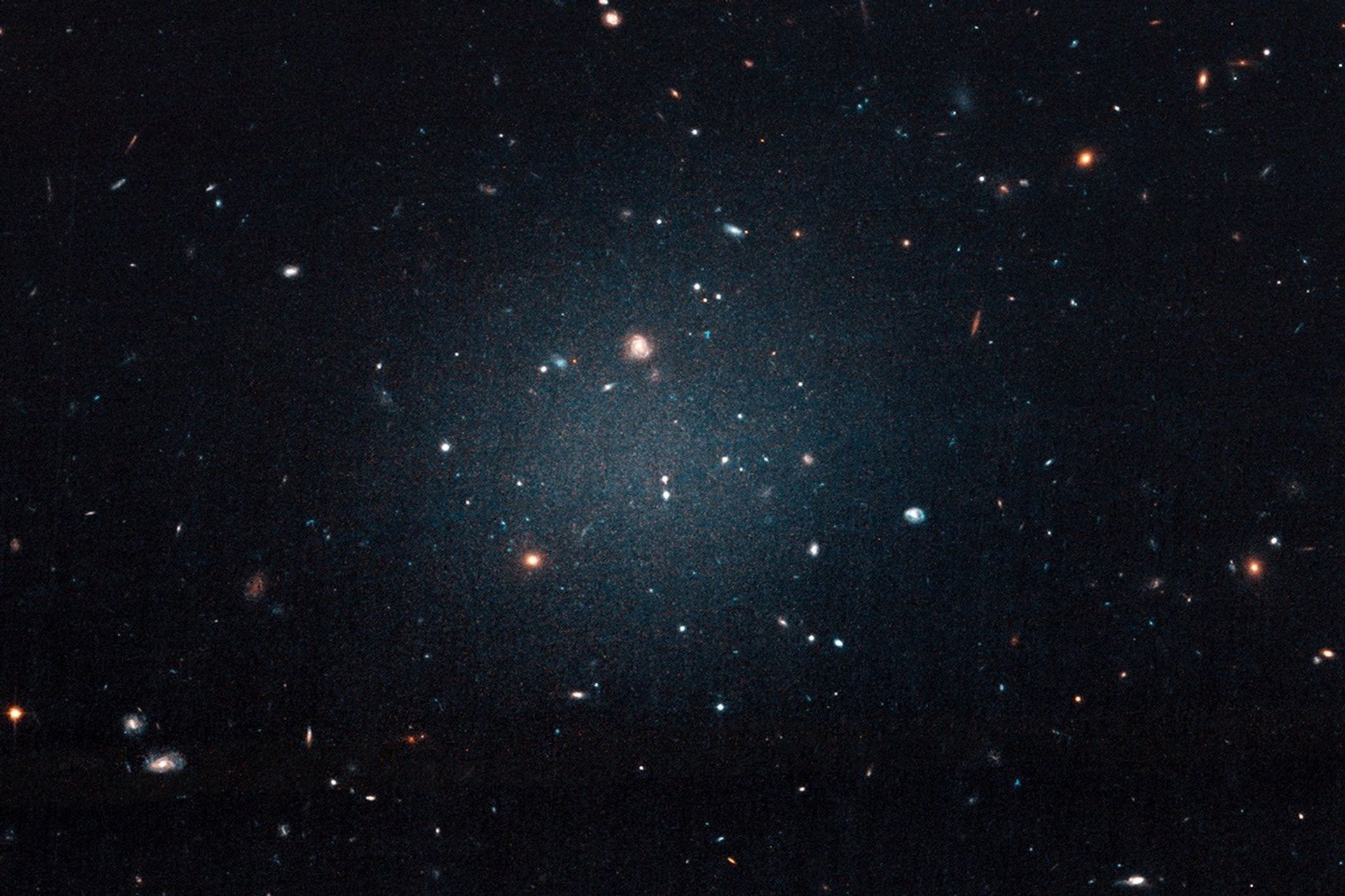
Astronomers Discover Third Galaxy Lacking Dark Matter, Bolstering Cosmic Collision Theory
Satellites

Astronomers Discover Third Galaxy Lacking Dark Matter, Bolstering Cosmic Collision Theory

Source: Universe Today Original Author: Andy Tomaswick Intelligence Analysis by Gemini

The Gist

Discovery of NGC 1052-DF9 supports the 'Bullet Dwarf' collision theory, suggesting some galaxies can exist without dark matter.

Explain Like I'm Five

"Imagine galaxies are held together by invisible glue called dark matter. Scientists found some galaxies that seem to have lost their glue, maybe because they bumped into each other really hard!"

Deep Intelligence Analysis

The discovery of NGC 1052-DF9 adds significant weight to the controversial 'Bullet Dwarf' collision scenario, suggesting a mechanism by which galaxies can exist without significant dark matter. This challenges the prevailing cosmological models that rely on dark matter as the primary gravitational scaffolding for galaxy formation. The initial discovery of DF2 already presented a paradox for Modified Newtonian Dynamics (MOND), an alternative theory to dark matter, and the subsequent confirmation by Hubble further solidified the case against MOND. The string of galaxies, DF2, DF4 and now DF9, strengthens the argument that these are not isolated anomalies but part of a larger phenomenon. The implications of these findings are profound, potentially requiring a re-evaluation of our understanding of dark matter, gravity, and the processes that govern galaxy evolution. Further research is needed to fully understand the mechanisms behind these dark matter deficient galaxies and their impact on our cosmological models. The 'Bullet Dwarf' theory proposes that collisions between dwarf galaxies can strip away dark matter, leaving behind ultra-diffuse galaxies like those observed. This discovery highlights the dynamic and complex nature of galaxy formation and evolution, suggesting that interactions and mergers play a crucial role in shaping the properties of galaxies. The ongoing debate between dark matter and alternative theories like MOND underscores the need for continued research and exploration in the field of cosmology. The discovery of galaxies lacking dark matter provides a unique opportunity to test our understanding of gravity and the fundamental laws of physics.

_Context: This intelligence report was compiled by the DailyOrbitalWire Strategy Engine. Verified for Art. 50 Compliance._

Impact Assessment

This discovery challenges existing models of galaxy formation and dark matter's role. It could lead to a better understanding of gravity and the universe's composition.

Read Full Story on Universe Today

Key Details

  • NGC 1052-DF9 is the latest galaxy found seemingly devoid of dark matter.
  • The 'Bullet Dwarf' collision theory is supported by this discovery.
  • The galaxy DF2's discovery in 2018 challenged Modified Newtonian Dynamics (MOND).
  • Hubble confirmed the distance calculations of DF2, strengthening the no dark matter claim.

Optimistic Outlook

Further research into these galaxies could reveal new physics beyond the Standard Model. This may lead to innovative technologies based on a deeper understanding of gravity.

Pessimistic Outlook

If the 'Bullet Dwarf' theory is incorrect, it could indicate a flaw in our understanding of dark matter detection methods. This would require revisiting fundamental assumptions about the universe.

DailyOrbitalWire Logo

The Signal, Not
the Noise|

Get the week's top 1% of space-tech intelligence synthesized into a 5-minute read. Join 25,000+ aerospace insiders.

Unsubscribe anytime. No spam, ever.

```