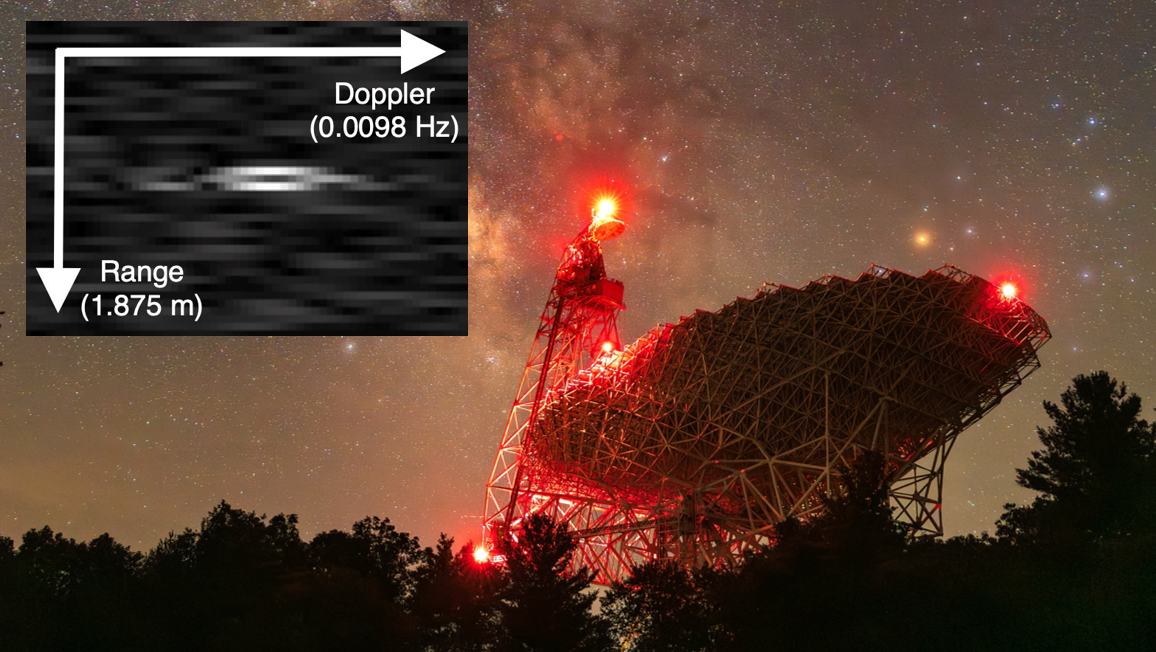
Green Bank Telescope Tracks Artemis II with Unprecedented Precision
The Gist
The Green Bank Telescope precisely tracked NASA's Artemis II mission, demonstrating ground-based radio telescopes' critical support role for crewed lunar missions.
Explain Like I'm Five
"Imagine a giant ear on Earth listening to a spaceship going to the Moon. This ear is so good, it can tell how fast the ship is going with super accuracy, helping NASA keep the astronauts safe!"
Deep Intelligence Analysis
The GBT's involvement in the Artemis II mission builds upon its previous contributions to space exploration, including providing radar support during NASA's DART mission. These experiences are collectively establishing an infrastructure that extends beyond pure scientific research, offering vital support for both governmental and commercial space endeavors. As the frequency of lunar missions increases, the availability of independent, ultra-precise tracking capabilities becomes increasingly important for ensuring mission safety and success.
However, the reliance on ground-based telescopes also introduces potential vulnerabilities. Atmospheric conditions, equipment malfunctions, or even intentional interference could disrupt tracking capabilities. Therefore, further research and development are needed to enhance the robustness and reliability of ground-based tracking systems. This includes exploring techniques for mitigating atmospheric effects, implementing redundant tracking systems, and establishing secure communication protocols. The integration of ground-based telescopes into space mission infrastructure requires a comprehensive approach that addresses both technical and operational challenges to ensure consistent and dependable support for future lunar endeavors.
Transparency Compliance: This analysis was generated by an AI assistant to provide a concise summary of the provided news article. The AI model (Gemini 2.5 Flash) was trained to extract key details, assess the strategic importance, and formulate potential outlooks based on the information presented in the article. The analysis aims to provide factual information and avoid subjective opinions or unsubstantiated claims. The AI's interpretation is intended to be a starting point for further research and discussion.
_Context: This intelligence report was compiled by the DailyOrbitalWire Strategy Engine. Verified for Art. 50 Compliance._
Impact Assessment
This showcases the potential of ground-based radio telescopes to provide independent and highly accurate tracking for lunar missions. As lunar activity increases, such capabilities become crucial for ensuring mission safety and redundancy.
Read Full Story on Universe TodayKey Details
- ● The Green Bank Telescope (GBT) tracked the Artemis II mission orbiting the Moon at over 343,000 km from Earth.
- ● GBT measured the spacecraft's speed to within 0.2 millimeters per second of NASA's calculations.
- ● The GBT conducted five separate six-hour observations during Artemis II.
- ● The GBT's dish spans 100 meters.
Optimistic Outlook
The GBT's success suggests a future where ground-based telescopes are integral to lunar mission support, enhancing safety and providing independent verification of spacecraft telemetry. This could lead to increased investment in and utilization of radio telescope networks for space exploration.
Pessimistic Outlook
Reliance on ground-based telescopes introduces potential vulnerabilities, such as atmospheric interference or equipment failure, that could disrupt tracking capabilities. Further validation and redundancy measures are needed to ensure consistent and reliable support for critical lunar missions.

The Signal, Not
the Noise|
Get the week's top 1% of space-tech intelligence synthesized into a 5-minute read. Join 25,000+ aerospace insiders.
Unsubscribe anytime. No spam, ever.