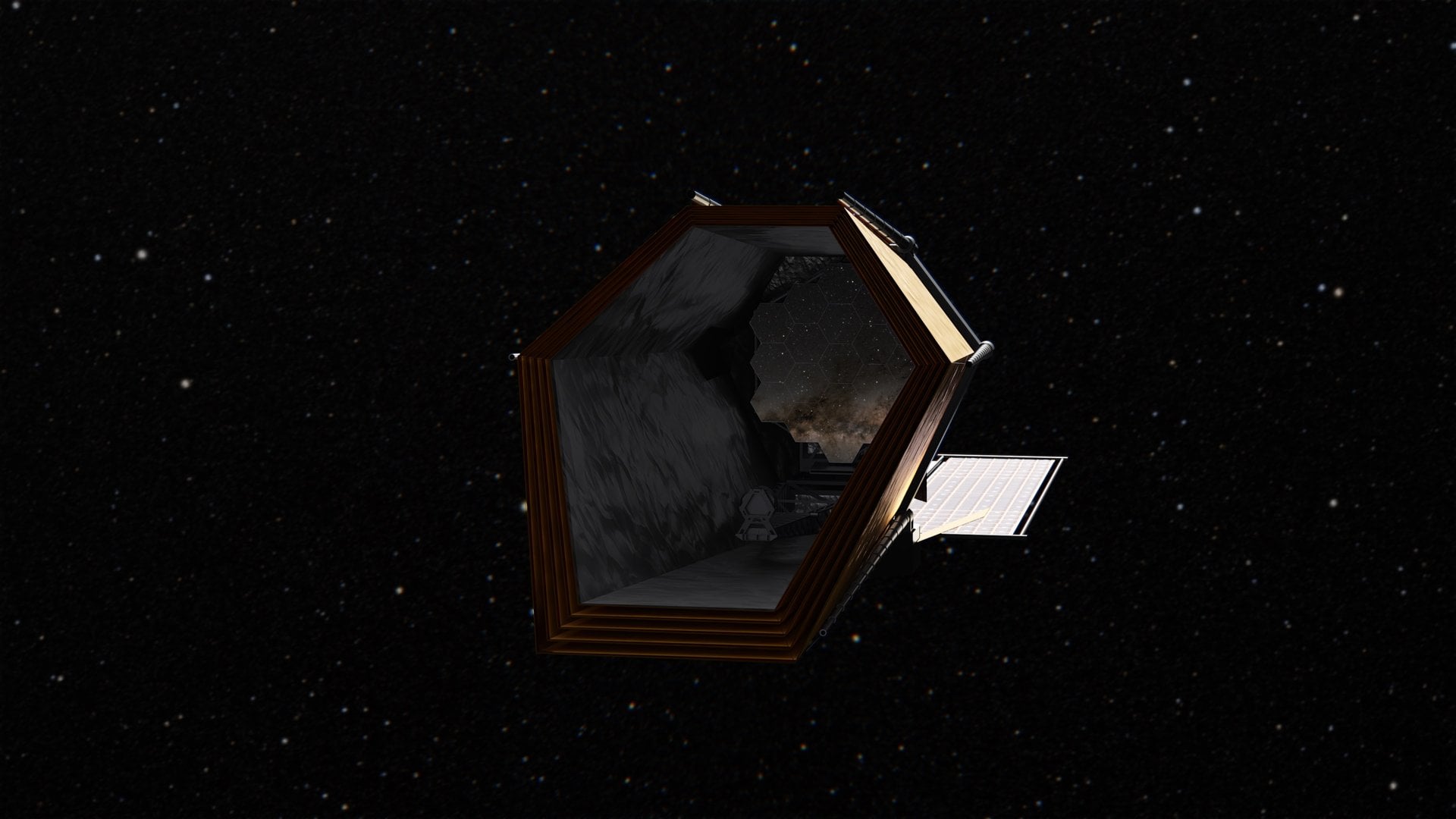
Habitable Worlds Observatory Requires Astrometry for Accurate Exoplanet Mass Measurement
The Gist
The Habitable Worlds Observatory (HWO) will require precise astrometry to accurately measure exoplanet mass and determine atmospheric composition.
Explain Like I'm Five
"Imagine trying to weigh a tiny marble orbiting a lightbulb really far away. We need to know how much the marble weighs to know if it's like Earth. Astrometry is like watching the lightbulb wiggle a tiny bit because of the marble's pull, which helps us guess the marble's weight, especially when the lightbulb is super bright and shaky!"
Deep Intelligence Analysis
However, astrometry faces its own challenges, particularly in achieving the required precision of 0.3 microarcseconds for an Earth-like planet 10 parsecs away. This precision is limited by photon noise from background stars, making the direction of observation crucial. Overcoming these challenges is essential for HWO to accurately characterize exoplanet atmospheres and assess their habitability. The success of HWO hinges on advancing astrometry techniques and mitigating the limitations posed by background star density.
EU AI Act Art. 50 Transparency: This analysis was conducted by an AI model to provide a concise and informative summary of the provided article. The AI model has been trained to identify key facts, potential implications, and relevant context within the aerospace sector. The analysis is intended to assist professionals in quickly assessing the significance of the news and should be used in conjunction with their own expertise and judgment.
_Context: This intelligence report was compiled by the DailyOrbitalWire Strategy Engine. Verified for Art. 50 Compliance._
Impact Assessment
Accurate mass measurement is crucial for determining exoplanet habitability by enabling precise atmospheric composition analysis. Astrometry offers a solution for stars where radial velocity measurements are unreliable, expanding the scope of potentially habitable exoplanet candidates.
Read Full Story on Universe TodayKey Details
- ● HWO aims for 10% precision in planetary mass measurement.
- ● Radial velocity (RV) is ineffective for 30% of HWO's target stars (hot, rotating A and F-type stars).
- ● Astrometry measures the side-to-side wobble of a star caused by an orbiting planet.
- ● The astrometric signal for an Earth-like planet 10 parsecs away is approximately 0.3 microarcseconds.
Optimistic Outlook
Astrometry's ability to analyze active stars enhances HWO's potential to discover Earth-like exoplanets. Overcoming the precision challenges in astrometry could revolutionize exoplanet characterization and the search for life.
Pessimistic Outlook
Achieving the required precision for astrometry (0.3 microarcseconds) is technically challenging. The reliance on background star density introduces observational limitations, potentially hindering the effectiveness of HWO in certain regions of space.

The Signal, Not
the Noise|
Get the week's top 1% of space-tech intelligence synthesized into a 5-minute read. Join 25,000+ aerospace insiders.
Unsubscribe anytime. No spam, ever.