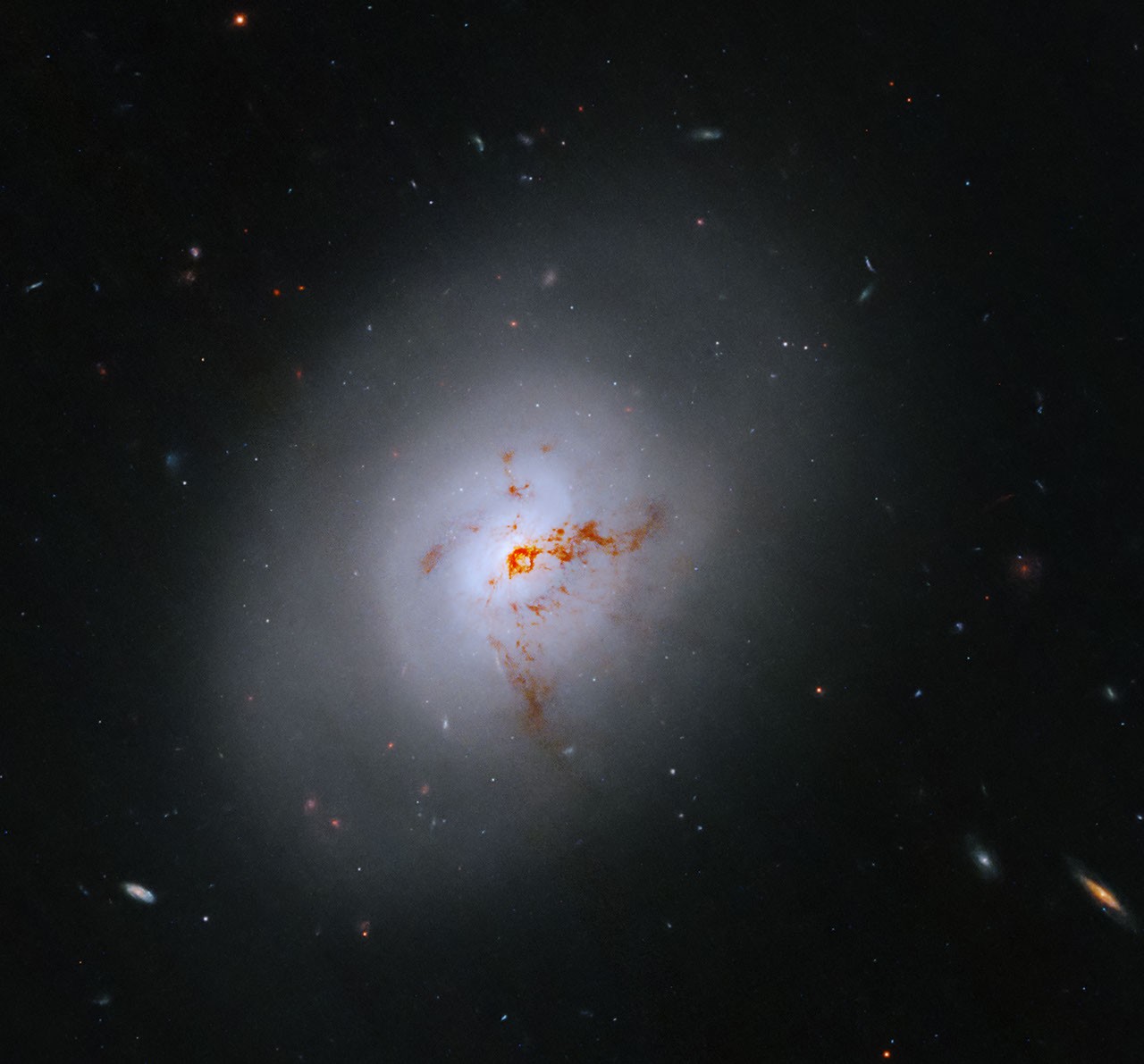
Hubble Telescope Observes Galaxy in Transition
The Gist
Hubble captures NGC 1266, a lenticular galaxy transitioning from a starburst phase to a quiescent elliptical state.
Explain Like I'm Five
"Imagine a galaxy that used to make lots of stars, but now it's running out of gas and the black hole in the middle is stopping it from making more!"
Deep Intelligence Analysis
The galaxy's history of a minor merger, which triggered a burst of star formation and increased the activity of its supermassive black hole, highlights the interplay between galactic interactions and internal processes. The black hole's powerful jets and winds are believed to be responsible for stripping away the galaxy's star-forming gas, effectively shutting down star birth. This process underscores the significant role that supermassive black holes play in shaping the evolution of their host galaxies.
Further research on NGC 1266 and other post-starburst galaxies is crucial for refining our understanding of galaxy evolution and the universe's overall structure. By studying these transitional objects, astronomers can gain valuable insights into the processes that drive galaxy transformation and the factors that determine their ultimate fate. The Hubble's observations provide a crucial piece of the puzzle, paving the way for future investigations using ground-based and space-based observatories.
*Transparency: This analysis was generated by an AI model to provide an objective assessment of the provided news article. The AI model is trained to avoid bias and provide factual information.*
_Context: This intelligence report was compiled by the DailyOrbitalWire Strategy Engine. Verified for Art. 50 Compliance._
Impact Assessment
Studying galaxies like NGC 1266 helps astronomers understand the complex processes that govern galaxy evolution and the role of supermassive black holes.
Read Full Story on NASA Breaking NewsKey Details
- ● NGC 1266 is a lenticular galaxy 100 million light-years away.
- ● It's a post-starburst galaxy, representing 1% of local galaxies.
- ● A minor merger 500 million years ago spurred star formation.
- ● The galaxy has a supermassive black hole suppressing star birth.
- ● Hubble observations reveal a strong outflow of gas from the galaxy.
Optimistic Outlook
Further research on post-starburst galaxies could reveal new insights into the lifecycle of galaxies and the mechanisms that regulate star formation. This knowledge could refine our understanding of the universe's evolution.
Pessimistic Outlook
The processes suppressing star formation in NGC 1266 are complex and not fully understood. Further research may reveal unexpected challenges in modeling galaxy evolution and the interplay between black holes and their host galaxies.

The Signal, Not
the Noise|
Get the week's top 1% of space-tech intelligence synthesized into a 5-minute read. Join 25,000+ aerospace insiders.
Unsubscribe anytime. No spam, ever.